Advertisement






The Gulf conflict has disrupted global supply chains, pushed...
REITs have changed the way commercial real estate is owned a...
What really powers the cloud? Behind every Google search, A...
What really powers the cloud? Behind every Google search, A...
Luxury real estate is one of the most talked-about segments ...
Borivali is emerging as a potential commercial growth corridor in Mumbai’s Western Suburbs, supported by its rail, road and Metro connectivity and a pipeline of major infrastructure projects. The suburb is already a significant residential market and transport junction, connecting northern Mumbai with Dahisar, Mira-Bhayandar and the wider Mumbai Metropolitan Region. Proposed infrastructure, including the INR 16,600-crore Thane-Borivali Twin Tube Tunnel, Goregaon-Mulund Link Road and the extension of the Mumbai Coastal Road towards Borivali, is expected to strengthen links with Thane, Powai, Navi Mumbai and South Mumbai. Redevelopment is also creating opportunities for mixed-use developments incorporating commercial and residential space. The next phase of growth will depend on the supply of Grade A offices and the extent to which corporate occupiers move into the micro-market.
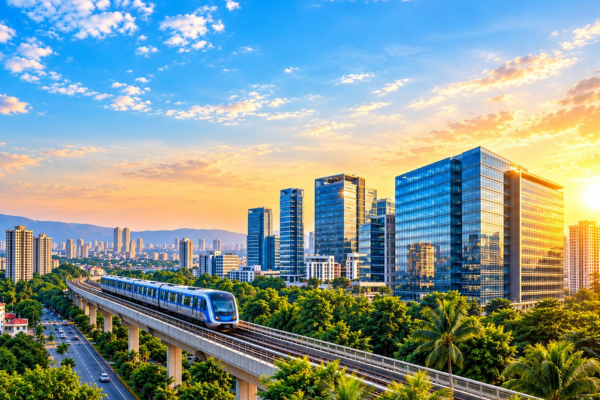
Borivali is gaining attention as a potential next-stage commercial location in Mumbai’s Western Suburbs, with existing transport infrastructure, redevelopment activity and a pipeline of major connectivity projects creating conditions for increased business activity.
Mumbai’s commercial geography has expanded progressively beyond established business districts. Nariman Point emerged as a major commercial centre in the 1970s, followed by Lower Parel and subsequently the Bandra-Kurla Complex (BKC). As established districts matured, businesses expanded into Andheri, supported by its proximity to the airport and suburban railway network. Goregaon and Malad subsequently attracted office developments, helped by the Western Express Highway, Metro connectivity and large integrated business parks.
These locations now form a substantial office market outside BKC, accommodating multinational companies, IT firms, global capability centres (GCCs), media businesses and financial services companies. Rising rentals in established commercial districts, changing workplace models, access to talent and the availability of larger development parcels have contributed to occupiers considering alternative locations.
Borivali has several of these characteristics. The suburb is a major Western Railway junction and is located along the Western Express Highway, providing access towards Dahisar, Mira-Bhayandar and northern parts of the Mumbai Metropolitan Region. Existing Metro connectivity adds another component to its transport network, while proposed infrastructure could further improve links with other employment centres.
A spokesperson for Chandak Group said businesses were increasingly assessing locations on factors including connectivity, workforce availability and surrounding social infrastructure rather than rental costs alone. The spokesperson added that Borivali was beginning to demonstrate these characteristics and that infrastructure projects nearing completion could support a broader range of businesses.
Several large projects are expected to alter Borivali’s connectivity. The INR 16,600-crore Thane-Borivali Twin Tube Tunnel is planned to establish a direct east-west connection and reduce travel time between the two locations by nearly an hour. The Goregaon-Mulund Link Road is expected to improve access towards Powai, the Eastern Express Highway and Navi Mumbai. Meanwhile, the proposed extension of the Mumbai Coastal Road to Borivali is intended to strengthen north-south connectivity and provide improved access towards South Mumbai.
Redevelopment is another factor influencing the suburb’s commercial landscape. Large redevelopment schemes are creating opportunities for mixed-use developments combining residential and commercial components. The pattern has similarities with earlier changes in Andheri, Goregaon and Malad, where redevelopment and infrastructure improvements accompanied the expansion of commercial activity.
A senior industry expert said infrastructure alone would not determine the maturity of a commercial market, with sustained growth also requiring quality office space, housing, retail, hospitality and civic infrastructure. Borivali already has several of these components, while the introduction of premium office developments could determine whether the suburb develops into a larger business district.
The scale and pace of Grade A office development, together with corporate occupier demand, will therefore be important indicators of Borivali’s commercial trajectory. Its expanding infrastructure and redevelopment pipeline place the suburb among the northern Western Suburbs locations being assessed for future commercial growth.

20th Oct, 2026

3rd Oct, 2026

28th Sep, 2026
24th Sep, 2026


4th Aug, 2026


Advertisement








 Facebook
 Whatsapp

