Advertisement






The Gulf conflict has disrupted global supply chains, pushed...
REITs have changed the way commercial real estate is owned a...
What really powers the cloud? Behind every Google search, A...
What really powers the cloud? Behind every Google search, A...
Luxury real estate is one of the most talked-about segments ...
Mumbai’s housing landscape is expected to increasingly depend on redevelopment as limited land availability, population growth and changing homebuyer expectations shape the city’s residential expansion. Knight Frank India data shows that 1,094 societies are currently under redevelopment, covering nearly 432 acres, with the pipeline estimated to generate about 59,000 homes worth around INR 1.5 lakh crore by 2031. Residential demand has also remained firm in 2026, with 47,355 homes sold in the first half of the year and 13,617 property registrations recorded in July. Against this backdrop, redevelopment is emerging as a route to renew ageing neighbourhoods while improving housing quality, infrastructure and sustainability. Larger cluster-led developments, energy-efficient design, technology-enabled services and resident-focused planning are expected to become increasingly important as Mumbai plans for its housing requirements towards 2035.
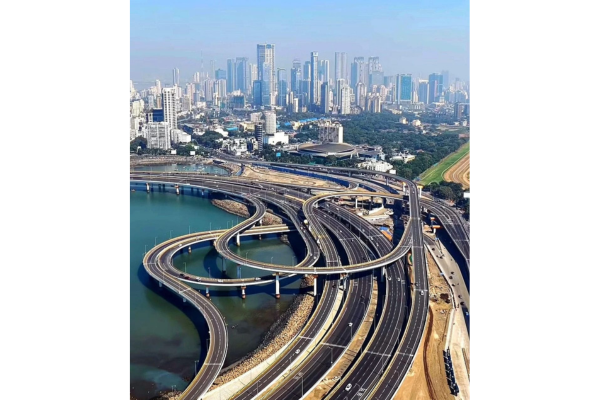
Mumbai’s residential growth towards 2035 is expected to be increasingly shaped by redevelopment, with developers and residents turning to existing neighbourhoods as the city faces limited land availability, a growing population and rising expectations for better housing. The trend is already visible in the scale of projects entering redevelopment, with Knight Frank India reporting 1,094 societies under redevelopment across Mumbai, collectively covering nearly 432 acres.
The current redevelopment pipeline could generate approximately 59,000 new homes valued at around INR 1.5 lakh crore by 2031. Momentum has also remained strong, with around 70 societies entering redevelopment by mid-March 2026. The activity indicates a shift towards using existing urban areas to accommodate additional housing rather than relying solely on new land parcels.
Redevelopment, however, involves more than replacing ageing structures with larger buildings. Existing neighbourhoods provide established social networks and local identities, while redevelopment offers an opportunity to improve safety, infrastructure, environmental performance and the quality of residential spaces. The challenge for developers will be to combine these improvements with the requirements of existing residents.
Mumbai’s residential market has provided a supportive backdrop for this activity. The city recorded 47,355 housing sales during the first half of 2026, a 1% year-on-year increase, while new launches increased 8% to 49,161 units, according to Knight Frank India. Unsold inventory declined 4% to 157,410 units, pointing to continued absorption. Property registrations also remained strong in July, reaching 13,617, an 8.3% year-on-year increase and the highest July figure recorded in 14 years.
Changing expectations among residents are also likely to influence redevelopment projects. Homes are increasingly expected to provide better layouts, natural light and ventilation, green spaces, wellness facilities, technology-enabled security and amenities that support community interaction. This could shift the emphasis from simply adding floor area towards improving the overall residential environment.
The scale of redevelopment is another emerging feature. Larger and cluster-based projects can facilitate integrated planning, more efficient land use and improvements to neighbourhood-level infrastructure. Suburban markets account for a significant share of redevelopment activity, reflecting the availability of ageing housing stock and the scope for larger-scale urban renewal.
Sustainability is also becoming an important consideration. Energy efficiency, water conservation, waste management, green areas and responsible material selection can be incorporated during project planning rather than introduced as additional features later.
Technology is expected to support this transition through intelligent building management, digital security, energy monitoring and connected infrastructure. The focus, however, is on applying technology to improve efficiency, convenience and everyday building operations rather than simply increasing the number of digital features.
For redevelopment to deliver sustained benefits, resident participation and project execution will remain important. Transparency, trust and long-term maintenance will influence whether redevelopment translates into a meaningful improvement in living conditions. By 2035, the scale and quality of these projects could therefore play a significant role in determining how Mumbai accommodates growth while retaining the neighbourhood character that defines the city.
Disclaimer:
The views, opinions, and information expressed in this article are solely those of the author and do not necessarily reflect the views of Prop News Time. The content has not been independently verified or endorsed by Prop News Time. Readers are advised to exercise their own discretion and seek professional advice if required.
20th Oct, 2026

3rd Oct, 2026

28th Sep, 2026
24th Sep, 2026

4th Aug, 2026


Advertisement








 Facebook
 Whatsapp

