Advertisement






The Gulf conflict has disrupted global supply chains, pushed...
REITs have changed the way commercial real estate is owned a...
What really powers the cloud? Behind every Google search, A...
What really powers the cloud? Behind every Google search, A...
Luxury real estate is one of the most talked-about segments ...
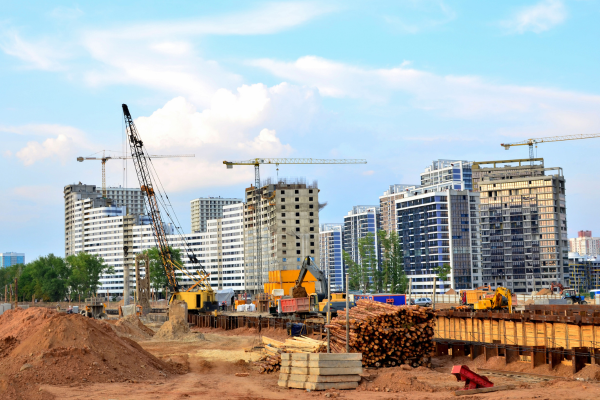
Mumbai’s redevelopment market has reached a key shift, with sales from redevelopment projects overtaking new project launches for the first time, according to a JLL report. More than 1,000 redevelopment projects have been launched since 2020, accounting for 13% of the city’s residential supply. Redevelopment contributed 15% of total housing sales between 2025 and the first half of 2026, compared with 6% during 2016-2021. The report also highlighted a sharp rise in slum rehabilitation activity, with 1,202 active projects covering 2,156 acres and 321,858 hutments, indicating a growing role for redevelopment in Mumbai’s housing market.

Mumbai’s redevelopment market has for the first time recorded housing sales at a higher level than new project launches, marking a shift in how the city’s limited land availability is shaping residential supply, according to a JLL report.
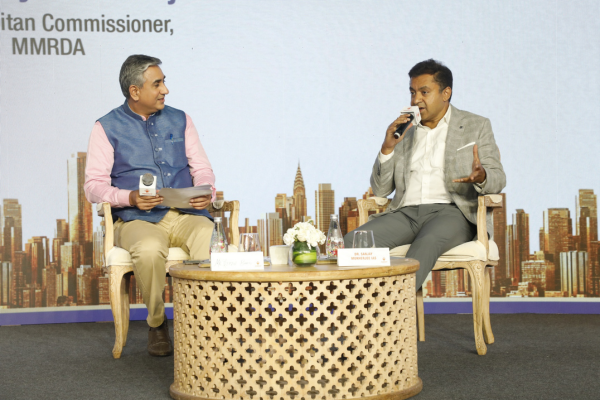
The report, titled Redevelopment in Mumbai: The Inflection Point, from land scarcity to systematic urban renewal, was released at the NAREDCO Maharashtra Real Estate & Infrastructure Investors’ Summit 2026. It said more than 1,000 redevelopment projects have been launched since 2020, making up 13% of Mumbai’s overall residential supply.
Redevelopment accounted for 15% of total housing sales during 2025 and the first half of 2026, compared with 6% during 2016-2021. According to the report, the increase indicates that buyers are increasingly opting for redeveloped homes in established locations instead of only considering new projects on the city’s outskirts.
Karan Singh Sodi, Senior Managing Director – Mumbai MMR & Gujarat and Alternatives, India, JLL, said Mumbai’s shortage of developable land has made redevelopment an increasingly necessary part of the housing market. He added that the segment has moved beyond individual, single-plot reconstruction towards larger-scale urban renewal.
The report said 850 redevelopment projects launched since 2020 represent 15% of the market, while the slum redevelopment pipeline has reached 2,156 acres. This is nearly four times the total area covered by such activity during the previous 30 years.
Slum rehabilitation has emerged as a major part of this change. Mumbai currently has 1,202 active projects covering 321,858 hutments across 2,156 acres under redevelopment. The area is nearly four times the acreage completed since the formation of the Slum Redevelopment Authority (SRA) in 1995. The report also noted the entry of major institutional developers into large-scale slum redevelopment projects.
The shift from a rise in project launches to stronger sales absorption suggests that redevelopment is developing into a continuing source of housing supply rather than remaining dependent on policy-led activity. For developers, the trend supports longer-term investment in redevelopment, while buyers can access newer homes in established areas without waiting for the infrastructure and connectivity improvements that often take several years in peripheral locations.
For Mumbai, redevelopment also provides a way to replace ageing housing stock while creating additional public amenities through cluster redevelopment schemes.
Source PTI

20th Oct, 2026

3rd Oct, 2026

28th Sep, 2026
24th Sep, 2026

4th Aug, 2026

Advertisement








 Facebook
 Whatsapp

