Advertisement






The Gulf conflict has disrupted global supply chains, pushed...
REITs have changed the way commercial real estate is owned a...
What really powers the cloud? Behind every Google search, A...
What really powers the cloud? Behind every Google search, A...
Luxury real estate is one of the most talked-about segments ...
Maharashtra Chief Minister Devendra Fadnavis said the State is accelerating redevelopment and infrastructure projects across Mumbai and the wider Mumbai Metropolitan Region (MMR), with an ambition to take the region’s economy to USD 1.5 trillion by 2047. At REIIS 2026, he outlined plans covering Mumbai 3.0, Dharavi redevelopment, a third Mumbai airport in the Virar region, the Uttan-Virar sea link, Vadhavan Port, new airports for Pune and Nagpur, and a proposed Mumbai-Pune Quantum Corridor. The State is also planning AI-led governance and new economic centres focused on education, healthcare and innovation. Separately, Transport Minister Pratap Sarnaik said tenders for converting 140 MSRTC depots into modern Bus Ports would be invited within three months, opening opportunities for private sector participation.
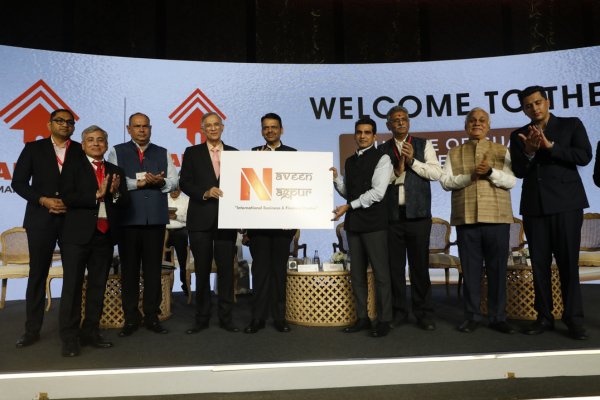
Maharashtra is accelerating redevelopment, transport infrastructure, economic corridors and technology-led initiatives across Mumbai and other metropolitan regions, with Chief Minister Devendra Fadnavis outlining a long-term development strategy aimed at taking the Mumbai Metropolitan Region's (MMR) economy to USD 1.5 trillion by 2047.
Fadnavis was speaking at the sixth edition of the Real Estate & Infrastructure Investors' Summit (REIIS 2026), organised by NAREDCO Maharashtra in Mumbai. He said infrastructure projects that had earlier formed part of Mumbai's long-term development plans had moved into the execution stage and invited the real estate and infrastructure sectors to participate in the State's development programme.
During the summit, Fadnavis also unveiled the logo of 'Naveen Nagpur', an initiative of the Nagpur Metropolitan Region Development Authority (NMRDA). NAREDCO Maharashtra signed a Memorandum of Understanding (MoU) with NMRDA in the presence of Sanjay Meena, IAS, Metropolitan Commissioner, NMRDA.
Maharashtra's economy grows 8.8%
Fadnavis highlighted Maharashtra's economic growth, noting that the State recorded 8.8% growth compared with India's 7.6% growth in the first quarter. He said the real estate sector would have an important role in sustaining economic activity.
He also pointed to Mumbai's property registration activity, saying August 2026 recorded around 12,500 registrations, while cumulative registrations crossed 1.06 lakh. These transactions generated approximately INR 9,355 crore in government revenue, according to the Chief Minister.
Fadnavis said the pace of activity in the MMR property market indicated the need for Mumbai to undergo further redevelopment and infrastructure-led expansion.
Redevelopment to drive Mumbai's next phase
Redevelopment was identified as a major component of Mumbai's future urban development. Fadnavis said the State Government's cluster redevelopment approach was intended to make Mumbai slum-free over the next decade, with implementation already under way.
For Dharavi, the Government has set an objective of completing 10,000 rehabilitation homes by January 2029 and handing them over to eligible residents.
The cluster approach is also expected to create redevelopment opportunities in older MHADA layouts and ageing urban settlements developed several decades ago. Fadnavis said the approach could improve the utilisation of land within established parts of the city.
BEST depots planned for mixed-use redevelopment
The State Government is also planning comprehensive redevelopment of BEST depot land, combining transport infrastructure with mixed-use development.
The proposed developments could include residential and commercial spaces as well as museums, recreational facilities and other public destinations. According to Fadnavis, the model could create an additional revenue stream for BEST while strengthening the city's public transport infrastructure.
He called on developers to participate in the proposed redevelopment opportunities.
MMR targets USD 1.5 trillion economy by 2047
The State's MMR Growth Plan has set an objective of taking the region's economy to USD 1.5 trillion by 2047.
Fadnavis said planned urbanisation would remain central to Maharashtra's economic development strategy, with the Mumbai, Pune and Nagpur metropolitan regions being developed as major economic centres.
He said these metropolitan regions were expected to account for 60% of India's data-centre capacity and smart manufacturing, alongside the development of new urban centres focused on education, healthcare and innovation.
Mumbai 3.0 moves from planning to execution
Fadnavis said infrastructure projects associated with Mumbai's transformation, including the coastal road, metro network and airport infrastructure, had progressed from planning to implementation.
He said the Mumbai 3.0 development programme had already begun, with new urban centres such as Education Cities, Medi-cities and Innovation Cities expected to contribute to a broader economic ecosystem.
Uttan-Virar sea link and third airport planned
The State Government is planning further expansion of Mumbai's northern connectivity through a proposed 24-km sea link between Uttan and Virar.
The project is envisaged as part of a larger coastal road network that could eventually provide signal-free connectivity between Nariman Point and Virar.
Fadnavis also announced plans for a third airport for Mumbai in the Virar region. The detailed project report (DPR) is expected to be ready by the end of 2026.
He said the combination of improved road and air connectivity would support the development of a new economic corridor in the northern MMR.
Vadhavan Port to expand regional economic activity
Fadnavis also highlighted the development of Vadhavan Port as a major component of Maharashtra's maritime infrastructure strategy.
He said Jawaharlal Nehru Port Authority (JNPA) currently handles around 75% of the relevant container traffic in the region, while Vadhavan Port is being developed as a deep-draft port with significantly higher handling capacity.
The port is expected to generate employment and support economic activity in Palghar and Thane districts.
The State is also considering freight connectivity from the port towards Nashik and onward through the Samruddhi Mahamarg to Jalna, Wardha and dry ports extending up to Gadchiroli. The proposed network is intended to connect port-led economic activity with inland areas of Maharashtra.
New Nagpur and Pune airports to support investment
Fadnavis described Nagpur as one of the fastest-developing cities in Maharashtra and highlighted the development of 'Naveen Nagpur' as an emerging economic and urban development opportunity.
Land acquisition and planning for the new Nagpur initiative are under way, with the State seeking investment in the proposed economic ecosystem.
For Pune, Fadnavis said work towards a new airport would begin this year, with tenders expected to be floated soon. He also highlighted the growth of Global Capability Centres (GCCs) in Pune and the resulting demand for commercial and supporting real estate.
Mumbai-Pune corridor proposed as Quantum Corridor
Advanced technology is another component of Maharashtra's growth strategy. Fadnavis proposed developing the Mumbai-Pune corridor as a 'Quantum Corridor', with the region positioned around technology-intensive industries and GCCs.
He said the real estate sector would be an important participant in developing the infrastructure and commercial ecosystem required to support these industries.
AI expected to change job landscape
Fadnavis also highlighted the impact of artificial intelligence on Maharashtra's workforce and governance systems.
He said around 65% of India's population was young, while Maharashtra had approximately three crore people aged between 18 and 28. According to him, the growing familiarity of younger workers with technology would support the adoption of AI across sectors.
Fadnavis said the nature of around 70% of jobs could change over the next 1,000 days because of AI. The State Government is also working on incorporating AI into approval systems and government processes to make governance faster and more technology-driven.
140 MSRTC depots to be redeveloped as Bus Ports
Separately, Maharashtra Transport Minister Pratap Sarnaik announced that the Maharashtra State Road Transport Corporation (MSRTC) would invite tenders within the next three months for redevelopment of 140 ST bus depots into modern Bus Ports.
The announcement was made during REIIS 2026, as Maharashtra seeks greater private sector participation in infrastructure development.
The Maharashtra Cabinet approved the initiative on July 14, 2026. Sarnaik called on private developers to participate in the programme, which is intended to modernise the State's bus infrastructure through private sector involvement.
According to the Minister, the broader initiative could unlock and develop approximately 13,000 to 14,000 acres of MSRTC land through private participation.
The proposed redevelopment would convert existing ST depots into integrated transport hubs with commercial and allied development opportunities while upgrading passenger facilities.
Sarnaik made the announcement while addressing the change-of-guard ceremony of NAREDCO Maharashtra Next Gen, where Raunak Bandelkar formally took charge as President from outgoing President Vikas Jain.

20th Oct, 2026
3rd Oct, 2026

28th Sep, 2026
24th Sep, 2026


4th Aug, 2026


Advertisement








 Facebook
 Whatsapp

