Advertisement






The Gulf conflict has disrupted global supply chains, pushed...
REITs have changed the way commercial real estate is owned a...
What really powers the cloud? Behind every Google search, A...
What really powers the cloud? Behind every Google search, A...
Luxury real estate is one of the most talked-about segments ...
Karnataka has prepared an Economic Master Plan to expand the Bengaluru Metropolitan Region’s (BMR) economy from its current USD 149 billion to USD 400 billion by 2037, when Bengaluru is set to complete 500 years. Prepared by the Institute for Sustainability, Employment and Growth (ISEG) Foundation in collaboration with the state government, the plan targets 2–2.5 million additional jobs and seeks to position the region as a global hub for technology, advanced manufacturing, healthcare, education and tourism. The strategy proposes major investments in public transport, roads, a second airport, water security and planned urban development.
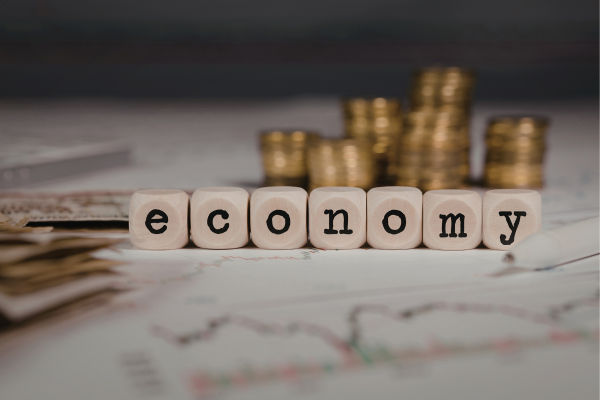
Karnataka has drawn up an Economic Master Plan to expand the Bengaluru Metropolitan Region’s (BMR) economy to USD 400 billion by 2037, with the strategy targeting new employment, private investment and infrastructure-led urban development across the region. The plan was presented to Chief Minister D K Shivakumar on Wednesday by the Institute for Sustainability, Employment and Growth (ISEG) Foundation, which prepared it in collaboration with the state government.
The target year coincides with Bengaluru completing 500 years. The BMR, as defined in the report, currently has an economy of around USD 149 billion and is spread across three districts, with a population of approximately 16 million. The region contributes about 40% of Karnataka’s gross state domestic product despite accounting for roughly a quarter of the state’s population. Its per capita income is nearly twice the state average.
The plan aims to create between 2 million and 2.5 million jobs while strengthening Bengaluru’s role across technology, advanced manufacturing, healthcare, education and tourism. In the technology sector, the strategy proposes dedicated IT and Global Capability Centre (GCC) hubs, deep-tech sandboxes and an artificial intelligence mission. It also identifies seven priority areas for advanced manufacturing, including aerospace and defence, electronics, automotive, biopharma and medical devices.
Healthcare, higher education and high-end tourism have also been identified as potential growth sectors. The plan seeks to attract greater private investment while using land value capture mechanisms to help finance urban transformation. The approach is intended to link economic expansion with infrastructure and urban development rather than relying solely on the city’s existing employment and technology base.
Transport infrastructure forms a major component of the proposed strategy. The plan targets an increase in public transport’s modal share from the current 35% to 75%. This would involve expanding metro, suburban rail and regional rapid transit corridors, alongside stronger road infrastructure. A second airport, additional ring, radial and chord roads, and multi-modal transport hubs have also been proposed.
The strategy also places emphasis on water security as the region expands. Proposed measures include augmenting water supplies, increasing the reuse of treated wastewater and improving the efficiency of distribution networks. These measures are intended to address one of the key infrastructure requirements associated with Bengaluru’s continued population and economic growth.
Urban development recommendations include planned cities, services-led business districts, integrated private townships and transit-oriented development. The plan also proposes expanding affordable and shared rental housing for industrial, gig and services workers, along with a slum rehabilitation programme. These measures are aimed at aligning housing supply with the employment expected to be generated across emerging industrial and services clusters.
The plan was presented in the presence of Bengaluru Development Minister Krishna Byre Gowda, Home and IT/BT Minister Priyank Kharge, Chief Secretary Shalini Rajneesh and Chief Minister’s advisor L K Atheeq. ISEG Foundation representatives Shirish Sankhe, Rasagya Kabra and Aditi Vyas also attended the meeting.
The Karnataka government will now discuss the recommendations with relevant stakeholder departments before finalising an actionable growth plan for the Bengaluru Metropolitan Region. The proposed framework would therefore need to move from economic targets to department-level implementation plans covering transport, land use, housing, water, industrial development and urban infrastructure.

16th Nov, 2026

13th Nov, 2026


12th Nov, 2026



Advertisement









 Facebook
 Whatsapp

