Advertisement






The Gulf conflict has disrupted global supply chains, pushed...
REITs have changed the way commercial real estate is owned a...
What really powers the cloud? Behind every Google search, A...
What really powers the cloud? Behind every Google search, A...
Luxury real estate is one of the most talked-about segments ...
Bengaluru's long-awaited Pink Line metro is expected to begin carrying passengers in early September, once it receives the required statutory clearances, according to Bangalore Metro Rail Corporation Limited (BMRCL). The nearly 7.5-kilometre elevated stretch between Kalena Agrahara and Tavarekere, running along Bannerghatta Road, missed its earlier 15 August target and now awaits Railway Board approval for rolling stock and inspection by the Commissioner of Metro Rail Safety. Even as construction nears completion, poor footpaths, broken roads, garbage accumulation and weak last-mile connectivity around several stations have raised concerns among residents about how commuters will actually reach the new stations.
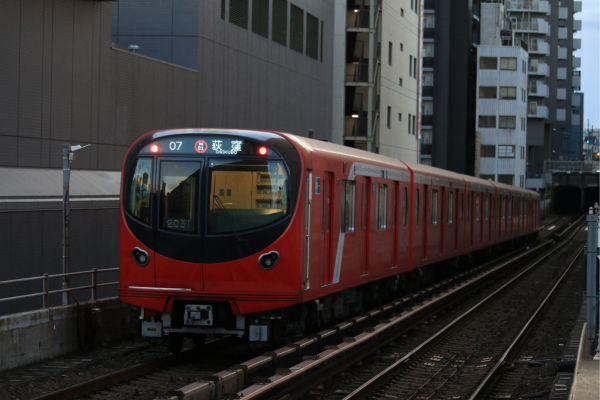
Bengaluru's long-awaited Pink Line metro could finally begin carrying passengers in the first week of September, provided it receives the required statutory clearances, according to Bangalore Metro Rail Corporation Limited (BMRCL). The nearly 7-kilometre elevated stretch between Kalena Agrahara and Tavarekere was earlier expected to open on 15 August, but that deadline was missed, pushing the launch window to September.
BMRCL Managing Director PC Jaffer said construction and other related works had been completed from the corporation's side, with the remaining formalities limited to Railway Board approval for the rolling stock and inspection by the Commissioner of Metro Rail Safety (CMRS). He said the exact opening date would depend on when these clearances came through. The elevated section had already cleared speed trials conducted by the Research Design and Standards Organisation (RDSO) in June, following successful oscillation trials and emergency braking tests, and its CMRS safety inspection concluded on 14 August, though formal clearance was not granted at that stage, with only the Independent Safety Assessment certificate for the signalling system still pending.
Once operational, this first phase will comprise six stations along Bannerghatta Road: Kalena Agrahara, Hulimavu, IIMB, JP Nagar 4th Phase, Jayadeva Hospital and Tavarekere. Jayadeva Hospital will become Bengaluru's third interchange station, after Majestic and RV Road, allowing passengers to switch between the Pink Line and the Yellow Line. The Jayadeva station, already partly operational for the Yellow Line, spans six levels and is integrated with the road flyover that forms part of the city's double-decker infrastructure project.
The Pink Line, once fully operational, will span 21.26 kilometres with 18 stations in total, six elevated and 12 underground, connecting Kalena Agrahara in the south to Nagawara in the north via Bannerghatta Road and MG Road. The remaining 13.76-kilometre underground stretch, running from Dairy Circle to Nagawara via MG Road and forming the city's fourth interchange at MG Road with the Purple Line, is targeted for completion in December, though track-laying and systems work on this longer, more complex section remain ongoing even as tunnelling was completed in December 2024.
Even as the elevated stretch nears its opening, civic infrastructure along the surrounding stretch of Bannerghatta Road remains in poor condition, raising concerns among residents about how commuters will actually reach the new stations. Around Kalena Agrahara, a temporary bus stop has come up near the Himagiri Main Road-Bannerghatta Road junction beside an open drain, with portions of the surrounding footpath still covered in mud and waste. Near Hulimavu station, buses are expected to serve commuters, but a proper shelter is reportedly missing, and pedestrian connections from nearby residential areas along Hulimavu Main Road, BDA 80 Feet Road and Arekere Road remain inadequate despite their relative proximity to the station. At the Royal Meenakshi Mall junction, metro infrastructure occupies portions of the existing pedestrian space, while garbage accumulation on other sections further complicates walking access.
Similar concerns have been flagged elsewhere along the corridor. The stretch near Vega City Mall continues to face long-standing maintenance issues, while the JP Nagar 4th Phase station sits in one of the most congested sections of Bannerghatta Road, compounding access challenges during peak hours. Jayadeva station currently benefits from comparatively better bus connectivity, though residents say proper pedestrian crossings and feeder services are still needed to ensure smooth first- and last-mile movement. At the Tavarekere terminal, garbage dumping and poorly maintained approach roads remain unresolved. Local residents note that metro construction along this corridor has stretched over nearly eight years, a period during which the surrounding area has also seen rapid real estate and population growth, adding further strain on already inadequate civic infrastructure.
Despite these access concerns, the Pink Line is expected to meaningfully ease daily travel for residents along Bannerghatta Road, including those in Kalena Agrahara, Gottigere, Hulimavu, Bilekahalli and surrounding neighbourhoods, who currently rely on a heavily congested road corridor for their daily commute.
The report did not specify a firm opening date beyond the "early September" window cited by BMRCL officials, nor did it detail which civic agency, the BBMP, BDA or BMRCL, is responsible for addressing the footpath, drainage and last-mile connectivity gaps flagged around the stations ahead of the launch.


16th Nov, 2026

13th Nov, 2026


12th Nov, 2026



Advertisement








 Facebook
 Whatsapp

