Advertisement






The Gulf conflict has disrupted global supply chains, pushed...
REITs have changed the way commercial real estate is owned a...
What really powers the cloud? Behind every Google search, A...
What really powers the cloud? Behind every Google search, A...
Luxury real estate is one of the most talked-about segments ...
Chembur is gaining attention among Mumbai homebuyers and investors as infrastructure improvements, redevelopment and new residential projects coincide with a substantial price differential against premium Western Suburbs. Average residential prices in Chembur were around INR 24,654 per sq ft in Q2 2026, compared with INR 48,343 per sq ft in premium Western Suburbs, while Chembur recorded approximately 7% price appreciation during 2025, according to the source. Improving multimodal connectivity, including Metro Line 2B, road upgrades and planned infrastructure projects, is adding to the suburb’s accessibility. JLL reported that Mumbai’s Eastern Suburbs accounted for 13.2% of residential sales in Q1 2026, indicating continued buyer activity in the broader micro-market.
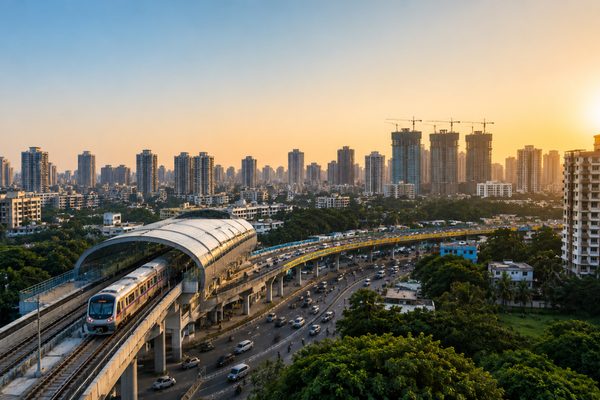
Chembur is seeing renewed interest in Mumbai’s residential market as improvements in transport infrastructure coincide with redevelopment and new housing supply. Average residential prices in the suburb stood at approximately INR 24,654 per sq ft in Q2 2026, according to a leading property portal, against around INR 48,343 per sq ft across premium Western Suburbs.
The price difference comes alongside an estimated 7% appreciation in Chembur during 2025. The market opportunity, according to the source, centres on the possibility of the existing valuation gap narrowing as connectivity improves and redevelopment introduces newer residential stock.
A spokesperson for Chandak Group said Chembur’s next phase of growth could support sustained capital appreciation as infrastructure development, redevelopment and premium residential launches progress. The spokesperson said the suburb’s established market base, combined with pricing below premium Western Suburbs, could make the timing of entry relevant for buyers and investors considering a medium- to long-term holding period.
Connectivity is becoming an important component of Chembur’s development profile. The Chembur Metro Station on Metro Line 2B is located close to Chembur railway station and the V N Purav Marg Monorail station, providing interchange possibilities between the rail, metro and monorail systems. The Monorail connects Chembur with Jacob Circle, while the proposed Jacob Circle–Mahalaxmi travelator could provide an additional onward connection.
Road infrastructure has also improved. The completion of the final 1.4-km stretch of SCLR Phase 2 has strengthened access from Chembur towards Bandra Kurla Complex (BKC) and the Western Express Highway. Other infrastructure projects, including Metro Line 2B, the Elevated Eastern Freeway Extension and the Goregaon-Mulund Link Road, are expected to add further east-west and north-south connections across Mumbai’s eastern corridor.
A real estate industry expert said infrastructure-led appreciation generally results from cumulative improvements in accessibility rather than a single project. The expert said Chembur’s established residential base could be an advantage as transport infrastructure develops alongside redevelopment and new-quality housing projects.
Redevelopment is simultaneously changing the composition of available housing stock in the suburb. New residential developments are introducing contemporary homes into an established neighbourhood that already has access to social infrastructure and established civic and commercial facilities.
The wider Eastern Suburbs market is also recording measurable demand. JLL reported that the micro-market accounted for 13.2% of Mumbai’s residential sales during Q1 2026. This provides an indication of the broader eastern corridor’s contribution to the city’s residential activity as infrastructure projects and redevelopment continue to shape its housing market.
For Chembur, the combination of its existing residential ecosystem, comparatively lower capital values and improving transport links is creating a market where future price movement remains closely connected to the pace of infrastructure delivery and redevelopment.

20th Oct, 2026

3rd Oct, 2026

28th Sep, 2026
24th Sep, 2026




4th Aug, 2026


Advertisement








 Facebook
 Whatsapp

