Advertisement






The Karnataka government plans to set up 1,500 high-capacity EV charging stations under the PM E-Drive scheme, focusing on fast-charging heavy vehicles like buses and trucks with 60-240 kW outputs. With over 6,000 existing public chargers, the state aims to strengthen infrastructure for e-buses and e-trucks along highways, logistics hubs, and depots. Central subsidies will cover 80-100% of project costs, minimizing state expenses. Karnataka already leads India in charging station count and has sought 4,500 e-buses under PM E-Drive. Collaborations with major oil companies and upgrades to fast chargers further boost accessibility, positioning Karnataka as a frontrunner in large-scale EV infrastructure and fleet electrification.
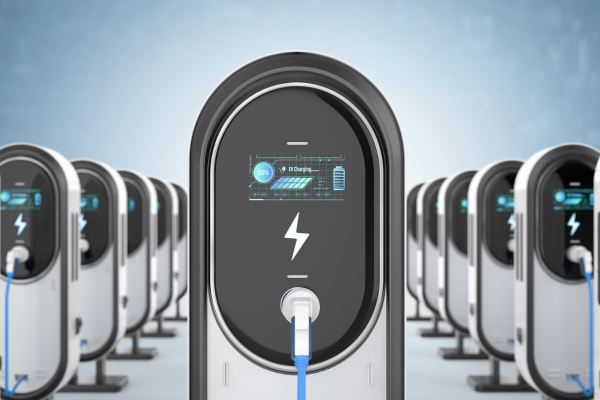
The government of Karnataka is preparing to submit a detailed proposal under the PM E-Drive scheme to establish 1,500 high-capacity EV charging stations across the state, each capable of fast-charging heavy vehicles such as buses and trucks with outputs in the 60 kW to 240 kW range. The decision marks the next phase in the state's electric mobility expansion - having already installed more than 6,000 public charging stations, Karnataka now plans to move beyond lighter vehicles and ramp up infrastructure for e-buses and e-trucks. Advertisement


The state energy department will identify strategic locations such as bus depots, national and state highways, freight corridors and logistics hubs to set up these charging facilities. According to officials, the state's financial burden will remain minimal thanks to central subsidies under PM E-Drive, which range from 80 % to 100 % depending on project components. The initiative is aligned with the scheme's objectives - accelerating EV adoption, strengthening charging networks and promoting local manufacturing of EV components.
Karnataka's proposal accompanies its broader efforts, with the state already seeking central support for deployment of e-buses under the same initiative. The nodal agency for implementing EV-charging infrastructure across the state has been designated as the state's electricity supply company. It explained that upstream components such as transmission lines, transformers and conductors are eligible for 100 % subsidy, while other equipment enjoys up to 70 % subsidy.
As of August this year, India had roughly 29,000 EV-charging stations, among which Karnataka accounted for approximately 6,097 - the highest number in the country. Earlier in the year the state held discussions with the Union ministry of heavy industries and steel seeking enhanced central assistance and allocation of some 4,500 e-buses for its transport corporations under the PM E-Drive scheme. Since electric cars typically require chargers of 60-120 kW capacity, the state is making the leap for heavy-duty vehicles requiring 240 kW chargers.
In another step, the Karnataka supply company partnered with major oil companies such as the Indian Oil Corporation, Hindustan Petroleum and Bharat Petroleum to install about 400 EV-charging points at petrol stations across the state. The company is also upgrading its existing slow-charging infrastructure: of the 209 slow-charging stations under its jurisdiction, 184 have already been upgraded to fast-charging systems - citing major improvements in convenience and waiting times, since slow chargers typically take three to four hours, whereas fast chargers can complete the charge within 30 to 45 minutes.
By targeting heavy-duty vehicles and focusing on strategically located high-capacity charging stations, the state is stepping into a new phase of infrastructure growth. Subsidy support ensures minimal financial strain on state resources and lends momentum to EV adoption, charging-network expansion and local manufacturing. If executed effectively, Karnataka could set a benchmark for other states seeking to electrify fleets and logistics at scale.

5th Jun, 2025

25th May, 2023

11th May, 2023

27th Apr, 2023
Advertisement





 Facebook
 Whatsapp