Advertisement






The success of Mumbai's Metro Line 3 (Colaba-Bandra-SEEPZ) has encouraged authorities to plan a series of large-scale underground infrastructure projects worth around INR 40,000 crore across the Mumbai Metropolitan Region (MMR). Agencies including the Mumbai Metropolitan Region Development Authority (MMRDA), Brihanmumbai Municipal Corporation (BMC) and Maharashtra State Road Development Corporation (MSRDC) are preparing to execute these tunnel-based projects to improve connectivity while reducing land acquisition and environmental impact. Together, these initiatives will include more than 60 km of tunnels across key corridors.
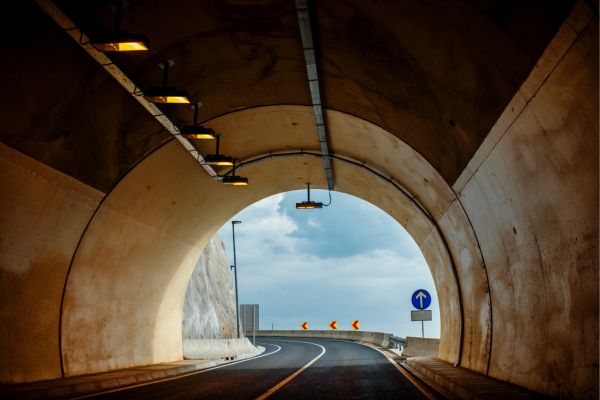
The Metro Line 3 project has demonstrated that extensive tunnelling can be executed successfully in Mumbai, despite its complex underground conditions. The line, which connects Colaba, Bandra and SEEPZ, involved 17.6 km of twin tunnels constructed using 17 tunnel boring machines (TBMs). Officials said the project proved that tunnelling can be carried out safely and efficiently in the city's challenging geology. The experience has now encouraged agencies to integrate underground alignments in upcoming projects across the region. Advertisement


Authorities including the MMRDA, BMC and MSRDC are planning several major projects that collectively involve tunnelling work valued at around INR 40,000 crore. The focus is on creating underground routes through densely populated zones to avoid large-scale land acquisition and minimise environmental disturbance. These projects are also expected to improve east-west connectivity, ease surface traffic congestion and generate substantial employment opportunities.
Among the upcoming developments, the Goregaon-Mulund Link Road (GMLR) tunnel project by MMRDA will include 5.5 km of tunnelling at an estimated cost of INR 6,408 crore. The BMC's Orange Gate to Marine Drive Connector project will feature 6.5 km of tunnels, costing about INR 8,005 crore. The MSRDC's Versova to Dahisar Coastal Road tunnel, one of the longer stretches, will cover 10.25 km at a cost of INR 8,883 crore. Another important project, the Coastal Road's Bandra Kurla Complex (BKC) connector, will include 2.1 km of tunnels costing around INR 3,391 crore. The largest of all is the Thane-Borivali twin tunnel, with a total length of 16 km and an estimated cost of INR 14,400 crore.
Officials mentioned that together these projects will create over 60 km of new tunnels across the MMR. Work has already started on some sections such as the GMLR tunnel, while others are at various stages of planning and clearance. The Thane-Borivali tunnel, which will pass under the Sanjay Gandhi National Park, is currently awaiting forest and environmental approvals. The BKC Coastal Road connector and the Orange Gate-Marine Drive tunnel are expected to begin construction in 2025, after completion of preparatory works.
Each tunnel boring machine used in such projects costs between INR 250 crore and INR 500 crore, depending on its diameter. A typical TBM is about 100-150 metres long and weighs around 1,500 tonnes. These machines are assembled and launched directly at the construction site, enabling continuous tunnelling with minimal surface disruption.
The success of the Metro Line 3 has also influenced the design of newer projects, with officials confirming that tunnelling is now being preferred for several upcoming transport corridors. The approach not only allows faster execution in congested zones but also helps reduce the impact on existing structures and daily urban activity. With multiple projects planned simultaneously, agencies are expected to coordinate efforts to ensure steady progress, technical safety and environmental compliance.

5th Jun, 2025

25th May, 2023

11th May, 2023

27th Apr, 2023
Advertisement





 Facebook
 Whatsapp