Advertisement






During the recent GRIHA Summit held in New Delhi, Knauf India reaffirmed its commitment to sustainability and circular material design within the construction industry. The company showcased how innovations in gypsum systems, material reuse, and circular design principles could contribute to India's shift toward climate-resilient buildings. Company executives highlighted the need for collaboration among manufacturers, architects, and policymakers to promote responsible sourcing, reduce waste, and integrate sustainability throughout the material lifecycle.
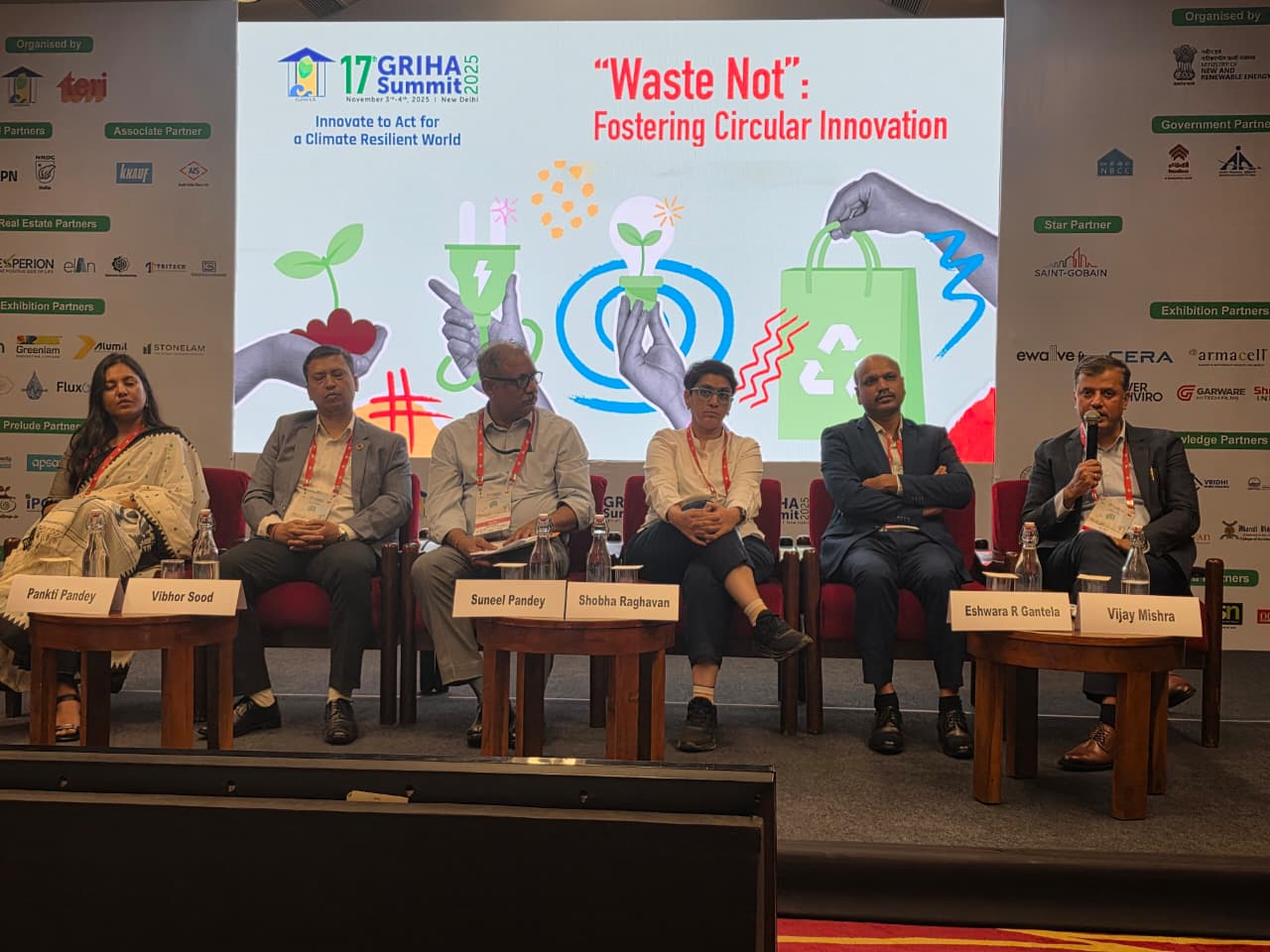
At the GRIHA Summit held earlier this week at the India Habitat Centre in New Delhi, Knauf India, a global leader in Drywall and Ceiling Solutions, reiterated its dedication to advancing circular design and sustainable construction practices. Themed 'Innovate to Act for a Climate Resilient World,' the summit gathered architects, engineers, policymakers, and industry experts to discuss pathways towards low-carbon, resource-efficient, and adaptable urban development. Advertisement


During a panel discussion titled 'Waste Not: Fostering Circular Innovation,' Vijay Mishra, Commercial Director of Knauf India, discussed how integrating circular design principles from the product development stage could reshape the construction industry's environmental footprint. He explained that sustainability must be embedded at the design phase itself, where durability, reuse, and recyclability are prioritised to extend a material's life and reduce waste generation.
Mishra observed that the focus should not solely rest on end-of-life recycling but on designing materials that can be reused, have a longer lifespan, and safely reintegrate with the environment. He stated that every square metre built should aim to minimise waste and enhance climate resilience. He further noted that transitioning towards circularity requires collective effort among manufacturers, designers, and policymakers, driven by innovation in material science and ethical sourcing practices.
Highlighting Knauf's initiatives, he mentioned that the company utilises synthetic gypsum-derived as a by-product of industrial desulphurisation-rather than mined gypsum, and that its paper liners are made entirely from recycled fibre. According to Mishra, such measures illustrate how circular innovation can simultaneously reduce emissions and maintain product quality.
India?s construction landscape is evolving as more builders embrace dry construction systems that offer speed, energy efficiency, and environmental benefits. The use of plasterboards has gained momentum in both residential and commercial projects, gradually replacing traditional POP-based systems. The nation's ceiling market, which was relatively small two decades ago, has expanded considerably, reflecting the rising demand for sustainable materials.
Mishra further emphasised that Knauf India's products adhere to recognised green building standards such as GRIHA and IGBC, with innovations like the DewBloc Moisture-Resistant Board developed to suit India's diverse climatic conditions. He stated that as the market continues to grow, it is essential to prioritise durability, use locally sourced materials, and reduce embodied carbon in alignment with India's broader sustainability goals.
At the summit, Knauf India exhibited a range of environmentally efficient plasterboards and ceiling systems designed to conserve water, reduce energy consumption, and minimise on-site waste. The company's participation underlined how innovation in material design and circularity could create climate-resilient infrastructure without compromising quality or performance.
Knauf India's contribution at the GRIHA Summit reflected its ongoing effort to incorporate sustainability into every phase of its product lifecycle-from sourcing raw materials to end-of-life recovery. The company's advocacy for circular design and responsible material innovation reinforced the importance of collaboration across the construction ecosystem. As India's demand for sustainable infrastructure accelerates, Knauf's approach serves as an example of how environmental stewardship and industrial growth can progress hand in hand.

5th Jun, 2025

25th May, 2023

11th May, 2023

27th Apr, 2023
Advertisement





 Facebook
 Whatsapp
