Advertisement






Adani Ports and Special Economic Zone Ltd (APSEZ) plans to raise revenue from its logistics business to around INR 140 billion by fiscal year 2029, compared to approximately INR 28.81 billion in fiscal 2025. The company is strengthening its presence in warehousing, port-feeder services, and related logistics to reduce reliance on global trade cycles. The logistics division's revenue surged 79% year-on-year in the latest quarter, contributing 11.5% to overall revenue, up from 8% a year earlier. Cargo volumes also grew 12% to 124 million tonnes during the period.
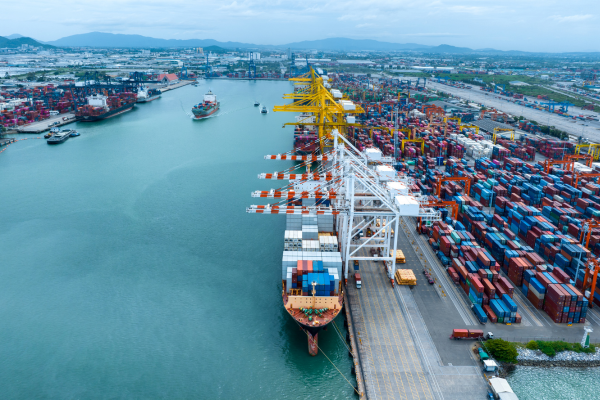
Adani Ports and Special Economic Zone Ltd (APSEZ), India's largest private port operator, is targeting a significant rise in its logistics business revenue from about INR 28.81 billion in fiscal year 2025 to nearly INR 140 billion by fiscal year 2029. The company expects this five-fold growth to come from expanding its services beyond traditional port operations. Advertisement


The logistics division, which includes warehousing, port-feeder transport, and multimodal connectivity, has become one of the fastest-growing parts of APSEZ's business. The company is now focusing on building a strong domestic logistics network to balance the effects of global trade volatility.
According to the company's latest quarterly results, the logistics segment's revenue grew by 79% year-on-year and accounted for 11.5% of total revenue, compared with 8% in the same period last year. This steady rise shows the growing contribution of logistics to APSEZ's overall performance.
Revenue from operations rose 30% in the same quarter, supported by higher cargo volumes that reached 124 million metric tonnes, a 12% year-on-year increase, slightly higher than the 11% growth recorded in the previous quarter. The company also posted a 27% rise in profit to INR 31.09 billion (about USD 354 million), driven by consistent performance across ports and logistics.
APSEZ's expansion comes at a time when global trade conditions remain uncertain, and export volumes in some sectors have slowed. Diversifying into logistics and warehousing allows the company to rely more on domestic and regional demand, which has remained relatively strong. The company is aiming to position itself as a full-service logistics provider rather than just a port operator.
Industry peers such as JSW Infrastructure Ltd have also recorded cargo growth, but their margins were affected by weaker export markets. This highlights how APSEZ's broader mix of logistics and port operations may help cushion the business against external pressures.
Historically, APSEZ has outlined in its investor presentations that developing integrated logistics including inland container depots, warehousing, and feeder rail networks is a key part of its long-term strategy. These investments are designed to provide end-to-end solutions to customers while improving cost efficiency and service reliability. The company's logistics infrastructure now spans several locations across India, giving it an advantage in connecting ports with key industrial and consumption hubs.

5th Jun, 2025

25th May, 2023

11th May, 2023

27th Apr, 2023
Advertisement





 Facebook
 Whatsapp