Advertisement






Delhi International Airport Ltd (DIAL) has announced plans to expand the annual passenger-handling capacity of Indira Gandhi International Airport (IGI) from 10.5 crore to about 12.5 crore by around 2029-30. The development plan includes constructing a new Pier E at Terminal 3, adding more aircraft parking bays, and decongesting Terminal 1. DIAL's management expects the current capacity to reach its limit within the next three to four years. The older Terminal 2 will be replaced only when passenger numbers rise close to 10 crore annually, in line with expansion thresholds.
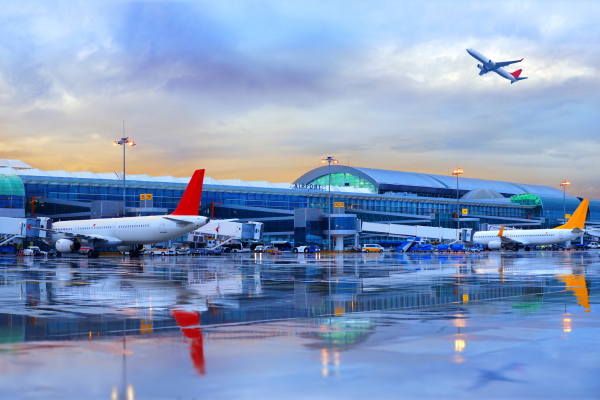
Delhi International Airport Ltd (DIAL), the operator of Indira Gandhi International Airport (IGI), has outlined a detailed plan to increase its annual passenger-handling capacity by around 20 %. The expansion aims to raise capacity from the current 10.5 crore to 12.5 crore passengers by approximately 2029-30, aligning with the steady growth in air travel demand across India. Advertisement


A major part of this plan involves the construction of Pier E at Terminal 3 (T3). Once complete, Pier E is expected to handle about 1 crore to 1.2 crore additional passengers each year. This will help balance domestic and international operations, especially as traffic continues to grow in both segments. The new pier will also include additional boarding gates, passenger lounges, and improved connectivity with the main terminal building.
At present, T3 has four piers two for domestic flights and two for international flights. DIAL stated that one of the existing domestic piers will soon be converted for international use to support growing overseas operations. This adjustment is expected to take effect during the upcoming winter schedule.
Along with Pier E, DIAL is planning further infrastructure improvements, including the addition of several new aircraft parking stands and the optimization of traffic flow at Terminal 1 (T1), which has been experiencing congestion during peak hours. The operator is also studying passenger movement patterns to streamline operations and reduce wait times across terminals.
Regarding Terminal 2 (T2), which was originally built in 1986 and currently accommodates around 1.5 crore passengers a year, DIAL confirmed that there are no immediate plans for its demolition. The terminal, recently refurbished and reopened, will continue to function for the foreseeable future. However, DIAL indicated that once overall traffic at IGI nears 10 crore passengers annually, work on a larger replacement terminal will begin.
DIAL's Chief Executive Officer mentioned that capacity expansion decisions are usually taken once an airport reaches about 80 % of its operational limit. With IGI's projected capacity set at 12.5 crore passengers, this threshold would be reached around the 10 crore mark. Considering that the airport handled slightly under 8 crore passengers in the 2024-25 financial year, the next phase of development is expected to be initiated within the next few years.
The operator also stated that a master plan is being finalized to decide whether the new Pier E will primarily handle domestic or international flights. This decision will depend on passenger traffic trends at the time of construction. The pier is expected to take about two to three years to complete once work begins.
Over the past decade, IGI Airport has consistently ranked among the busiest airports globally. In 2024, it was the ninth busiest in the world, handling over 7.7 crore passengers. The ongoing expansion is part of a broader effort to accommodate India's rapidly increasing air travel demand and to ensure that Delhi remains a key aviation hub for both domestic and international routes.

5th Jun, 2025

25th May, 2023

11th May, 2023

27th Apr, 2023
Advertisement





 Facebook
 Whatsapp