Advertisement






Singapore is expected to maintain its monetary policy as domestic growth remains solid despite a slowdown in exports caused by U.S. tariffs. Strong construction activity, fiscal support, and low interest rates have mitigated external pressures, while sectors such as retail, property, hospitality, and banking show resilience. The government recently upgraded the 2025 GDP growth forecast to 1.5%-2.5%. MAS manages policy via the S$NEER rather than interest rates, and inflation remains low. Tariffs on pharmaceuticals and global trade dynamics continue to pose challenges.
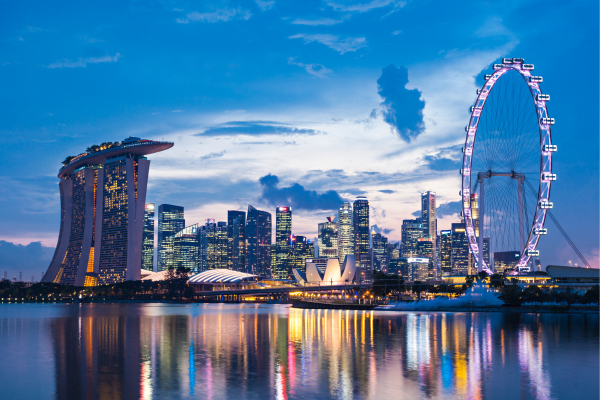
Singapore is expected to keep its monetary policy settings unchanged in its upcoming review, reflecting steady domestic growth despite a slowdown in trade linked to U.S. tariffs. Analysts note that strong domestic factors, including a construction boom, fiscal support, and falling interest rates, have cushioned the impact of slower exports. Advertisement


Recent economic data suggest that several sectors are performing well. Retail sales, hospitality, property transactions, bank lending, trading volumes, and initial public offerings have all shown resilience, helping offset the contraction in exports. Observers also highlight that global semiconductor demand, fueled by artificial intelligence-related investments, continues to support the economy.
The government had recently raised its GDP growth forecast for 2025 to a range of 1.5% to 2.5%, up from an earlier estimate of 0.0% to 2.0%, following a stronger-than-expected performance in the first half of the year. The Monetary Authority of Singapore (MAS) previously eased policy twice earlier this year due to tariff concerns but left policy unchanged after strong second-quarter growth.
Singapore manages monetary policy through the Singapore dollar nominal effective exchange rate (S$NEER), rather than interest rates. Adjustments are made using the slope, midpoint, and width of the policy band, allowing the currency to rise or fall against major trading partners. Inflation remains low, with the key consumer price index rising just 0.3% in August, the smallest annual increase since early 2021.
Singapore's exports to the U.S. face a baseline tariff of 10% despite a free trade agreement, with sector-specific tariffs, such as a 100% levy on branded pharmaceuticals, creating additional challenges. The city-state exports about S$4 billion (USD 3.1 billion) in pharmaceutical products to the U.S., most of which are affected by these higher tariffs. MAS reported in July that the effective U.S. tariff on Singapore's exports had risen to 7.8% from 6.8% in April.
Globally, central banks have generally eased policy this year. The European Central Bank kept rates steady in September after cutting them earlier, while the U.S. Federal Reserve reduced its policy rate by 25 basis points last month, responding to a softening job market. Some economists, however, see room for MAS to ease policy due to weaker-than-expected non-oil exports, lower industrial output, and declining imported inflation from global oil prices.
Source Reuters

5th Jun, 2025

25th May, 2023

11th May, 2023

27th Apr, 2023
Advertisement





 Facebook
 Whatsapp