Advertisement






India has inaugurated its first 3D concrete-printed rural house at the Central Building Research Institute (CBRI) in Roorkee, Uttarakhand, under the Pradhan Mantri Awaas Yojana-Gramin (PMAY-G). Built in under a week at an estimated cost of INR 1.8 lakh using eco-friendly cement mixes that incorporate fly ash and bagasse ash, the prototype offers a fast, affordable, and sustainable housing solution. Combining traditional knowledge with advanced 3D printing technology, the model provides durability, scalability, and essential amenities, setting a precedent for future rural housing projects.
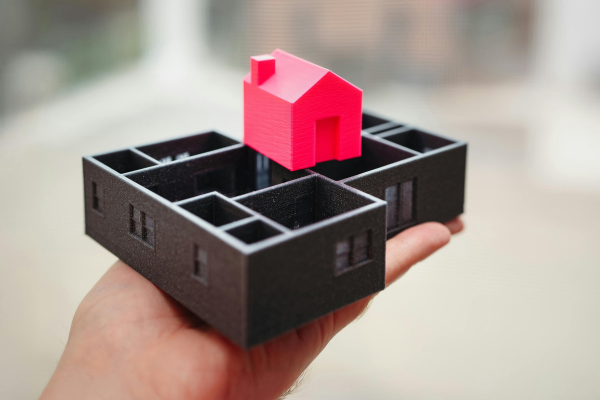
India has launched its first rural 3D-printed house at the Central Building Research Institute (CBRI) in Roorkee. Developed under the Pradhan Mantri Awaas Yojana-Gramin (PMAY-G), the house aims to provide quick, cost-effective, and environmentally friendly housing solutions in villages. Built in under a week at an estimated cost of INR 1.8 lakh, it uses sustainable cement mixes that incorporate agro-industrial waste, including fly ash and bagasse ash. The design aligns with PMAY-G norms, ensuring essential amenities are included. Advertisement


Union Minister of State for Rural Development, Chandra Sekhar Pemmasani, who inaugurated the house, highlighted its significance in bridging traditional construction knowledge with modern 3D printing technology. He mentioned that these houses are a model for affordable, adaptable, and environmentally responsible rural homes. Pemmasani also urged CBRI to pilot 100 cost-effective 3D-printed houses to demonstrate scalability across rural India and recommended integrating features like thermal comfort, climate resilience, renewable energy, and mason training.
The 3D printing technology, also called additive manufacturing, constructs homes layer by layer using robotic systems and concrete. This approach offers faster construction, reduced labor costs, and minimized material waste. India's first urban 3D-printed house, developed by Tvasta Manufacturing Solutions at IIT-Madras in 2021, was completed in five days and aimed at low-income families, but it was not part of a rural housing program. The Roorkee house, by contrast, is the first rural model under PMAY-G and is expected to last over 70 years, providing both durability and sustainability.
The CBRI team, led by Dr Ajay Chourasia and scientist Ashish Kapoor, emphasized the efficiency and affordability of 3D-printed rural homes. A standard rural house of 25 square metres can now be printed in under a week, compared to four to five months required by traditional methods. Past achievements under PMAY-G were also noted, including the sanction of 3.85 crore houses, with 2.87 crore already completed. Studies have reported a 17% increase in household incomes and a 14% reduction in hospital visits due to improved housing, with 72% of houses registered in women's names, supporting empowerment.
CBRI has a history of innovations, including over 250 disaster-resilient, region-specific housing designs, non-erodible mud plaster, simple strengthening methods, and the two-pit pour-flush toilet system, benefitting over 5 crore households under the Swachh Bharat Mission. Institute Director R Pradeep Kumar stated that today's inauguration marks the beginning of a journey to bring these advanced housing technologies to villages across India.

5th Jun, 2025

25th May, 2023

11th May, 2023

27th Apr, 2023
Advertisement





 Facebook
 Whatsapp