Advertisement






India's office leasing market has picked up pace in the first half of 2025, led by co-working operators who leased 6.5 million sq ft across seven major cities-a 48% jump from last year. This reflects growing demand for flexible, managed workspaces as companies look for cost-effective and scalable solutions. Despite this shift, traditional leasing remains significant. Overall, gross office leasing rose 13% year-on-year to 33.7 million sq ft. Experts note that flexible spaces are becoming central to corporate strategies, with strong demand from tech firms setting up Global Capability Centres. New Grade A office supply continues to attract both domestic and global occupiers.
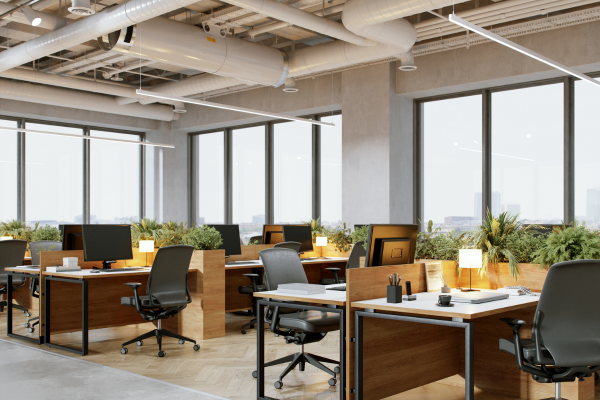
The Indian office leasing market has gained significant momentum in the first half of 2025, particularly driven by co-working space operators. Across seven major cities Delhi-NCR, Mumbai, Kolkata, Chennai, Hyderabad, Pune, and Bengaluru co-working firms have leased a total of 6.5 million sq ft of office space, marking a 48% increase compared to the same period last year when 4.4 million sq ft was leased. Advertisement


These operators typically rent large commercial spaces from developers and then sub-lease them to corporates of all sizes. The growing preference among companies for managed, flexible workspaces is playing a major role in this upward trend, as businesses seek cost-effective solutions and operational ease.
Despite this surge in flexible space demand, conventional office leasing by companies directly from developers continues to hold a sizable share in the overall market. However, the evolving landscape shows that flexible space is becoming a significant part of corporate real estate strategies.
Colliers India reported that total gross office leasing across the top seven cities touched 33.7 million sq ft in the first six months of 2025, a 13% rise from 29.9 million sq ft during the same period in the previous year.
Vimal Nadar, National Director and Head of Research at Colliers India, stated that flexible spaces are now emerging as a core component of office demand and are poised to shape the direction of commercial real estate in India through 2025 and beyond.
Supporting this view, Darshan Govindaraju, Executive Director at Vaishnavi Group, noted that a strong pipeline of Grade A office developments across urban micro-markets is attracting both domestic and global occupiers. He also pointed to the increasing establishment of Global Capability Centres (GCCs) by tech firms as a key growth driver.
Manas Mehrotra, Founder of 315Work Avenue, observed that flex spaces have become a defining trend in India's modern commercial real estate environment. He added that flexible workspaces are helping corporates boost productivity, improve collaboration, and scale operations in sync with business needs.
Echoing similar views, BHIVE Workspaces CEO Shesh Rao Paplikar highlighted that India's economic growth story continues to draw global investment in sectors such as technology, BFSI, insurance, and GCCs, with managed office spaces acting as an enabler for steady leasing growth.
Source: PTI

5th Jun, 2025

25th May, 2023

11th May, 2023

27th Apr, 2023
Advertisement





 Facebook
 Whatsapp