Advertisement






The Gujarat government has rolled out a revamped township policy to boost private participation in large-scale, self-sufficient townships. Addressing shortcomings of its 2009 policy, the new plan offers higher FSI, stamp duty waivers, and lower municipal fees to attract developers. To ease land challenges, the government may provide its own land in difficult-to-aggregate areas. A state-wide redevelopment and Transferable Development Rights (TDR) framework is also in the works, allowing developers to use TDRs across cities. Managed by digital city-level committees, the new system aims for transparent, fair valuations. The inter-city TDR model follows successful examples from Mumbai and Pune.
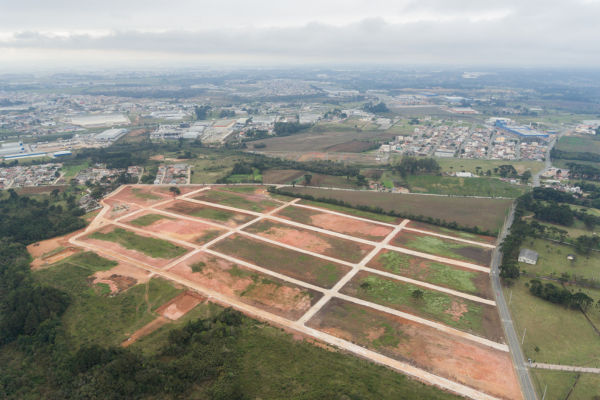
The Gujarat government has introduced a significantly revised township policy, aiming to attract more private sector participation in creating large, self-sufficient townships. This new framework directly addresses the gaps and limitations of the 2009 policy, which failed to gain traction due to issues such as lack of service coordination, land aggregation hurdles, and inadequate financial motivation for developers. Advertisement


To rectify this, the new policy package includes major fiscal and procedural incentives. Developers will be eligible for a higher FSI, exemptions from stamp duty and registration charges, and reduced municipal development fees. These benefits are intended to lower the cost burden on township builders and make projects more viable on a large scale.
One of the critical challenges in township development has been the acquisition of large contiguous land parcels, especially in rapidly urbanising zones. To address this, the Gujarat government is considering the option of directly offering government land parcels to developers, particularly in locations where private aggregation is infeasible or time-consuming.
In parallel, Gujarat is working on a state-wide redevelopment and Transferable Development Rights (TDR) framework, which will permit developers to acquire and utilise development rights across cities. This is a marked departure from the conventional intra-city TDR model and is expected to bring more flexibility and market-driven efficiency to the urban development process.
The valuation, issuance, and governance of these TDRs will be managed by dedicated city-level committees, which will use digital tools for monitoring and data tracking. The system is also being calibrated to ensure fairness and balance in TDR pricing, ensuring that rights are neither undervalued nor artificially inflated. Special provisions are being drafted for areas with heritage value, slum clusters, or government land to encourage their productive reuse.
This inter-city TDR mechanism draws inspiration from similar policies implemented in Maharashtra, where Mumbai and Pune have leveraged TDRs to facilitate urban expansion and rehabilitation without over-reliance on direct public funding.

5th Jun, 2025

25th May, 2023

11th May, 2023

27th Apr, 2023
Advertisement





 Facebook
 Whatsapp
