Advertisement






India plans to add 50 new airports over the next five years, Union Minister K Rammohan Naidu announced at IATA's annual meeting. The country now operates 162 airports, up from 74 in 2014, driven by initiatives like the UDAN scheme, which has launched 619 regional routes connecting tier-2 and tier-3 cities. The government also aims to make India a global Maintenance, Repair and Overhaul (MRO) hub, targeting USD 4 billion in MRO market value by 2031. Naidu called for global collaboration on sustainable aviation fuel (SAF) to decarbonise the sector. With India among the world's fastest-growing aviation markets, these expansion plans will strengthen domestic and international connectivity, boost industry partnerships, and promote greener air travel. The move signals a strong, future-forward vision for India's aviation sector.Read more

Meerut has become India's first city to integrate Transit-Oriented Development (TOD) zones into its 2031 Master Plan, promoting high-density, mixed-use communities around the Namo Bharat and Meerut Metro corridors. The Meerut Development Authority (MEDA) has designated 3,273 hectares for TOD, with 2,442 hectares mapped across seven TOD zones and two Special Development Areas. A 300-hectare township will be auctioned to private developers to fund the initiative. In partnership with NCRTC, the project aligns TOD zones with transit hubs to boost connectivity and reduce vehicle dependence. The Uttar Pradesh government is supporting the plan with value capture financing through FSI sales and land monetization. Inspired by global models, Meerut's TOD strategy aims to foster sustainable urban growth, improve livability, and serve as a blueprint for future Indian cities embracing integrated transit and development.Read more

Mumbai ranks 6th worldwide among 97 cities for data centre capacity under construction, per Cushman & Wakefield's 2025 Global Data Center Market Comparison report. The city is adding 335 MW, expected to expand operational capacity by 62%. U.S. cities lead the list-Virginia (1,834 MW), Atlanta, Columbus, Dallas, and Phoenix-while Mumbai tops Asia-Pacific markets. Executive Managing Director Gautam Saraf highlighted Mumbai's strategic edge: a resilient digital backbone, reliable power, and growing interest from hyperscale operators. The city currently hosts over 50% of India's total data centre capacity, supported by assets like 12 cable landing stations and the MIST submarine cable. While land and power availability remain challenges, strong demand from cloud computing and AI workloads continues to drive growth. With a robust infrastructure pipeline, Mumbai is poised to strengthen its role as India's data centre hub.Read more

The East-West Industrial Corridor Highway in Arunachal Pradesh is a transformative infrastructure project designed to enhance regional connectivity and bolster economic growth along the lower Himalayan foothills. Stretching nearly 967 km from the tri-junction of Bhutan, Assam, and Arunachal Pradesh to that of Nagaland, Assam, and Arunachal Pradesh, the two-lane highway forms part of the Special Accelerated Road Development Programme for the North East (SARDP-NE). Integrating an existing national highway section and extending through nine districts, it aims to connect strategic border areas while advancing India's 'Look East' policy. Spearheaded by the state government with support from central ministries, the project combines multiple funding and construction models to deliver a key industrial corridor with significant strategic and economic implications.Read more

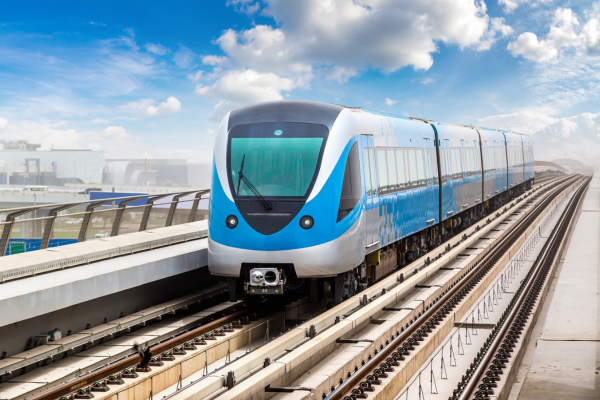
Prime Minister Shri Narendra Modi inaugurated a 5-km underground section of Kanpur Metro this week, with key works-including Kanpur Central Metro Station and 2.4 km of tunnelling-executed by Afcons Infrastructure Ltd under the KNPCC-06 package. The project included a 3.826-km underground corridor with three stations-Kanpur Central, Jhakarkatti, and Transport Nagar-constructed using shield Tunnel Boring Machines (TBMs). Despite challenges from fragile structures, Afcons ensured timely and precise delivery. Previously, Afcons built the Priority Section (IIT Kanpur to Motijheel) featuring an elevated viaduct and nine stations. The firm is a leading player in India's metro construction sector, with notable achievements like Kolkata's underwater tunnel and Nagpur's double-decker viaduct. A flagship of the Shapoorji Pallonji Group, Afcons ranks among the top 140 international contractors. Its contributions continue to shape the future of India's urban transit infrastructure.Read more
Advertisement


The Ramjal Setu Link Project is a vital infrastructure initiative in Rajasthan, aimed at building a bridge over the Chambal River to connect Kota and Sawai Madhopur. As part of the broader INR 1,500 crore Chambal River Link Project, it serves dual purposes: improving transport connectivity and enabling water transfer to drought-prone areas. Overseen by the Rajasthan Water Resources Department and aligned with the National Water Development Agency's river interlinking programme, the bridge offers an all-weather route, reduces monsoon disruptions, and enhances access to markets, healthcare, and education. It also supports equitable water distribution, rural development, and long-term regional growth in Rajasthan.Read more

India's data centre (DC) sector has attracted nearly USD 15 billion in investments since 2020 and is expected to draw an additional USD 20-25 billion over the next six years, according to Colliers India. As of April 2025, total DC capacity across Bengaluru, Chennai, Delhi NCR, Hyderabad, Kolkata, Mumbai, and Pune reached 1,263 MW, projected to surpass 4,500 MW by 2030. The physical DC footprint is also set to grow from 15.9 million sq. ft. to 55 million sq. ft. This surge is driven by rising demand for digital services, cloud computing, AI technologies, and regulatory data localisation. Colliers highlights India's strengths: ample land, reliable power, and skilled talent, positioning the country as a top APAC data centre destination. The market is evolving with increasing interest in edge data centres to support real-time applications and low-latency needs, further fuelling sectoral growth.Read more

The Multi-Modal Logistics Park (MMLP) in Varanasi, Uttar Pradesh, represents a pivotal development under India's National Industrial Corridor Development Programme, aiming to integrate road, rail, air, and inland waterways into a unified logistics network. Positioned strategically near key transport corridors like the Eastern Dedicated Freight Corridor and National Waterway-1, this expansive 575-acre project promises to boost trade in agriculture, textiles, handicrafts, and pharmaceuticals by cutting logistics costs and improving connectivity to major ports. With an investment of around INR 1,750 crore (USD 210 million) and strong support from central and state governments, the MMLP is poised to generate over 10,000 jobs and drive economic growth in a region facing high unemployment.Read more
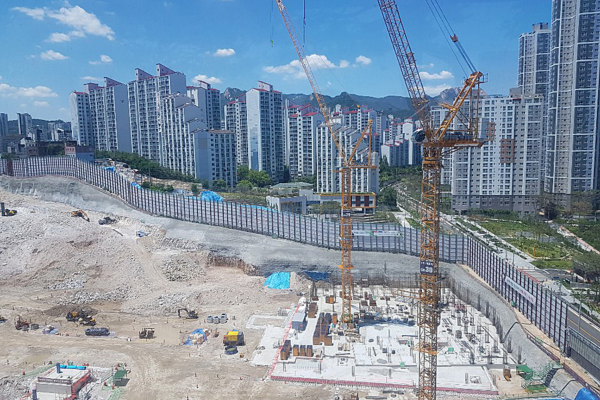
The Andhra Pradesh government will begin construction of the Visakhapatnam Metro Rail Project in October 2025, with a double-decker model proposed to meet rising transport demands. A semi-ring road is also planned to improve connectivity, especially to the upcoming Bhogapuram Airport, with 15 of 22 approach roads already approved. In housing, INR 7,000 crore has been allocated to complete pending TIDCO homes, prioritizing women beneficiaries by Dasara. Under the AMRUT scheme, INR 834 crore is being invested in water supply projects. At a VMRDA review, key concerns like sanitation, water shortages, and infrastructure gaps were addressed, reflecting a holistic push for urban development.Read more

Residential project completions across India's top nine cities rose by 33% in FY24, reaching 4,06,889 units, according to PropEquity. The combined total for the past three years has now crossed 10 lakh units. Kolkata led with an 88% rise, followed by Hyderabad (61%) and Chennai (49%). Pune (81,563 units) and Thane (77,017 units) topped overall deliveries. Western India (Mumbai, Thane, Pune, Navi Mumbai) accounted for 55% of total completions, while Southern markets (Bengaluru, Chennai, Hyderabad) contributed 30%. Delhi-NCR was the only region to see a decline, with an 8% drop. Factors driving this growth include revived projects through the SWAMIH Fund, stricter RERA enforcement, and strong market sentiment. The momentum is expected to continue with SWAMIH 2.0 and increasing dominance of branded developers.Read more

Advertisement





