Advertisement






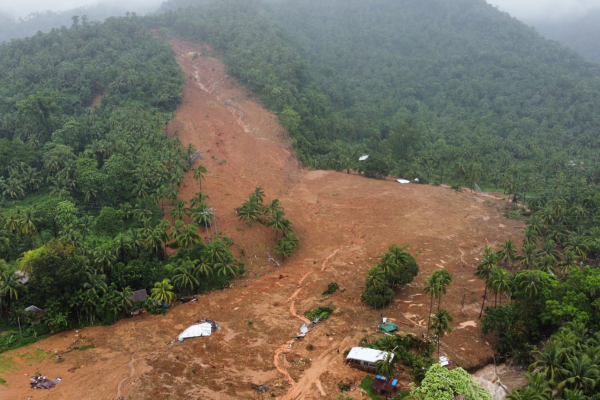
Authorities in Pune have started relocating 34 tribal families from Pasarwadi, a landslide-prone village near Malin, after soil cracks and a recent rockfall blocked their only road. The tehsil office has secured two acres of safer land, guided by Geological Survey recommendations. Financial aid for new homes is being arranged through state and central housing schemes, with additional CSR support. So far, 18 families have homes under the Gharkul scheme; remaining construction will start post-monsoon. Residents welcomed the move but raised concerns about water shortages and lack of basic facilities. The relocation echoes past efforts after Malin's deadly 2014 landslide.Read more
Indore has taken a major step in digital governance by becoming the first Indian city to launch a QR-code based digital address system. Starting with Ward 82 in Sudama Nagar, every house is now being equipped with a GPS-linked QR code plate that opens a unique digital profile via the national DigiPIN platform. Residents can now access services such as tax payments, utility bills, civic records, and emergency assistance through their phones. This pilot is free of cost and aims to gradually cover around 700,000 properties. The initiative also promises future infrastructure upgrades in the area.Read more

The Noida Authority has denied Max Estates' request for a INR 67 crore waiver in transfer fees for the stalled Delhi One project in Sector 16B. Max Estates took over the project through a corporate insolvency process approved by the NCLT, offering to pay INR 613 crore in dues over three years to revive it. The Authority accepted the payment plan but ruled that the full transfer charges under its Unified Policy must still be paid, rejecting arguments that the insolvency process justified a waiver. Max Estates has already paid INR 135 crore, with three years granted to complete the project and clear dues.Read more

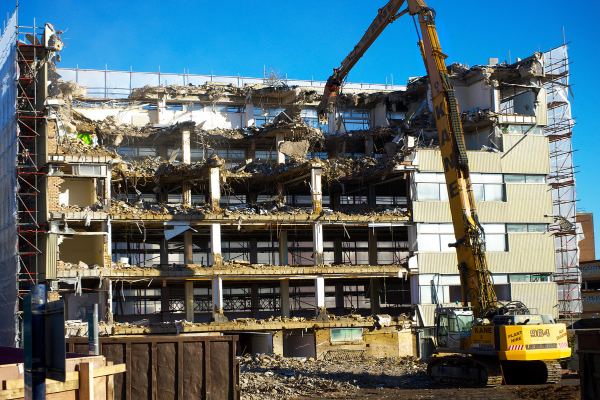
Following fresh orders from the National Green Tribunal, authorities in Gurgaon have demolished 15 illegal farmhouses built on protected forest land in the Aravali region, covering about 30 acres across eco-sensitive areas like Gwalpahari, Abheypur, and Manesar. The drive, supervised by a duty magistrate, followed show-cause notices and hearings for violators. Meanwhile, Haryana officials have identified over 6,700 illegal constructions in Faridabad's protected zones, with phased demolitions underway. While activists welcome the action, they say enforcement is still reactive, highlighting the need for stricter, preventive measures to protect the fragile Aravali ecosystem from further encroachment and ecological damage.Read more

The Punjab Cabinet has revamped the state's industrial land conversion policy, making it easier for owners of plots between 1,000 and 4,000 sq yd to shift to commercial uses like healthcare, hospitality, offices, education, and rental housing, subject to local zoning and road width rules. A flat 12.5% conversion fee simplifies what was once a complex process. Larger industrial plots can now be redeveloped into integrated parks with industrial, residential, and commercial spaces. Leasehold plots can also be converted to freehold, potentially generating INR 1,000 crore in fees. The government is also rolling out digital tools and new rules to speed up approvals and reduce red tape.Read more

Advertisement


The Maharashtra government is set to introduce vertical property cards to address the challenges of tracking flat ownership in cities like Mumbai, Pune, and Nagpur, where vertical development has boomed. Currently, property records cover only land parcels, creating legal headaches during resale, inheritance, or mortgage processes. The new cards will act as official Records of Rights for each flat, listing owner details, carpet area, and mortgage data. Officials say this will make transactions smoother and reduce disputes. The reform, aligned with digitisation drives like Svamitva Yojna, could make Maharashtra one of India's first states to modernise records for high-rise housing.Read more

Authorities in Margao have launched structural assessments on 21 buildings marked unsafe, following a series of collapses and long-standing neglect. A joint team from Goa Engineering College, PWD, and the Municipal Council recently inspected four structures, including commercial properties, revealing immediate risks to public safety. Despite previous warnings and demolition orders issued as far back as 2018, enforcement has been largely absent. Now, with pressure mounting, the administration is working to fast-track technical evaluations and take action, aiming to prevent further mishaps caused by neglected and deteriorating buildings.Read more

The municipal government has kicked off an ambitious urban renewal effort by relocating nine slum clusters from Bhopal's city centre to sites within a 3-5 km radius. Around 14,000 permanent homes will be built via a Public-Private Partnership on government land. This move part of the wider Jhuggi Mukt Bhopal Yojana aims to free up 125 acres in the heart of the city and revamp living standards across 388 slums impacting 150,000 households. It follows previous survey efforts and on-site redevelopment plans near high-security zones that were abandoned to avoid security issues.Read more

In a major step toward resolving civic infrastructure deficiencies in Pune's merged villages, Maharashtra's Urban Development Department has approved INR 5 crore for each of the 23 areas recently added to Pune Municipal Corporation (PMC) and the Uruli-Phursungi Municipal Council. The funds are directed at fixing long-standing issues such as untreated waste, odour from garbage depots, unpaved roads and erratic water supply. Plans include scientific waste processing, drawing treated water from the Jambhulwadi reservoir, and reviving local staffing. The state has also introduced a property tax amnesty to ease the financial burden on residents.Read more

Tiruvallur district authorities have appealed to the NGT for an extension in their ongoing eviction drive targeting 194 illegal structures built along Vilinjiyambakkam lake in Avadi, Chennai. Of these, 79 structures comprising 49 homes and 30 shops have already been removed. The remaining families are in the process of being relocated through government housing schemes or alternate land allocations. The lake, once spread over 100 acres, has shrunk drastically due to encroachments and untreated sewage. Although the NGT had passed eviction orders earlier, procedural delays and local resistance stalled progress. Officials now seek more time to complete the operation without displacing residents abruptly.Read more
Advertisement