Advertisement






The Gulf conflict has disrupted global supply chains, pushed...
REITs have changed the way commercial real estate is owned a...
What really powers the cloud? Behind every Google search, A...
What really powers the cloud? Behind every Google search, A...
Luxury real estate is one of the most talked-about segments ...
Electricity is an essential part of everyday apartment living, but many flat owners pay attention to their electrical systems only when a fault occurs. Understanding the sanctioned load, electricity meter, circuit breakers, earthing, wiring and backup arrangements can help homeowners identify potential problems, manage consumption and avoid unnecessary expenses. These basics are particularly important in high-rise buildings, where electrical infrastructure supports individual homes as well as lifts, water pumps, lighting and other shared facilities. Knowing what to check can make property ownership safer and more manageable.
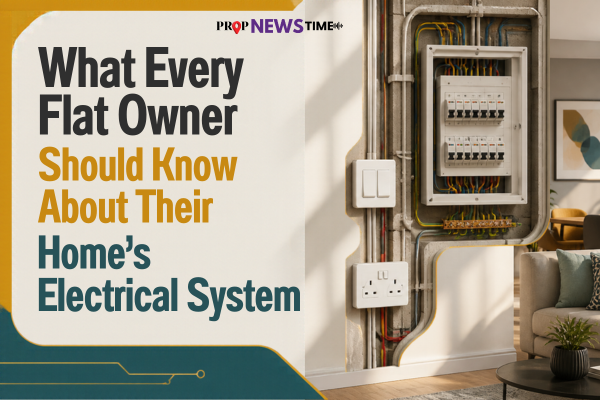
When buying or occupying a flat, homeowners generally focus on the layout, construction quality, amenities and maintenance charges. Electrical infrastructure often receives less attention, despite being central to the safety and functioning of a home. From operating kitchen appliances and air conditioners to powering lighting, lifts and water pumps, a residential building depends on a carefully designed electrical system.
Understanding how electricity is supplied, distributed and protected can help flat owners recognise warning signs, avoid overloading circuits and ask the right questions during property inspections. It can also help them understand their electricity bills and distinguish between individual consumption and common-area expenses.
Here are six electricity basics every flat owner should understand.
1. Know your flat's sanctioned electrical load
The sanctioned load is the maximum electrical load approved for a consumer's connection by the electricity distribution company. It determines how much electrical demand a flat is permitted to draw under its approved connection.
This is important because modern homes often operate several high-consumption appliances, including air conditioners, geysers, induction cooktops, washing machines and electric vehicle charging equipment. If the connected load exceeds the sanctioned limit, the homeowner may experience frequent tripping or face additional charges and requirements for a load enhancement, depending on the applicable electricity supply regulations.
Before purchasing a flat, buyers should ask the developer or existing owner about the sanctioned load and check whether it is adequate for the intended use. Homeowners planning to add major appliances should consult a qualified electrician and check with the local distribution company about whether an increase in sanctioned load is necessary.
2. Understand how your electricity meter works
An electricity meter records the energy consumed by a household, generally measured in kilowatt-hours (kWh), commonly referred to as units. The meter reading forms the basis of the electricity bill.
Flat owners should know where their meter is located, how to read its displayed consumption and whether it is a conventional or smart meter. They should also understand the billing cycle and compare current readings with previous bills to identify unusual changes in consumption.
In multi-storey residential buildings, individual flat meters are generally separate from meters used for common facilities. However, the way common-area electricity expenses are allocated can vary between housing societies and buildings.
Homeowners should check whether the electricity bill is based on an actual meter reading or an estimated reading. Unusually high consumption should be investigated rather than automatically attributed to increased appliance usage.
3. Know the difference between an MCB and an RCCB
Circuit protection devices play an important role in preventing electrical accidents. Two commonly used devices in residential electrical panels are miniature circuit breakers (MCBs) and residual current circuit breakers (RCCBs).
An MCB protects a circuit against overcurrent conditions, including overloads and short circuits. It automatically disconnects the supply when the current exceeds the device's rated capacity. An RCCB, on the other hand, detects an imbalance between outgoing and returning current, which can indicate leakage and a risk of electric shock.
These devices serve different purposes and are not interchangeable. An RCCB does not generally provide overload or short-circuit protection on its own, so appropriate circuit protection must be provided alongside it. Homeowners should ask whether their distribution board has suitable protection and have it inspected by a qualified electrician. They should never bypass a breaker that trips repeatedly.
4. Check whether the flat has proper earthing
Earthing provides a protective path for fault current, helping reduce the risk of electric shock when an electrical fault causes exposed metal parts of equipment to become live.
A properly designed earthing system is particularly important for appliances such as refrigerators, washing machines, water heaters and air conditioners. If a fault occurs, the earthing arrangement helps protective devices disconnect the supply.
Flat owners should ask whether the electrical installation has been properly earthed and whether the system is inspected periodically. They should also ensure that sockets intended for earthed appliances have the appropriate connections.
Warning signs such as tingling sensations when touching appliances, repeated electrical shocks or unexplained tripping should not be ignored. These may indicate an electrical fault and require immediate inspection by a qualified professional. Earthing should never be treated as an optional feature or replaced with makeshift arrangements.
5. Understand your home's wiring and electrical load distribution
A flat's electrical wiring carries power from the distribution board to individual rooms, sockets, lighting points and appliances. Its capacity and condition influence how safely electricity can be used throughout the home.
Different appliances have different power requirements. High-consumption equipment such as air conditioners, geysers and ovens may require dedicated circuits designed to handle their loads. Connecting several heavy appliances to an unsuitable circuit can cause overheating, repeated tripping and potential fire hazards.
Owners of older flats should pay attention to the condition and age of the wiring, especially if they are planning renovations or installing additional appliances. During a property inspection, buyers can ask for details of the electrical installation and whether it complies with applicable safety requirements.
Loose sockets, damaged insulation, burning smells, discoloured switchboards and unusually warm plugs are warning signs that need professional attention. Electrical repairs and alterations should always be carried out by qualified personnel.
6. Know how power backup and common-area electricity are managed
In apartment complexes, electricity arrangements extend beyond individual flats. Lifts, corridor lighting, security systems, water pumps, fire-safety equipment and other shared facilities may depend on backup power during outages.
Homeowners should understand whether the building has a diesel generator, battery-based backup system or another arrangement. They should ask which facilities receive backup power, whether individual flats are included and what capacity is available. Some developments provide backup only for essential services, while others offer limited or more extensive apartment-level support.
It is equally important to understand how common-area electricity expenses are calculated and included in maintenance charges. Residents should know whether backup power consumption is billed separately and how generator maintenance costs are shared.
For buyers considering a high-rise property, reliable backup arrangements are particularly relevant because lifts, water supply systems and emergency infrastructure may depend on uninterrupted power.
Understanding a flat's electrical infrastructure is an important part of responsible homeownership. Knowing the sanctioned load, monitoring meter readings, recognising circuit protection devices and checking earthing and wiring can help residents identify potential safety concerns before they become serious problems. Buyers should also examine the building's backup arrangements and understand how common-area electricity expenses are managed. While homeowners can monitor consumption and recognise warning signs, electrical inspections, repairs and modifications should be entrusted to qualified professionals. A well-maintained electrical system supports both everyday convenience and the long-term safety of a residential property.
Sources- Bureau of Indian Standards; Central Electricity Authority; local electricity distribution companies; applicable state electricity supply codes.

17th Nov, 2026

17th Nov, 2026


17th Nov, 2026




17th Nov, 2026


17th Nov, 2026
Advertisement








 Facebook
 Whatsapp

