Advertisement






The Gulf conflict has disrupted global supply chains, pushed...
REITs have changed the way commercial real estate is owned a...
What really powers the cloud? Behind every Google search, A...
What really powers the cloud? Behind every Google search, A...
Luxury real estate is one of the most talked-about segments ...
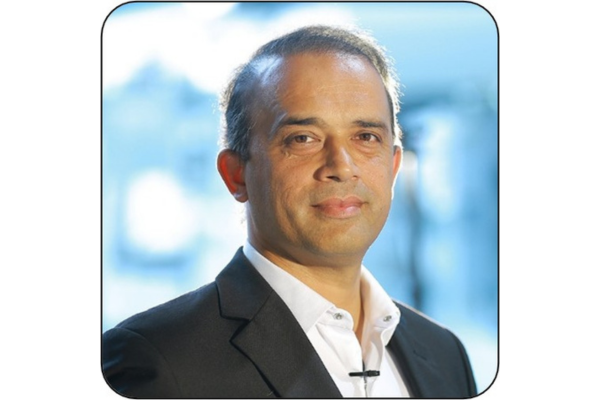
India's commercial real estate market is moving towards a workplace model that prioritises employee experience, space utilisation and operational efficiency alongside traditional measures such as leasing volumes and rental growth. With hybrid work gaining acceptance and businesses reassessing their office requirements, developers and occupiers are placing greater emphasis on workplace design, accessibility, technology and employee well-being. The article by Prabhakar C, Director at Gopalan Enterprises, examines how changing work patterns are influencing office design and why the next phase of commercial real estate development will focus on creating more value from existing space rather than simply increasing office area.
The office is no longer a place people go because they have to. Increasingly, it is becoming a place they choose to be because it enables better focus, meaningful collaboration, connection with colleagues, and a more productive and fulfilling workday. As the nature of work continues to evolve, employees are also becoming more conscious of the environments they spend their time in, while businesses are looking more closely at how their workplaces support productivity, culture, and performance.
For years, the conversation has revolved around absorption numbers, leasing volumes, vacancy rates, and rental growth. Those metrics still matter. But they no longer tell the full story. As 2026 unfolds, the most important question about an office is shifting from “How much space do we need?” to “What do we need this space to do?”
India’s office market is still growing - strongly. According to CBRE 2026, the country recorded its best-ever six-month leasing period, with around 45.5 million sq. ft absorbed, up 10% year-on-year. GCCs alone accounted for 43% of all leasing.
But strong demand does not mean businesses are returning to an old definition of the office. With 53% of Indian organisations having formally adopted hybrid models and 80% of employees preferring some form of hybrid arrangement, the office now has to earn its relevance. It must become a deliberate choice rather than a default destination.
This is where the real shift is happening: the next cycle will be defined by experience and efficiency, not just square footage. Here is what that means in practice:
1. Design for how people actually work
The concept of an office has drastically changed today. Earlier an office was a space where one was assigned a desk. However now it represents a space for team collaboration, a space for solving problems and creating an effective organization culture through learning and communication.
In India, most of the organizations are trying to find the balance between hybrid work and the return to physical workplaces. Metro accessibility, travel time, the availability of cafes and restaurants, wellness facilities, and flexible office spaces are becoming key factors in choosing and office.
2. Make efficiency a core design principle
A better workplace is not necessarily a larger workplace. It is a workplace that creates more value from the space it occupies. Efficiency means:
Better utilisation of space - from desk density to meeting room ratios to the design of shared areas.
Flexible configurations - spaces that can scale up or down as teams and projects change.
Technology-enabled operations - sensor-based occupancy tracking, app-based room booking, energy management systems.
The businesses that win will be those that extract more productivity, collaboration, and innovation from every square foot - not those that simply acquire more square feet.
3. Treat the employee as part of the real estate equation
For corporate real estate leaders, the equation has changed. It is no longer about lease cost, location, and built-up area. It is also about whether the workplace helps the business compete for talent, foster culture, and enable high-performance teams.
According to ACCAi research it shows 69% of Indian professionals believe greater office presence helps career progression. These findings highlight changing expectations around the workplace and what employees value from their work environment, including opportunities for collaboration, visibility, connection, and professional growth.
When a workplace offers convenience, accessibility, safety, quality amenities, and a sense of community, it reduces friction in people’s daily lives. That matters to employees. And it matters to the businesses that depend on them.
4. Developers must think beyond the building
In today’s times, developers have shifted their attention from merely creating a structure to creating a functional commercial ecosystem for businesses as well as people. This means creating buildings that are adaptable to evolving needs, accessible through transport and digital infrastructure, experience-driven through thoughtfully designed communal areas, F&B, and wellness facilities, and efficient in their use of space, energy, and resources.
This is a fundamental shift in what commercial real estate should provide. The question is no longer about how much space can be created, but how it can benefit the companies and people occupying it. Work environments which combine elements of productivity, teamwork, health, and efficiency in their design are likely to determine the future, making every inch of the space count for something.
India’s next commercial real estate cycle will still be measured in square feet, but its real value will increasingly be defined by what that space makes possible - better outcomes for businesses, their employees, and the cities they are part of.
Disclaimer:
The views, opinions, and information expressed in this article are solely those of the author and do not necessarily reflect the views of Prop News Time. The content has not been independently verified or endorsed by Prop News Time. Readers are advised to exercise their own discretion and seek professional advice if required.

17th Nov, 2026

17th Nov, 2026


17th Nov, 2026




17th Nov, 2026


17th Nov, 2026
Advertisement








 Facebook
 Whatsapp

