Advertisement






The Gulf conflict has disrupted global supply chains, pushed...
REITs have changed the way commercial real estate is owned a...
What really powers the cloud? Behind every Google search, A...
What really powers the cloud? Behind every Google search, A...
Luxury real estate is one of the most talked-about segments ...
Jaipur and Kolkata are home to historic markets shaped by regional craftsmanship, traditional trading communities and the evolution of urban commerce. Jaipur's bazaars are associated with jewellery, gemstones, lac bangles, leather footwear, textiles and stone carving, reflecting the city's planned market streets and artisan traditions. Kolkata's markets combine colonial-era shopping architecture with long-established wholesale and retail trading districts. From Jaipur's Johari Bazaar and Tripolia Bazaar to Kolkata's New Market, Burrabazar and College Street, these commercial areas continue to be associated with specialised products and distinctive shopping experiences. Their histories also reflect the relationship between local industries, cultural practices and urban development.
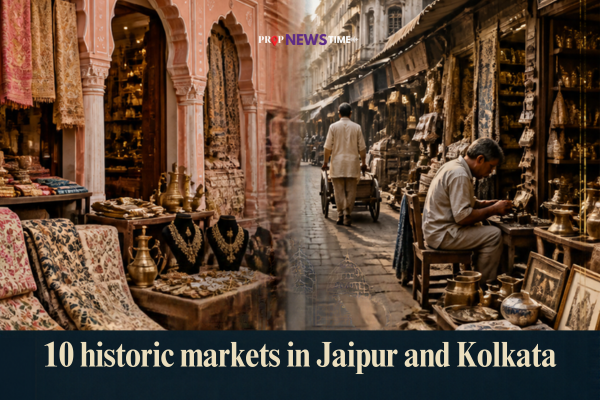
Historic markets are an important part of the commercial and cultural identity of Indian cities. In Jaipur, the traditional bazaar network developed alongside the city's planned urban layout, with individual markets becoming associated with particular crafts and merchandise. Kolkata's commercial landscape evolved through a combination of colonial-era shopping complexes, wholesale trading districts and markets serving expanding residential neighbourhoods. The two cities offer different examples of how specialised trades, artisan communities and changing consumer demand have shaped urban marketplaces. Ten markets across Jaipur and Kolkata illustrate this diversity, from traditional jewellery and textile trading to book retail, stone carving and wholesale commerce.
Historic bazaars of Jaipur
1. Johari Bazaar: Traditional jewellery and gemstones
Johari Bazaar is one of Jaipur's prominent traditional jewellery markets, known for kundan and meenakari work, cut gemstones, gold and silver jewellery. Associated with the city's royal jewellery trade, the market also contains specialised lanes such as Gopalji Ka Rasta, where gemstone-cutting and polishing traditions continue through artisan workshops. Haldiya Rasta is associated with wholesale silver trading, while bridal lehengas and other traditional wedding products contribute to the market's commercial mix. The bazaar forms part of Jaipur's historic Walled City, whose planned streets and uniform arcades reflect the city's original urban design.
2. Bapu Bazaar: Mojaris, textiles and traditional souvenirs
Bapu Bazaar is known for Jaipuri mojaris, Bandhani textiles, block-printed cotton fabrics and traditional souvenirs. Located along the southern side of the old city between Sanganeri Gate and New Gate, the market serves shoppers looking for locally associated footwear, clothing and home textiles. Its shops sell Sanganeri and Bagru hand-block-printed bedsheets and dress materials, linking the market to Rajasthan's textile and leather-craft traditions. The concentration of these products makes Bapu Bazaar a retail destination for visitors and residents seeking traditional merchandise in one area.
3. Tripolia Bazaar: Lac bangles and metalware
Tripolia Bazaar is associated with lac bangles, brassware, iron utensils and traditional carpets. Its name comes from Tripolia Gate, the three-arched entrance leading towards the City Palace complex. A distinctive part of the market is Maniharon Ka Rasta, a lane known for Muslim lac artisans, or Manihars, who craft traditional bangles by heating and shaping lac over open flames. This concentration of specialised artisans gives the area a strong association with traditional bangle-making, alongside the wider bazaar's trade in household goods and craft products.
4. Chandpole Bazaar: Marble carving and stone crafts
Chandpole Bazaar, situated near the western entrance to Jaipur's old city, is known for marble sculptures, stone carvings, wooden crafts and traditional turbans. The market's craft identity is particularly visible in Khazanewalon Ka Rasta, a lane associated with hereditary marble carvers who create religious figures and architectural stonework. These activities connect the bazaar with the skilled craftsmanship used in decorative objects and traditional architectural elements. Its location near Chandpole Gate also links the market to Jaipur's historic street network and the commercial activity surrounding the old city's western entrance.
5. Kishanpole Bazaar: Wooden furniture and traditional fabrics
Kishanpole Bazaar is associated with wooden furniture, decorative home products, Leheriya tie-dye fabrics and other traditional textiles. Running parallel to Chaura Rasta, the market has historically been linked to carpenters, woodturners and textile dyers. Its merchandise includes hand-carved teak and sheesham furniture, alongside Leheriya fabrics produced for seasonal and festive use, particularly around monsoon celebrations. The combination of furniture-making and textile trading distinguishes Kishanpole Bazaar from Jaipur's jewellery-focused and stone-carving markets, while retaining its place within the city's traditional commercial network.
Historic markets of Kolkata
6. New Market: Colonial architecture and diverse retail trades
New Market, also known as Sir Stuart Hogg Market, opened in 1874 as a shopping complex intended primarily for Kolkata's European residents. Named after municipal commissioner Sir Stuart Hogg, it is associated with Victorian Gothic architecture and a distinctive red-brick structure with a clock tower. Its stalls cover a broad range of merchandise, including handloom sarees, silver jewellery, leather goods, garments and confectionery. The market is also known for Nahoum & Sons, a historic Jewish bakery. Its trade-based arrangement of shops, including jewellers, florists, cobblers and tailors, reflects the market's longstanding role as a multi-category retail destination.
7. Gariahat Market: Bengali handlooms and household goods
Gariahat Market developed as a major commercial centre in South Kolkata during the early to mid-20th century, serving the city's expanding residential neighbourhoods. The market is particularly associated with Bengali handloom sarees, including Tant, Jamdani, Baluchari and Kantha-stitched varieties, as well as gold jewellery and household products. Its commercial corridor combines multi-storey textile shops with street-side stalls selling traditional cookware and handicrafts. This mix of established retail businesses and informal vendors gives Gariahat a broad shopping role, particularly for consumers seeking regional textiles and everyday household merchandise.
8. Burrabazar: Wholesale textiles, spices and trading networks
Burrabazar, also written as Bara Bazar, developed from an 18th-century yarn and cloth market into one of eastern India's major commercial trading districts. Its business activity spans textiles, bridal clothing, spices, grains, traditional bangles and dry fruits, with specialised trading areas serving different product categories. The wider market is organised around concentrated commercial lanes and trading clusters, including Posta, associated with spices and grains, and areas such as Satyanarayan Park Market, known for bridal wear. Burrabazar's dense network of merchants and specialised wholesale businesses distinguishes it from the predominantly retail-oriented markets elsewhere in Kolkata.
9. College Street: Academic books and second-hand literature
College Street, widely known as Boi Para or the book neighbourhood, is associated with academic publishing, textbooks, rare books, second-hand literature and printing services. Its development is linked to the growth of educational institutions, including Hindu College, established in 1817, and the University of Calcutta, established in 1857. The concentration of bookshops and street-side bookstalls serves students, academics, collectors and general readers. The nearby Indian Coffee House, associated with intellectual and artistic gatherings since 1942, adds to the area's cultural identity. College Street's commercial character is therefore closely connected to Kolkata's educational and literary traditions.
10. Hatibagan Market: Sarees, festive shopping and daily retail
Hatibagan Market is one of North Kolkata's established shopping districts, known for silk sarees, affordable fashion, traditional handicrafts and household goods. The area has a long retail history and is associated with traditional cinema halls and the nearby Star Theatre, established in 1883. Its shops and stalls attract shoppers looking for silk, Tussar and cotton sarees, particularly during the run-up to Durga Puja. Alongside festive clothing, the market serves everyday retail needs, combining traditional merchandise with accessible fashion and household products.
Jaipur's and Kolkata's historic markets demonstrate how specialised trading areas can become integral to a city's identity. Jaipur's bazaars retain associations with jewellery-making, textiles, lac bangles, furniture and stone carving within a planned historic street network. Kolkata's markets reflect a different mix of colonial-era retail architecture, wholesale trading clusters, educational commerce and neighbourhood shopping. Although their products and layouts vary, these ten markets connect commercial activity with craft traditions, merchant communities and local cultural practices. Their continued importance lies in both the goods they sell and the role they play in preserving the distinctive commercial character of their cities.
Sources: UNESCO, KMC, Intach,

17th Nov, 2026

17th Nov, 2026


17th Nov, 2026




17th Nov, 2026


17th Nov, 2026
Advertisement








 Facebook
 Whatsapp

