Advertisement






The Gulf conflict has disrupted global supply chains, pushed...
REITs have changed the way commercial real estate is owned a...
What really powers the cloud? Behind every Google search, A...
What really powers the cloud? Behind every Google search, A...
Luxury real estate is one of the most talked-about segments ...
The Delhi government has notified the Delhi Slum and Jhuggi Jhopri Relocation and Rehabilitation Policy, 2026, aimed at providing permanent housing to nearly four to five lakh eligible families, covering around 20 lakh people. Announced by Chief Minister Smt. Rekha Gupta on November 5, the policy covers eligible slum clusters established before January 1, 2025, and supports the government’s ‘Jahan Jhuggi, Wahan Makan’ scheme. It provides for alternative accommodation before the removal of eligible residents, with housing units allotted through a computerised lottery. Rehabilitation is prioritised within a three-kilometre radius of existing settlements.
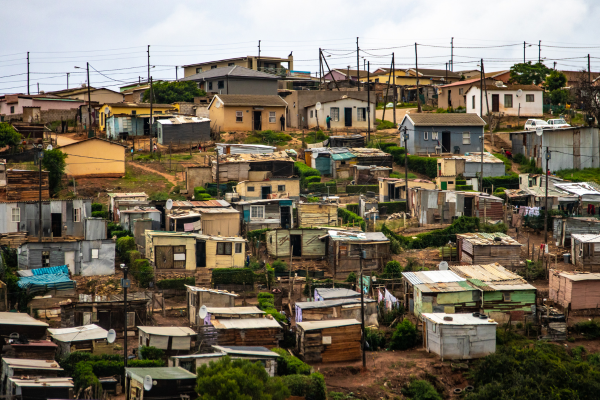
The Delhi government has notified the Delhi Slum and Jhuggi Jhopri Relocation and Rehabilitation Policy, 2026, with the objective of providing permanent housing to nearly four to five lakh eligible families, covering around 20 lakh people across the national capital. Chief Minister Smt. Rekha Gupta announced the policy on November 5, stating that it would strengthen the government’s ‘Jahan Jhuggi, Wahan Makan’ initiative. The policy covers eligible slum clusters established before January 1, 2025, extending the rehabilitation framework to families that may have been excluded under earlier schemes. It also addresses cases involving multiple families living on separate floors of the same dwelling, allowing their eligibility to be considered separately subject to the prescribed conditions.
A key provision states that eligible families will not be removed from their existing settlements without arrangements for alternative accommodation. The government has also provided for housing units to be allotted jointly in the names of married couples. Allotments will be conducted through a computerised lottery, with the aim of ensuring transparency in the selection process. The rehabilitation framework prioritises providing alternative housing at the existing settlement site or within a three-kilometre radius. This approach is intended to minimise disruption to residents’ daily lives and help families remain connected to their workplaces, schools and other essential facilities. The proposed accommodation will comprise one-bedroom, hall and kitchen units.
The residential complexes are also expected to include supporting community infrastructure such as schools, Anganwadi centres, healthcare facilities and playgrounds. Families with persons with disabilities will receive priority for ground-floor housing units, subject to the applicable provisions. The policy also addresses the arrangements required during the redevelopment process. Developers will be responsible for providing temporary housing or rented accommodation to eligible families while redevelopment work is underway. A grievance redressal mechanism will also be established to address concerns arising during relocation and rehabilitation.
Smt. Gupta said the government's approach was not limited to removing slum settlements but focused on providing permanent homes and enabling residents to live with dignity. She noted that economically weaker families had contributed to the growth of the capital and were entitled to secure housing. The policy establishes a framework for rehabilitation and relocation, although the identification of eligible beneficiaries, allotment process and implementation of individual projects will determine how the housing programme progresses across Delhi.

17th Nov, 2026

17th Nov, 2026

17th Nov, 2026


16th Nov, 2026


16th Nov, 2026

16th Nov, 2026
16th Nov, 2026
Advertisement








 Facebook
 Whatsapp

