Advertisement






The Gulf conflict has disrupted global supply chains, pushed...
REITs have changed the way commercial real estate is owned a...
What really powers the cloud? Behind every Google search, A...
What really powers the cloud? Behind every Google search, A...
Luxury real estate is one of the most talked-about segments ...
Delhi witnessed widespread traffic congestion on November 4 as the rush for Diwali shopping coincided with pollution-control restrictions under the Graded Response Action Plan (GRAP). Major markets, including Sadar Bazar, Karol Bagh, Chandni Chowk and Lajpat Nagar, reported heavy traffic, while bottlenecks were also recorded across central, north and south Delhi. Illegal parking, road encroachments and inadequate traffic personnel added to commuters' difficulties. Restrictions on non-BS-VI vehicles at the Ghazipur border further affected movement, with residents seeking stronger traffic management and enforcement.
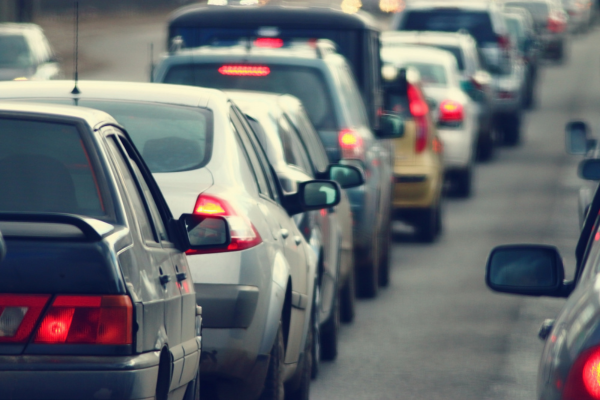
Delhi's roads experienced significant congestion on November 4 as shoppers headed to markets for last-minute Diwali purchases, adding pressure to an already strained traffic network. Long queues of vehicles and slow-moving traffic were reported across several commercial districts and arterial roads. The festive rush coincided with restrictions under the Graded Response Action Plan (GRAP), while illegal parking and encroachments further reduced available road space. The disruption affected commuters travelling through central, north, south and east Delhi, with several motorists reporting substantial delays during peak hours.
Major shopping destinations, including Sadar Bazar, Karol Bagh, Sarojini Nagar, South Extension, Lajpat Nagar, Kamla Nagar, Chandni Chowk and Rajouri Garden, witnessed heavy traffic. At Sadar Bazar, the stretch towards Qutub Road Chowk was particularly congested, with vehicles reportedly parked along footpaths and leaving limited space for pedestrians. Similar complaints emerged from Ajmal Khan Road in Karol Bagh, where indiscriminate parking was reported to be a recurring problem. Congestion was also recorded around Kashmere Gate, Hauz Khas and Defence Colony, as increased pedestrian and vehicular movement affected roads adjoining commercial areas.
Several bottlenecks were reported beyond the main shopping districts. In central and north Delhi, traffic remained heavily affected at Inderlok, where vehicles reportedly stayed almost stationary at a signal for nearly 30 minutes. Motorists also faced delays on Teen Murti Marg, Kushak Road and the stretch between 11 Murti and Dhaula Kuan. The road from Tal Katora Road towards Shankar Road experienced congestion, while the area around the Blind School faced additional pressure due to a Diwali mela. At Modi Mill near Kalkaji, commuters reported more than 200 cars remaining stuck for over 30 minutes. Similar traffic problems were flagged in Dwarka and East of Kailash.
Illegal and unauthorised parking emerged as a recurring concern, with commuters alleging that stationary vehicles, encroachments and inadequate enforcement were contributing to traffic bottlenecks. Complaints were reported at Prerna Chowk near Keshav Puram, outside Keshav Puram Metro station and at Azadpur Flyover, where motorists also flagged wrong-side driving. In south Delhi, congestion was reported outside Vasant Kunj police station and in Jasola, where vehicles parked along road stretches were said to be restricting movement. Commuters also sought the deployment of additional traffic personnel and cranes to remove improperly parked vehicles and clear encroachments.
Pollution-control restrictions added another layer to the traffic situation, particularly at the Ghazipur border, where vehicles entering Delhi from Uttar Pradesh were being checked for compliance with BS-VI emission standards. Personnel examined registration details and other vehicle information to establish the vehicles' registration year and emission category. The combined pressure of festive shopping, enforcement activity and local traffic violations highlighted the challenges of managing movement across the capital during peak seasonal periods. Commuters called for stronger traffic personnel deployment at major intersections, stricter action against illegal parking and better coordination to prevent local bottlenecks from disrupting movement across wider road corridors.

17th Nov, 2026

17th Nov, 2026


17th Nov, 2026




17th Nov, 2026


17th Nov, 2026
Advertisement








 Facebook
 Whatsapp

