Advertisement






The Gulf conflict has disrupted global supply chains, pushed...
REITs have changed the way commercial real estate is owned a...
What really powers the cloud? Behind every Google search, A...
What really powers the cloud? Behind every Google search, A...
Luxury real estate is one of the most talked-about segments ...
A new report by the Indian Solar Manufacturers Association (ISMA) says that running irrigation pumps on solar power could create demand for an additional 116 GW of solar modules in India. Grid-connected pumps alone may account for 100 GW, while diesel pumps could add 16 GW. The report names PM-KUSUM as a key driver, noting that the scheme added a record 7.6 GW in FY26. It also asks the government to keep domestic content rules, set state-wise targets and build a steady tender pipeline so manufacturers can plan fresh investment.
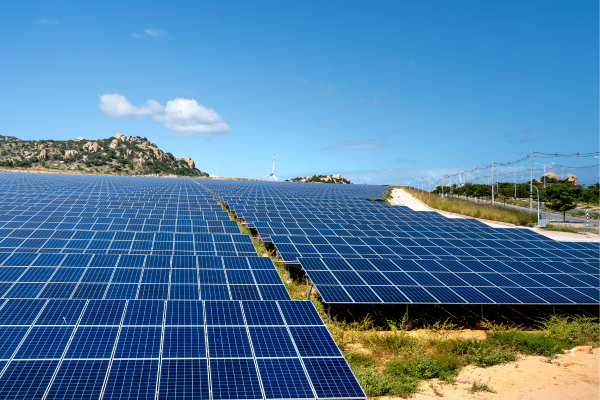
India’s agricultural sector could create demand for an additional 116 GW of solar modules, according to a report by the Indian Solar Manufacturers Association (ISMA). The industry body said this opens a major market for domestic manufacturers as the government expands efforts to solarise irrigation pumps and reduce the sector’s dependence on conventional electricity and diesel.
The report, titled Powering the Farms, Building the Factory (PM-KUSUM: Solarising Agriculture and Strengthening Domestic Manufacturing), was released at the Bharat RE Summit earlier this week. It estimates that grid-connected irrigation pumps could account for 100 GW of additional module demand, while diesel-powered pumps could add another 16 GW. The diesel figure does not include pumps located in groundwater-stressed areas.
India has nearly 2.3 crore irrigation pumps. According to ISMA, solarising them could become a significant source of long-term demand for the country’s solar manufacturing industry, linking India’s clean energy transition with its push to expand domestic manufacturing capacity.
The report identifies the Pradhan Mantri Kisan Urja Suraksha evam Utthaan Mahabhiyan (PM-KUSUM) as an important driver of this opportunity, with the potential to create a sustained market for locally made solar modules and cells. The scheme added a record 7.6 GW of solar capacity in FY26, and more than 28 lakh irrigation pumps had been solarised by July this year.
PM-KUSUM was launched in 2019 with three components. Its first phase aimed to install 34.8 GW of solar capacity by March 2026, but only around 14 GW had come online according to an analysis published in April, which pointed to weak grid infrastructure, land access and financial barriers for developers as reasons for the slow progress.
The Domestic Content Requirement (DCR) under Components B and C of the scheme has helped direct demand towards Indian manufacturers. By October, installations under these two components had reached 13.8 GW, meeting nearly two-thirds of the 20.8 GW of domestic manufacturing demand originally projected, ISMA said.
The report also points to the scale of electricity use in farming as an added economic reason to speed up pump and feeder solarisation. Agriculture accounts for 17.88 per cent of India’s total electricity consumption. Tariff subsidies billed by distribution companies (DISCOMs) doubled from INR 1.21 lakh crore in FY20 to INR 2.41 lakh crore in FY25. Solarising farm pumps and feeders could improve power availability for farmers, support more sustainable energy use and reduce the financial burden of subsidised agricultural power, the report said.
ISMA Secretary General Amit Manohar said PM-KUSUM had become an important link between India’s agricultural development and its domestic solar manufacturing ambitions. He said the estimated 116 GW of extra module demand from agriculture was a significant opportunity for Indian manufacturers. He added that sustaining this momentum would require continued policy support, adherence to domestic content requirements and a predictable project pipeline to encourage investment, strengthen the domestic supply chain and expand manufacturing capabilities.
The report calls for retaining DCR provisions under PM-KUSUM so that the growth in farm solar capacity translates into demand for domestically made equipment. It also recommends clearly defined state-wise solarisation targets and multi-year tender pipelines to give manufacturers better visibility of demand and encourage investment in additional production capacity.
On implementation, ISMA has sought stronger mechanisms for land access, statutory clearances and grid connectivity, as these affect the pace of project execution across states. The report further flags the need to deepen manufacturing beyond modules and cells, with more investment in upstream segments such as silicon wafers and ingots to reduce supply-chain dependence.
Meanwhile, the Centre is planning PM-KUSUM 2.0, which is expected to include a dedicated 10 GW agri-photovoltaic component that allows solar panels to be installed alongside crops.
Whether the 116 GW estimate turns into actual orders will depend on how quickly states solarise pumps, whether domestic content rules stay in place and how predictable the project pipeline remains. For manufacturers, installation targets under PM-KUSUM alone will not be enough; the government will also need to sustain procurement and implementation over several years. With the first phase falling short of its original target and a second phase being planned, the design of PM-KUSUM 2.0 and the way states handle land, clearances and grid connections are likely to decide how much of this demand reaches Indian factories.

17th Nov, 2026

17th Nov, 2026


17th Nov, 2026




17th Nov, 2026


17th Nov, 2026
Advertisement








 Facebook
 Whatsapp

