Advertisement






The Gulf conflict has disrupted global supply chains, pushed...
REITs have changed the way commercial real estate is owned a...
What really powers the cloud? Behind every Google search, A...
What really powers the cloud? Behind every Google search, A...
Luxury real estate is one of the most talked-about segments ...
Architect Narendra Sardeshpande, Founder of NSA Architects, has outlined practical interior design and renovation measures that homeowners can adopt to refresh their living spaces ahead of Diwali without undertaking extensive structural changes. The approach focuses on flexible colour schemes, pre-planned electrical provisions, organised storage, dedicated display areas and adaptable furniture arrangements. Neutral wall finishes and carefully selected decorative accents can help homeowners introduce festive colours without repainting entire rooms, while strategically positioned electrical points allow mood lighting to be installed without additional wiring work. The recommendations also emphasise decluttering, purposeful placement of decorative objects and flexible living and dining arrangements to accommodate family gatherings. The approach highlights how architectural planning and targeted improvements can make seasonal home updates more manageable and cost-effective.
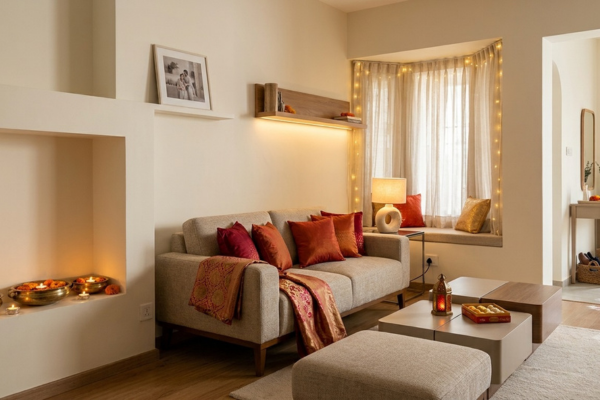
Homeowners can refresh their living spaces for Diwali through targeted interior upgrades involving lighting, colour schemes, furniture and storage, without undertaking extensive renovation work, according to architect Narendra Sardeshpande, Founder of NSA Architects. His recommendations focus on incorporating flexibility into residential design so that homes can accommodate festive decorations and gatherings through smaller interventions rather than major construction changes.
Sardeshpande noted that architecture and interior design should provide a functional setting for everyday activities while allowing residents to adapt their surroundings to changing requirements. Planning for periodic updates at the architectural stage can make seasonal changes easier, particularly during festivals when homeowners look to introduce decorative elements and create a different atmosphere.
One of the suggested approaches involves maintaining neutral or muted colour schemes across walls and major surfaces. These finishes provide a flexible backdrop against which homeowners can introduce festive colours through cushions, curtains, picture frames, artwork and traditional textiles. Such additions can change the appearance of a room without requiring fresh paint or alterations to existing surfaces. Personal artefacts and decorative pieces can also become more prominent against understated backgrounds.
Lighting provisions form another important part of the approach. Electrical outlets can be incorporated at suitable locations, including floor corners, window bays, console surfaces and wall niches, during the initial design or renovation stage. These provisions allow residents to install decorative lamps, warm linear LED strips and accent lighting during festive occasions without relying on extension cords or drilling into finished walls.
The use of layered illumination can also help distinguish between everyday functional lighting and the warmer lighting arrangements required for festive hosting. Combining task lighting with accent fixtures can create different lighting conditions within the same space, depending on its use.
The recommendations also highlight the importance of decluttering and planned storage. Rather than simply removing objects from visible surfaces, homeowners can organise their belongings by retaining items that are regularly used or hold personal significance. Dedicated architectural niches and display areas can accommodate decorative artefacts, brass urns or urlis, and seasonal floral arrangements. Providing designated spaces for these objects can help maintain clear circulation areas while allowing festive decorations to remain visible.
Living and dining areas, which accommodate both routine family activities and larger gatherings, can benefit from adaptable furniture arrangements. Sardeshpande suggested using modular seating, ottomans and low floor-seating arrangements that can be repositioned to suit different occasions, including family celebrations and card parties.
Entryways also require attention, as they form the first point of interaction for visitors. A simple statement console combined with concealed storage can help keep the entrance organised while providing space for selected decorative elements.
The approach centres on incorporating flexible design features into residential interiors, including adaptable colour schemes, strategically positioned electrical points and purpose-built storage. These provisions allow homeowners to make smaller seasonal changes without undertaking extensive construction work, while retaining the functionality of their everyday living spaces.

17th Nov, 2026

17th Nov, 2026


17th Nov, 2026




17th Nov, 2026


17th Nov, 2026
Advertisement








 Facebook
 Whatsapp

