Advertisement






The Gulf conflict has disrupted global supply chains, pushed...
REITs have changed the way commercial real estate is owned a...
What really powers the cloud? Behind every Google search, A...
What really powers the cloud? Behind every Google search, A...
Luxury real estate is one of the most talked-about segments ...
The Confederation of Indian Industry (CII)–Indian Green Building Council (IGBC) held the fourth Bihar Green Conclave 2026 in Patna on 4 November, bringing together government representatives, developers, industry leaders and sustainability experts to discuss environmentally responsible urban and industrial development. Held under the theme ‘Towards a Green Trillion: Sustainable Built Environment for Viksit Bihar’, the event focused on green construction, energy efficiency, water conservation, sustainable industrial infrastructure and green financing. Bihar Urban Development and Housing Minister Nitish Mishra outlined plans for 12 satellite townships, district-level urban master plans and incentives for green buildings. Discussions also covered proposed changes to building regulations, wastewater reuse and a 15 MW waste-to-energy project in Patna. IGBC representatives highlighted the resource savings possible through green buildings and the need for stronger policy and industry participation.
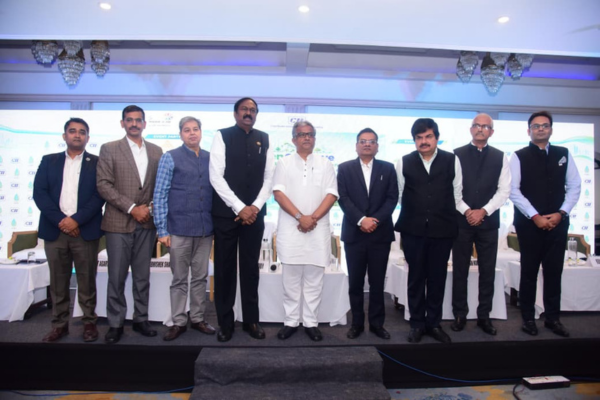
The Confederation of Indian Industry (CII)–Indian Green Building Council (IGBC) called for wider adoption of green buildings, resource-efficient industries and climate-resilient infrastructure at the fourth Bihar Green Conclave 2026, held at Hotel Chanakya in Patna on 4 November. The event brought together government officials, developers, architects, urban planners and industry representatives to discuss integrating sustainability into the state's urbanisation and industrial development plans.
Held under the theme ‘Towards a Green Trillion: Sustainable Built Environment for Viksit Bihar’, the conclave examined opportunities to improve energy efficiency, conserve water, promote sustainable construction materials and expand green industrial infrastructure. Discussions also covered green financing and the adoption of technologies to reduce the environmental impact of buildings and industrial operations.
Nitish Mishra, Bihar's Minister for Urban Development and Housing, outlined plans to develop 12 satellite townships to ease pressure on Patna and support urban growth in other districts. He also highlighted the importance of affordable housing and said urban local bodies across all districts would be provided with master plans and building bylaws to improve ease of living and doing business. Training programmes for urban local body officials were also planned.
The minister said the draft Building Bylaws had been sent for Cabinet approval. He also referred to the approved Reuse Water Policy and a proposed amendment to the Municipal Act aimed at simplifying approval processes. Other initiatives highlighted included a 15 MW waste-to-energy project in Patna and incentives intended to encourage green building construction. Mishra called for shared responsibility among government and industry stakeholders in advancing the state's sustainability agenda. He also accepted a District Data Portal developed by CII, which currently contains more than 470 indicators, with plans to expand the database to 1,000 indicators.
The discussions highlighted the opportunity to incorporate green building principles into the planning of Bihar's growing housing, commercial, industrial and public infrastructure. Participants said energy-efficient systems, water-saving technologies, renewable energy and climate-responsive design could reduce operating costs, improve resource efficiency and strengthen resilience to climate-related risks.
The conclave also examined the role of sustainable industrial infrastructure in improving Bihar's investment competitiveness. Industry representatives discussed how resource-efficient manufacturing facilities could reduce energy and water consumption, improve waste management and lower operational expenditure. Access to green financing was identified as an important requirement for businesses transitioning towards lower-carbon operations.
C Shekar Reddy, National Chairman of CII-IGBC, highlighted the benefits of green buildings, including lower energy and water consumption, improved indoor environmental quality and better occupant well-being. He said India had around 20,000 registered green building projects, with average savings of 20–40% in water consumption and approximately 30% in energy use.
Bhavesh Kumar, Chairman of CREDAI Bihar, called for the early notification of the Building Bylaws and greater attention to Tier-2 and Tier-3 cities. Gaurav Sah, Chairman of CII Bihar State Council, emphasised extending sustainability measures across building and industrial asset classes.
Punit Agarwal, Senior Counsellor at CII-IGBC, presented an impact analysis of green buildings, outlining potential savings and opportunities for wider adoption in Bihar. The programme also saw the induction of Vinay Pruthi as Co-Chairman of IGBC Patna in the presence of the minister.
The conclave concluded with a call for coordinated action among government agencies, developers, financial institutions and technology providers. Priorities identified included expanding green building practices across asset classes, promoting renewable energy, improving water conservation and wastewater reuse, developing resource-efficient industrial facilities and integrating climate resilience into urban planning. These measures were discussed in the context of Bihar's development objectives and the national vision of Viksit Bharat 2047.

16th Nov, 2026

16th Nov, 2026



12th Nov, 2026
Advertisement








 Facebook
 Whatsapp

