Advertisement






The Gulf conflict has disrupted global supply chains, pushed...
REITs have changed the way commercial real estate is owned a...
What really powers the cloud? Behind every Google search, A...
What really powers the cloud? Behind every Google search, A...
Luxury real estate is one of the most talked-about segments ...
Bhaarat Wealth Group (BWG), an India-focused land research and investment firm, is developing a patent-pending Demand-Supply Intelligence system to assess investment opportunities across emerging land markets. The framework combines information on property registrations, transaction activity, government tenders, infrastructure projects, master plans, zoning, Change of Land Use (CLU) and Floor Area Ratio (FAR) to support location assessment, risk evaluation and exit planning. The company has identified markets including Ayodhya, Sohna, Dholera and Goa for its investment portfolios. It aims to develop approximately 18 city portfolios and achieve assets under management of around INR 8,000 crore over the next 24 months. Its reported investment returns and growth targets remain company claims and require independent verification.
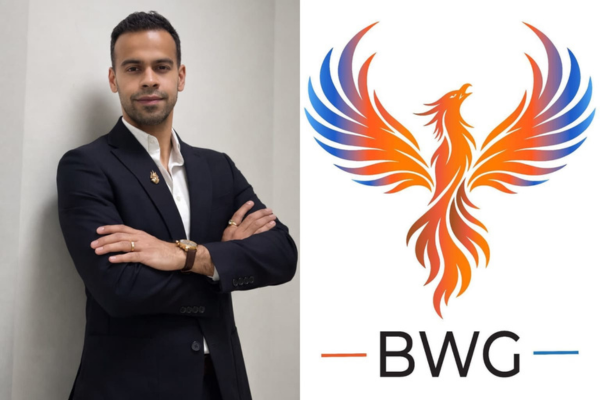
Bhaarat Wealth Group (BWG), an India-focused land research and investment firm, is developing a patent-pending Demand-Supply Intelligence system to bring a structured research and risk-assessment framework to direct land investments. The system is intended to help investors identify emerging locations, evaluate market conditions and assess potential exit opportunities as infrastructure development and urban expansion create new investment corridors across India.
The company's approach centres on addressing information gaps in land markets, where transactions can be difficult to assess because of fragmented records, varying regulatory requirements and differences in local demand. Unlike publicly traded financial assets, individual land parcels can also be difficult to value frequently and may take considerable time to sell. Their investment potential depends on factors such as location, title quality, permitted land use, acquisition price and the availability of buyers.
BWG's proposed framework seeks to combine several market and regulatory indicators rather than relying solely on location-based speculation or expectations of future infrastructure development. These include property registry values, transaction and sale velocity, government tender movements, master-plan information, infrastructure projects, zoning provisions, Change of Land Use (CLU) and Floor Area Ratio (FAR).
The company said these indicators are assessed together to understand the investment potential of a particular location. For instance, an infrastructure announcement alone may not establish the viability of a land investment. Its relevance needs to be examined alongside project implementation, existing connectivity, transaction activity, permissible land use and the price at which land is being offered. Similarly, changes in CLU or FAR can influence development potential and the economics of a parcel.
The system has been under development for approximately seven years, according to BWG. The company intends to combine its technology-led research with physical due diligence, including title and encumbrance checks, regulatory assessments, comparable transaction analysis and on-ground intelligence. Its stated objective is to evaluate both the conditions supporting an investment and the factors that could affect its eventual exit.
Founder Sahil Marshall's stated investment philosophy centres on assessing the evidence behind a location's growth prospects, identifying unresolved risks and considering the feasibility of an exit before committing capital. The company argues that a structured research process can help investors distinguish between a market's growth narrative and an investment opportunity supported by verifiable information.
BWG began building its land investment portfolios in Ayodhya and has identified Sohna, Dholera, Goa and emerging spiritual corridors among its expansion markets. The company has reported a 4.5-times return on invested capital in Ayodhya in less than 18 months. It has also outlined a broader investment thesis targeting approximately 2.5-times return on invested capital within 18 months. These figures are company-reported claims and do not represent assured or independently established returns.
Over the next 24 months, BWG aims to establish approximately 18 city portfolios and build assets under management of around INR 8,000 crore. Achieving these targets would require the company to demonstrate that its research framework can be applied consistently across markets with different demand patterns, land regulations and transaction conditions.
The company's proposition also highlights the considerations involved in attracting international investors to Indian land markets. Direct land ownership carries risks relating to liquidity, taxation, currency exposure, ownership structures and regulatory permissions. Cross-border investors would need to assess applicable foreign investment rules, ownership rights and repatriation requirements with qualified advisers, as access to direct land ownership varies according to investor category and investment structure.
BWG is positioning its Demand-Supply Intelligence system as a research layer connecting investment capital with land markets. Its ability to establish credibility will depend on the transparency of its methodology, the verification of its investment claims and the realised performance of its portfolios over time.

17th Nov, 2026

17th Nov, 2026


17th Nov, 2026




17th Nov, 2026


17th Nov, 2026
Advertisement








 Facebook
 Whatsapp

