Advertisement






The Gulf conflict has disrupted global supply chains, pushed...
REITs have changed the way commercial real estate is owned a...
What really powers the cloud? Behind every Google search, A...
What really powers the cloud? Behind every Google search, A...
Luxury real estate is one of the most talked-about segments ...
Waaree Solar Americas, a wholly-owned subsidiary of Waaree Energies, has started commercial production on two additional solar module manufacturing lines at its Brookshire facility in Texas. The new lines add 1.6 GW of annual capacity, taking the facility's total capacity to 3.2 GW. The company is also expanding its Arizona facility, taking its planned US module manufacturing capacity to 4.8 GW in FY27. Its US domestic business now contributes 43.8 per cent of its INR 59,200 crore order book.
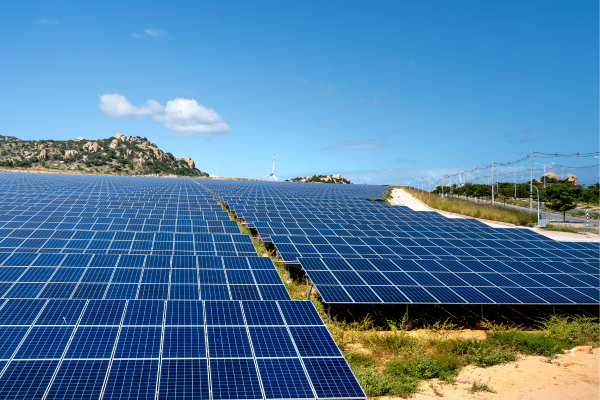
Waaree Solar Americas Inc, a wholly-owned subsidiary of Waaree Energies Ltd (WEL), has started commercial production on two new solar module manufacturing lines at its facility in Brookshire, Texas, increasing the plant's total annual installed capacity to 3.2 GW.
Each of the two new manufacturing lines has an annual capacity of 800 MW. Together, they add 1.6 GW of capacity to the Brookshire facility, doubling its earlier output. Production on the new lines began on October 29 under an expansion approved by the Waaree Energies Board in April 2025, according to a company statement.
The Brookshire expansion is part of Waaree Solar Americas' wider manufacturing plans in the United States. The company is also upgrading its solar module manufacturing facility in Arizona, increasing its capacity from 1 GW to 1.6 GW. With these additions, Waaree's planned solar module manufacturing capacity in the US is expected to reach 4.8 GW in FY27.
The company said the additional capacity would strengthen its ability to supply solar modules manufactured in the United States to American developers, utilities and engineering, procurement and construction (EPC) partners. Across its markets, Waaree's solar module order book currently stands at more than 25 GW.
The expansion comes amid changes in US trade policies, including Section 232 measures, which are affecting the economics of imported solar modules. Waaree said it had prepared for these changes by establishing manufacturing operations within the market it serves.
Revenue from the company's US manufacturing operations increased to INR 1,300 crore in Q2 FY27 from INR 732 crore in the corresponding quarter of the previous year. The US domestic business now accounts for 43.8 per cent of Waaree's total order book of INR 59,200 crore, compared with approximately 36 per cent at the end of the previous quarter.
Sunil Rathi, Director, Waaree Group, said shifting trade policies had strengthened the case for local manufacturing, which was the focus of the company's investments. He added that with Brookshire operating at 3.2 GW and the Arizona facility undergoing expansion, Waaree was supplying American customers through its manufacturing facilities in the country. He also noted that the company's US order book continued to grow every quarter.
The expansion is part of Waaree's dual-market manufacturing strategy, which follows its Make in India for the World and Make in USA for USA approach. The company is continuing to expand its manufacturing operations in both countries.
Waaree Energies' consolidated revenue from operations increased 23.9 per cent to INR 7,518 crore in Q2 FY27. Alongside its US expansion, the company is also strengthening backward integration in India. Its solar cell manufacturing capacity is scheduled to increase from 5.4 GW to 15.4 GW in FY27, while a 10 GW ingot and wafer manufacturing facility is targeted for FY28.
Waaree Energies is expanding its manufacturing presence in the United States while increasing production capabilities in India. The growth in its US order book and manufacturing revenue reflects the increasing contribution of the American market to its business. At the same time, the planned expansion of solar cell, ingot and wafer manufacturing in India points to a wider focus on strengthening its domestic production capabilities. The progress of these capacity additions and their contribution to the company's order book will remain important developments in its manufacturing strategy.
Source PTI
Advertisement








 Facebook
 Whatsapp

