Advertisement






The Gulf conflict has disrupted global supply chains, pushed...
REITs have changed the way commercial real estate is owned a...
What really powers the cloud? Behind every Google search, A...
What really powers the cloud? Behind every Google search, A...
Luxury real estate is one of the most talked-about segments ...
Infrastructure projects influence real estate differently depending on whether they improve urban connectivity, open up peripheral land, attract commercial activity or upgrade essential civic services. Metro rail networks can support residential demand and retail activity near stations, while expressways can encourage logistics parks and satellite townships around key interchanges. Airports may generate longer-term demand for offices, hotels and logistics facilities, while industrial corridors and ports can support housing demand through employment creation. Civic upgrades, including drainage and water supply, help preserve property values by improving neighbourhood conditions. Understanding these differences can help developers and investors assess location-specific opportunities, investment timelines and potential risks.
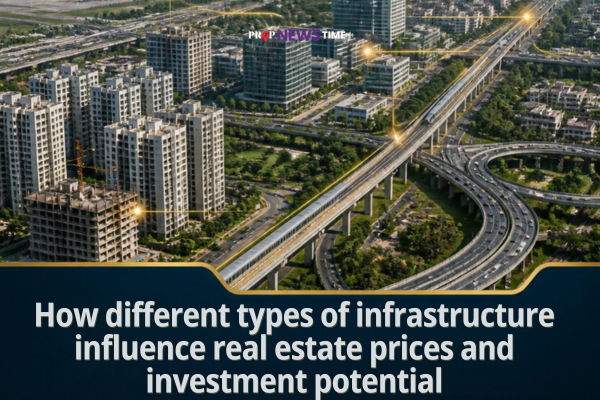
Infrastructure development does not generate the same real estate impact everywhere. Metro lines, expressways, airports, industrial corridors and civic upgrades influence property values through different mechanisms, from reducing commute times to creating employment centres and improving neighbourhood services. For developers evaluating land acquisitions and investors assessing residential or commercial assets, understanding these differences can help identify which property types are most likely to benefit and when demand may emerge.
1. Mass transit and intra-city connectivity
Metro rail, monorails and bus rapid transit systems can support residential demand, office rentals and retail activity by reducing commuting times within urban centres. Properties within approximately 500 metres to 1 kilometre of transit stations may benefit from improved accessibility and resale liquidity. The supplied framework cites potential price premiums of 15% to 30% for well-connected properties, although actual outcomes depend on local market conditions. Value appreciation may begin during construction and continue until operations approach, followed by more gradual growth supported by rental demand.
2. Expressways and high-speed intercity roads
Expressways and bypass roads can open peripheral areas to plotted developments, logistics parks, warehousing facilities and satellite townships by reducing travel times between cities and regional markets. Their real estate impact is often concentrated around interchanges, toll plazas and feeder-road junctions rather than along the entire highway. The supplied framework identifies potential speculative land-price increases of 50% to 120% or more following acquisition notifications and route announcements, but such gains are not guaranteed and depend on project execution, access, land-use permissions and actual demand.
3. Airports and aviation hubs
Greenfield airports and major aviation hubs can support long-term development of hotels, convention centres, Grade-A offices, logistics facilities and mixed-use commercial districts. Their influence may extend across a 10–20 kilometre radius, depending on connectivity and the emergence of supporting employment centres. Unlike projects focused on local commuting, airport-led development may take five to ten years to mature as flight volumes, corporate activity and commercial demand grow. Early land speculation does not necessarily translate into sustained appreciation unless economic activity develops around the airport.
4. Industrial corridors, SEZs and ports
Industrial corridors, special economic zones, manufacturing clusters and ports can create new property demand by attracting factories, logistics operations and associated employment. Potential beneficiaries include industrial parks, cold-storage facilities, workforce housing and affordable residential developments. The timing of appreciation is closely linked to manufacturing investment commitments and factory commissioning. Unlike infrastructure that mainly improves access to existing employment centres, these projects can generate new jobs and sustained demand for housing and local retail, provided announced investments translate into operational businesses.
5. Civic upgrades and essential services
Improvements in drainage, water supply and other municipal services can protect property values by making neighbourhoods safer, more usable and more attractive to residents and businesses. Their benefits may extend across an entire locality rather than being concentrated around a transit station or highway interchange. Effective drainage can reduce exposure to flooding, while reliable water supply supports everyday residential and commercial use. These upgrades may not always produce sharp price increases, but they can reduce location-related disadvantages and support the long-term value and occupancy prospects of existing properties.
Matching infrastructure with real estate investment
The property impact of infrastructure depends on the type of project, its stage of development and the economic activity it supports. Metro networks primarily improve urban accessibility, expressways open up development nodes, airports can support regional commercial clusters, and industrial corridors generate employment-linked demand. Civic upgrades help preserve existing neighbourhood value. For developers and investors, infrastructure proximity alone is not sufficient: actual accessibility, project completion, land-use regulations, local supply and demonstrated demand must also be considered when assessing potential appreciation and rental returns.
Sources: IIMB Real Estate Research, RICS, Property Pistol Research & Market Insights

17th Nov, 2026

17th Nov, 2026


17th Nov, 2026




17th Nov, 2026


17th Nov, 2026
Advertisement








 Facebook
 Whatsapp

