Advertisement






The Gulf conflict has disrupted global supply chains, pushed...
REITs have changed the way commercial real estate is owned a...
What really powers the cloud? Behind every Google search, A...
What really powers the cloud? Behind every Google search, A...
Luxury real estate is one of the most talked-about segments ...
Smart home technology is increasingly influencing the design and handover specifications of urban residential projects, with developers exploring integrated systems for access control, lighting, climate management and household safety. Features such as biometric smart locks, video door phones connected to mobile applications, touch-enabled switches and motorised curtain channels can be incorporated during construction to reduce the need for later modifications. Gas leak detectors, water ingress sensors and high-load smart plugs can further support safety and energy management. Communication standards such as Matter are also contributing to the development of interoperable smart home ecosystems. However, the availability of these features varies by project, developer and price segment, and they should not be assumed to be standard across all new apartments.
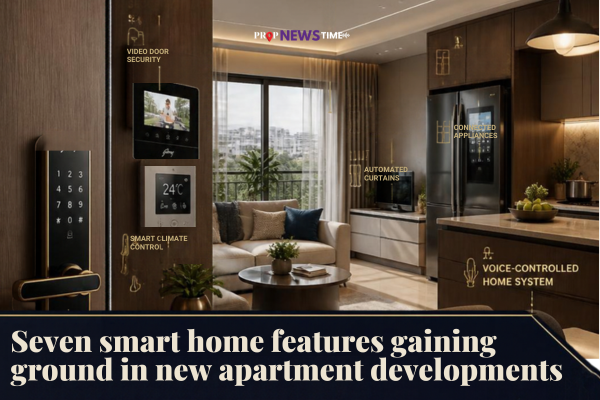
Smart home technology is becoming an increasingly relevant consideration in urban residential development, as buyers look beyond conventional fittings towards integrated systems for security, convenience and energy management. Installing the necessary wiring, power points, sensors and control infrastructure during construction can make these systems easier to incorporate than retrofitting them after possession. While the level of automation varies across projects, seven features illustrate how technology can be integrated into apartment design and handover specifications.
1. Multi-modal smart locks
Smart locks can replace conventional door locks with keyless access options, including fingerprint recognition, passcodes, RFID cards and mobile applications. Depending on the model, a mechanical key may remain available as an emergency override. For developers, installing compatible locksets during construction can reduce the need for later door modifications. Temporary digital access codes can also help residents manage entry for domestic staff, maintenance teams and interior contractors without distributing physical keys.
2. Video door phones with mobile connectivity
Video door phone systems combine a camera at the apartment entrance with an indoor display and, where supported, a smartphone application. Residents can view visitors and communicate with them remotely, while integration with residential gate management systems may enable digital visitor clearance. Hardwired installations can be planned alongside electrical and communication layouts, reducing dependence on separate aftermarket devices. The available functions depend on the equipment and the building's access management system.
3. Smart touch switches and scene controllers
Touch-sensitive switch panels and smart relay modules can allow residents to control lights and selected appliances through preset scenes. Functions such as switching off multiple lights together or configuring a night-time setting can simplify everyday operation. Installing suitable wiring, including neutral wires where required by the chosen system, during construction can improve compatibility and reduce retrofit work. Developers must ensure that the selected equipment supports the electrical loads of connected devices, including fans and other high-power appliances.
4. Motorised curtain channels
Concealed curtain tracks, dedicated power points and motorised mechanisms can be incorporated into window recesses and false ceilings during construction. These systems allow residents to operate curtains through switches, applications or automated schedules, depending on the configuration. Timed curtain operation may help manage direct sunlight and indoor heat gain, potentially reducing cooling requirements in some conditions. Actual energy savings depend on window orientation, glazing, curtain materials, climate and air-conditioning use.
5. Smart infrared climate hubs
Infrared control hubs can allow compatible conventional air conditioners, televisions and set-top boxes to be operated through a smartphone or home automation system. Rather than replacing every appliance with a connected model, residents can use these hubs to automate devices that respond to infrared remote controls. Installation locations and network connectivity should be planned to ensure adequate coverage. Compatibility varies by appliance, and infrared systems generally require a clear or suitable signal path to the equipment being controlled.
6. Gas leak and water ingress sensors
Sensors installed in kitchens, bathrooms and utility areas can provide early warnings of gas leaks or water leakage. Depending on the system, alerts may be delivered through a local alarm and a connected mobile application. More advanced configurations can also operate compatible motorised shut-off valves when a leak is detected. Such installations require appropriate sensor placement, reliable power and careful integration with the gas or water supply. Automated shut-off functions should be included only where the equipment is designed and installed for that purpose.
7. High-load smart plugs and energy controls
Smart outlets and dedicated controls can help residents schedule selected appliances, including water heaters, and monitor electricity consumption where supported. Higher-current equipment must be appropriately rated for the connected load and installed in accordance with electrical safety requirements. In residential projects with electric vehicle charging facilities, charging schedules and energy monitoring may be managed through dedicated charging equipment rather than ordinary smart plugs. Planning these provisions during construction can help accommodate future requirements, although the final setup depends on the building's electrical capacity and design.
The growing range of smart home systems highlights the importance of planning technology alongside a building's electrical, security and interior infrastructure. For developers, incorporating suitable provisions before handover can reduce retrofit complexity and give buyers more options for automation. For homebuyers, however, the presence of a smart feature alone does not establish its quality or long-term usefulness. Compatibility between devices, data security, maintenance support, replacement costs and the ability to operate essential functions during network outages remain important considerations when evaluating a connected apartment.
Sources: Matter Protocol Official Specs, Smartify India, IAMA Architects Journal, Aziot Smart Home Solutions

17th Nov, 2026

17th Nov, 2026


17th Nov, 2026




17th Nov, 2026


17th Nov, 2026
Advertisement








 Facebook
 Whatsapp

