Advertisement






The Gulf conflict has disrupted global supply chains, pushed...
REITs have changed the way commercial real estate is owned a...
What really powers the cloud? Behind every Google search, A...
What really powers the cloud? Behind every Google search, A...
Luxury real estate is one of the most talked-about segments ...
The Reserve Bank of India's measures to support the rupee have prompted several banks to temporarily stop quoting dollar-rupee forward contracts, raising concerns about liquidity, hedging costs and market volatility. According to bankers, uncertainty over the scope of new margin requirements and increased scrutiny of dollar transactions have disrupted trading activity. The rupee has recovered from near-record lows following the measures but remains down around 6% this year. Market analysts have warned that regulatory restrictions can influence the timing and cost of dollar demand but cannot remove the underlying pressures arising from trade, hedging needs and capital outflows.
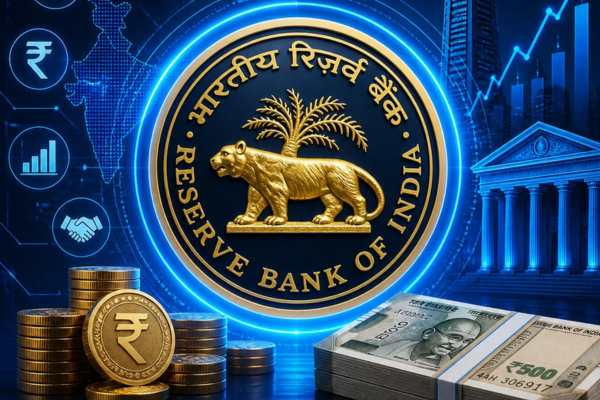
The Reserve Bank of India's (RBI) recent measures to support the rupee have led to unintended disruptions in currency trading, with at least eight banks holding back from quoting dollar-rupee forward contracts during early trading on Tuesday, according to bankers who spoke to Reuters.
The uncertainty follows a series of regulatory steps introduced since Saturday to curb dollar demand and speculative activity. The RBI redirected oil-related dollar demand to a special facility, imposed cash margin requirements on derivatives used to hedge certain merchant transactions and later extended the requirement to banks hedging their own assets and liabilities. It also instructed banks to offer non-deliverable forward contracts to clients only for hedging underlying exposures.
The measures came after the rupee weakened to nearly 96.96 against the US dollar last week, despite the central bank raising interest rates for the first time in almost four years. Following the latest restrictions, the currency recovered to around 95.25 against the dollar.
Mitul Kotecha, head of FX and emerging markets macro strategy for Asia at Barclays, said the RBI had moved beyond signalling that the rupee's weakness might be excessive and had begun directly restricting dollar demand and speculative activity in the foreign exchange market. He noted that such measures could affect when and where dollar demand occurs, as well as its cost, but could not eliminate genuine demand arising from trade, hedging requirements or capital outflows.
The RBI did not respond to a Reuters request for comment on the measures or their impact on the market.
Banks' reluctance to quote forward contracts followed a circular issued on Monday night that required lenders to maintain a risk reserve for rupee derivative contracts used to hedge currency risks on their own assets and liabilities. The circular stated that the margin requirement applied to rupee derivative contracts for which banks purchased foreign currency.
Several bankers interpreted the provision as extending the requirement to interbank transactions, prompting them to reconsider quoting dollar-rupee forward rates. However, a person familiar with the RBI's thinking said this interpretation was incorrect, explaining that derivatives used for market-making or trading were outside the circular's scope.
According to bankers, three of the eight banks resumed quoting forward contracts after receiving bilateral clarification from the RBI. Other currency traders said they would wait for official communication before restarting interbank quotes.
The disruption reduced dollar-rupee forward trading volumes and widened bid-ask spreads, contributing to sharp price movements. A banker at a large foreign bank said some clients had shifted their activity to the non-deliverable forward market amid concerns that hedging in the domestic market could become more expensive. The bankers quoted in the report requested anonymity because they were not authorised to speak to the media.
The regulatory measures have also coincided with closer scrutiny of dollar transactions. Bankers said the RBI sought information about derivative transactions on Monday, with some lenders facilitating large dollar purchases receiving calls from the central bank. Other banks were asked to submit details of client transactions by email.
A banker at a foreign lender said the regulator had requested detailed information about clients' requirements. Another banker said that although the RBI regularly engages with lenders, the current scrutiny was more detailed than usual.
Despite its recent recovery, the rupee has fallen by around 6% this year, underperforming most of its Asian peers. High crude oil prices and capital outflows have added pressure on the currency.
MUFG expects the rupee to gradually weaken to 97.50 against the US dollar by the September quarter of 2027. The bank also expects the RBI to introduce further measures if the currency comes under additional pressure.
Michael Wan, senior currency analyst at MUFG, said the underlying pressure on the rupee would ultimately ease only if there were changes in India's fundamental capital and trade flows.
The developments highlight the difficulty of stabilising the rupee through restrictions when businesses and financial institutions continue to require dollars for trade and risk management. Uncertainty over the application of margin rules can also affect banks' willingness to quote prices, reducing liquidity and making currency movements sharper. For companies with foreign currency liabilities or import payments, changes in the availability and cost of hedging contracts could affect financial planning. The rupee's direction will therefore depend not only on regulatory action but also on crude oil prices, capital flows and broader foreign exchange demand.
Source Reuters

17th Nov, 2026

17th Nov, 2026


17th Nov, 2026




17th Nov, 2026


17th Nov, 2026
Advertisement








 Facebook
 Whatsapp

