Advertisement






The Gulf conflict has disrupted global supply chains, pushed...
REITs have changed the way commercial real estate is owned a...
What really powers the cloud? Behind every Google search, A...
What really powers the cloud? Behind every Google search, A...
Luxury real estate is one of the most talked-about segments ...
India could attract approximately INR 7.5 lakh crore in private investment in its nuclear power sector, with private companies expected to contribute 30 GW towards the country's target of 100 GW of nuclear capacity by 2047, Atomic Energy Commission Chairman Shri Ajit Kumar Mohanty has said. Speaking to the Press Trust of India in Ranchi on October 11, 2026, he said India currently has around 9 GW of installed nuclear power capacity and is looking to expand beyond its traditionally public-sector-led model. The Sustainable Harnessing and Advancement of Nuclear Energy for Transforming India (SHANTI) Act, enacted in December 2025, has opened the sector to wider participation by public and private entities while retaining sovereign control over sensitive activities.
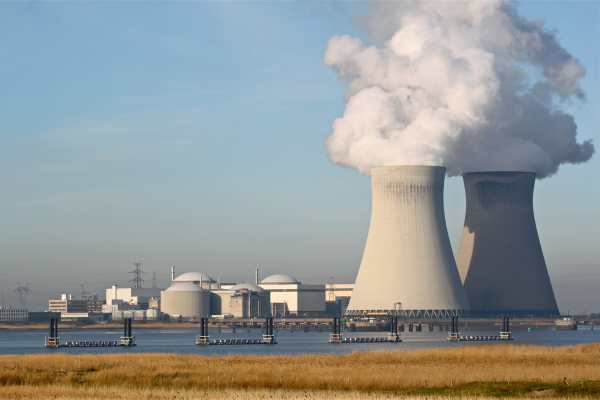
India's nuclear power sector could attract approximately INR 7.5 lakh crore in private investment, with private companies expected to contribute 30 GW towards the country's target of 100 GW of nuclear power capacity by 2047, Atomic Energy Commission Chairman Shri Ajit Kumar Mohanty said on October 11, 2026. Speaking to the Press Trust of India in Ranchi, he said India currently has around 9 GW of installed nuclear capacity and is seeking to accelerate expansion by allowing greater private sector participation in reactor operations and project development.
Shri Mohanty, who also serves as secretary of the Department of Atomic Energy, said Nuclear Power Corporation of India Limited (NPCIL), a public sector undertaking, currently operates 24 reactors. He expected a couple of private sector companies to begin operating reactors within the next five years, with their contribution potentially reaching 30 GW by 2047. Based on an estimated cost of INR 25 crore per MW of generation capacity, the proposed private sector contribution would require substantial capital investment.
The policy framework for this expansion changed with the enactment of the Sustainable Harnessing and Advancement of Nuclear Energy for Transforming India (SHANTI) Act in December 2025. The legislation opened the nuclear sector to broader participation by public and private entities while retaining sovereign control over sensitive activities. The move is intended to support expansion beyond the traditional public sector-led development model.
Private companies are assessing reactor technologies, fuel supply arrangements, land requirements and potential partnerships, including joint ventures with NPCIL and foreign technology providers. Shri Mohanty noted that nuclear power projects generally require five to seven years to construct, depending on the technology selected, regulatory approvals and construction requirements. These factors will influence the pace at which new capacity can be developed.
India is also looking to leverage its domestic resources and technological capabilities. Shri Mohanty said the country holds approximately 25% of the world's thorium reserves, with monazite-bearing beach sands in coastal states such as Odisha and Andhra Pradesh providing a source from which thorium can be recovered through appropriate processing.
Another development supporting the country's nuclear programme is the Prototype Fast Breeder Reactor at Kalpakkam in Tamil Nadu, which attained first criticality in April 2026. The milestone marked the initiation of a sustained nuclear chain reaction and India's entry into the second stage of its three-stage nuclear power programme. Once fully operational, the reactor is expected to place India among the countries operating commercial fast breeder reactors.
International cooperation is also expected to support the expansion. India has signed inter-governmental agreements on peaceful civil nuclear cooperation with 18 countries. Shri Mohanty cited the Kudankulam nuclear power project, which uses Russian reactor technology, as an example of international collaboration.
The projected private investment and capacity contribution form part of India's longer-term effort to expand nuclear generation to 100 GW by 2047. Achieving this target will require financing, technological development, regulatory clearances and partnerships as private participation grows alongside the existing public sector-led programme.
Source PTI

17th Nov, 2026

17th Nov, 2026


17th Nov, 2026




17th Nov, 2026


17th Nov, 2026
Advertisement








 Facebook
 Whatsapp

