Advertisement






The Gulf conflict has disrupted global supply chains, pushed...
REITs have changed the way commercial real estate is owned a...
What really powers the cloud? Behind every Google search, A...
What really powers the cloud? Behind every Google search, A...
Luxury real estate is one of the most talked-about segments ...
India’s real estate sector is moving beyond conventional green-building certifications towards net zero buildings that target measurable reductions in energy, water and whole-life carbon emissions. The approach combines energy-efficient design, renewable power, wastewater recycling, rainwater management and low-carbon construction materials. As global occupiers and institutional investors increasingly assess environmental performance, net zero standards could influence tenant demand, operating costs, financing and long-term asset value. The shift also places greater emphasis on operational data and lifecycle performance, making decarbonisation an increasingly important consideration for developers and property owners.
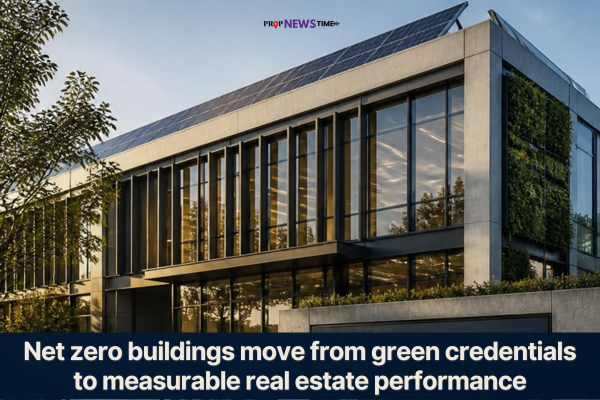
India’s rapid urbanisation is pushing the real estate sector beyond conventional green-building certifications towards buildings that can demonstrate measurable reductions in energy use, water consumption and whole-life carbon emissions. The shift towards net zero buildings places greater emphasis on actual operational performance and the emissions embedded in construction materials, rather than only on design features or certification scores. For developers, occupiers and institutional investors, this is increasingly becoming a question of asset performance, future compliance and long-term value. India already has a large base of certified green buildings, while government policy is gradually expanding its focus from energy efficiency towards a broader whole-life approach to building emissions.
1. Energy efficiency is becoming the starting point
Net Zero Energy buildings first reduce their underlying energy demand through passive design. Building orientation, high-performance façades, double-glazed low-emissivity glass and automated shading can reduce heat gain and cooling loads before mechanical systems are sized. Efficient HVAC systems, smart lighting and sensor-based controls can further lower consumption. The remaining requirement can then be balanced through rooftop solar, building-integrated photovoltaics or dedicated off-site renewable power.
2. Water systems are moving towards closed loops
Net Zero Water focuses on reducing dependence on municipal supply and limiting wastewater discharge. On-site treatment systems such as membrane bioreactors can recycle wastewater for applications including flushing, cooling and landscaping. Rainwater harvesting, permeable surfaces and groundwater recharge can further reduce stormwater runoff and freshwater demand. In water-stressed urban markets, these systems can become an important part of building resilience.
3. Embodied carbon is becoming a development consideration
Operational emissions are only one part of a building’s carbon footprint. Embodied carbon is generated through the extraction, manufacturing and transportation of construction materials and through construction itself. Developers are therefore looking at lower-carbon concrete mixes, recycled steel, mass timber and other material alternatives. Design approaches that allow components to be dismantled and reused can also reduce waste when buildings are refurbished or eventually deconstructed.
4. Green certification and net zero are not the same
A green-certified building can demonstrate better performance than a conventional asset across parameters such as energy, water and materials. A net zero building goes further by targeting a defined measurable outcome. This means monitoring actual energy consumption, renewable generation, water recycling and carbon emissions during operations. The distinction is becoming important as occupiers and investors increasingly look beyond certification labels towards the actual performance of an asset.
5. Developers face higher upfront costs but longer-term benefits
Moving towards net zero can require additional investment in building envelopes, efficient mechanical systems, renewable energy, water-treatment infrastructure and lower-carbon materials. However, these costs need to be considered alongside potential reductions in operating expenditure and the requirements of institutional investors and large occupiers. For developers, the financial case increasingly depends on the asset’s entire lifecycle rather than only its construction cost.
6. Occupier and investor demand is strengthening
Global companies and Global Capability Centres are increasingly incorporating environmental performance into their real estate decisions as they work towards corporate emissions targets. Institutional investors are similarly assessing assets against climate-related risks and future regulatory requirements. This could make high-performing buildings more attractive to occupiers while increasing pressure on older or less efficient properties to undergo retrofits.
7. Net zero could become an asset-value issue
The shift towards measurable environmental performance means sustainability is increasingly connected with the long-term competitiveness of real estate. Buildings with lower energy requirements, renewable power, water recycling and credible carbon-management strategies may be better positioned against future operating costs and regulatory changes. Conversely, inefficient assets could require expensive retrofits and face greater risk of becoming less attractive to tenants and investors.
What it means for Indian real estate
For India, the net zero transition is likely to move the sustainability conversation from “Is the building green?” to “How does the building actually perform?” As the country adds large volumes of commercial, residential, logistics and institutional space, developers will increasingly need to consider energy, water and carbon performance from the design stage through the operating life of the asset.
Sources Indian Green Building Council, GRIHA Council, WorldGBC

17th Nov, 2026

17th Nov, 2026


17th Nov, 2026




17th Nov, 2026


17th Nov, 2026
Advertisement








 Facebook
 Whatsapp

