Advertisement






The Gulf conflict has disrupted global supply chains, pushed...
REITs have changed the way commercial real estate is owned a...
What really powers the cloud? Behind every Google search, A...
What really powers the cloud? Behind every Google search, A...
Luxury real estate is one of the most talked-about segments ...
Mechanical, electrical and plumbing (MEP) systems are essential to the safety, comfort and operational efficiency of high-rise buildings. Poor design, inadequate coordination or faulty installation can lead to recurring air-conditioning problems, inconsistent water pressure, electrical faults and persistent leaks. These issues may affect residents' daily lives, increase maintenance expenses and reduce a property's long-term performance. Recognising early warning signs can help homebuyers, housing societies, facility managers and investors identify potential engineering deficiencies and seek professional assessments before minor problems develop into expensive repairs.
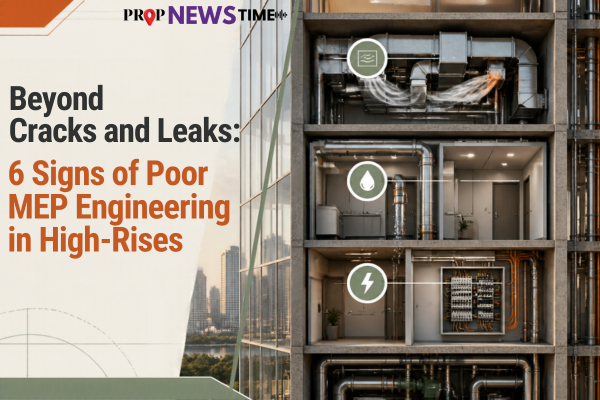
A high-rise building's performance depends on much more than its structural strength, façade and architectural design. Behind its walls and ceilings lies a complex network of mechanical, electrical and plumbing systems that supports ventilation, cooling, lighting, water supply, drainage and essential safety functions.
In tall buildings, these systems must work together across multiple floors, with careful planning for pressure differences, equipment capacity, vertical distribution and emergency operations. Poor coordination during design or construction can create problems that become apparent only after residents begin occupying the building.
Not every maintenance issue indicates poor MEP engineering. Equipment ageing, inadequate servicing and changes in occupancy can also affect performance. However, recurring faults across different floors or repeated failures despite repairs may warrant closer investigation.
Here are six warning signs that could indicate deficiencies in a high-rise building's MEP systems.
1. Uneven cooling, poor ventilation and persistent indoor discomfort
When some apartments remain excessively warm while others are consistently cold, the problem may extend beyond individual air-conditioning units. In buildings with centralised cooling or shared ventilation systems, incorrect equipment sizing, poorly balanced airflow, faulty controls or inadequate duct design can result in uneven indoor temperatures.
Residents may also experience stuffy rooms, persistent humidity, condensation or unpleasant odours. These symptoms can indicate inadequate ventilation, moisture-control problems or poorly maintained equipment. In some cases, the building's design may not adequately account for heat gains, occupancy patterns or the effects of wind and pressure differences at different heights.
The consequences extend beyond comfort. Inefficient cooling can increase electricity consumption, while persistent dampness may contribute to mould growth and damage to internal finishes.
Facility managers should examine whether complaints are concentrated in particular zones or floors and whether ventilation and cooling systems are operating as designed. Airflow measurements, equipment checks and a review of control settings can help identify the cause. Simply installing more powerful air conditioners may not resolve an underlying distribution or ventilation problem.
2. Fluctuating water pressure and recurring plumbing failures
Water distribution becomes more complicated as building height increases. Systems must deliver adequate pressure to upper floors without exposing lower floors and equipment to excessive pressure. This often requires carefully designed pumping arrangements, pressure zones, storage tanks, control systems and pressure-reducing valves.
A possible warning sign is a recurring pattern of weak water flow on upper floors, sudden pressure fluctuations or inconsistent hot-water delivery. Repeated pipe leaks, water hammer, noisy plumbing and frequent pump breakdowns may also warrant investigation.
Such problems can arise from several causes, including incorrectly sized pipes, unsuitable pump selection, faulty controls, poor installation or inadequate maintenance. In high-rise buildings, an unsuitable pressure-management strategy can affect multiple floors rather than a single apartment.
The financial impact can include higher maintenance charges, water wastage, damage to ceilings and walls, and disruption to residents. Persistent leaks may also affect electrical installations or other building components if water enters service shafts and concealed spaces.
Housing societies should review pump performance, pressure readings, maintenance logs and leak histories. A qualified plumbing engineer can determine whether the problem originates in the design, installation, equipment or ongoing operation.
3. Frequent electrical faults, overheating or unexplained power interruptions
Electrical systems in high-rise developments must distribute power safely across apartments, lifts, pumps, lighting, cooling equipment and other common services. Their design needs to account for expected demand, load distribution, protection devices, earthing and the requirements of emergency power systems.
Repeated circuit trips, unexplained voltage fluctuations, overheating electrical panels, burning smells or persistent faults affecting common areas should never be dismissed as routine inconveniences. They may indicate overloaded circuits, loose connections, defective equipment, inadequate protection or poor installation.
Some faults may be isolated to an individual appliance or apartment, while others may originate in shared electrical infrastructure. A pattern of recurring problems across multiple floors or common facilities deserves particular attention.
The implications can be serious. Electrical defects may damage equipment, interrupt essential services and, in certain circumstances, create fire or shock hazards. Emergency generators and backup supplies also need appropriate design and testing to support the systems they are intended to serve.
Residents should report unusual smells, visible damage or repeated faults promptly and avoid opening electrical panels themselves. Qualified electrical professionals should investigate persistent issues, review protection arrangements and carry out appropriate inspections and testing.
4. Persistent leaks, damp service shafts and drainage problems
Water leakage is not always a plumbing problem confined to one apartment. Repeated damp patches near service shafts, wet ceilings, sewage odours, slow drainage and recurring blockages can point towards defects in pipework, drainage gradients, joints, waterproofing interfaces or the coordination of building services.
In high-rise buildings, plumbing and drainage networks extend vertically through multiple floors. A defect in a shared riser or concealed connection can therefore affect apartments far removed from the original source. Poor access to valves and inspection points can make diagnosis and repairs more difficult.
Persistent moisture can damage finishes, corrode metal components and encourage mould growth. If leaks reach electrical equipment or concealed installations, they may create additional risks and increase repair costs.
A single leak does not prove that the original engineering design was defective. Ageing seals, damaged fixtures and poor maintenance can produce similar symptoms. However, repeated failures in the same locations, especially after several repairs, suggest that the underlying cause may not have been properly identified.
Building managers should document leak locations, repair histories and affected floors. Where problems recur, a qualified plumbing or building-services professional should inspect the relevant systems rather than relying on repeated surface repairs.
5. Frequent lift, pump and other essential equipment breakdowns
Lifts, water pumps, ventilation equipment and electrical backup systems are integral to the operation of a high-rise building. Although their mechanical components may be supplied by specialist manufacturers, their performance also depends on appropriate system selection, installation, power supply, controls and coordination with the wider building infrastructure.
Frequent breakdowns, repeated overheating alarms, unstable pump operation or recurring failures following equipment replacement may indicate problems with equipment sizing, control settings, installation quality or maintenance practices.
For example, a pump may struggle to meet demand if its operating conditions do not match the building's water-distribution requirements. Similarly, equipment may fail to operate as intended when electrical supplies, sensors and control systems are incorrectly configured.
Residents may experience lift delays, interrupted water supply, unreliable ventilation or the loss of essential common services. Repeated repairs can also increase society maintenance expenses and accelerate the replacement of equipment.
The key is to look for patterns rather than treating every breakdown as evidence of poor engineering. Facility managers should review fault logs, service records, operating parameters and commissioning documents. Persistent failures across interconnected systems may justify a broader engineering assessment.
6. Building systems that fail to coordinate during emergencies
An important test of MEP engineering is whether interconnected systems perform their intended functions together, particularly during an emergency. Fire alarms, smoke-control systems, emergency lighting, backup power and lift controls may need to respond in a coordinated sequence, depending on the building's design and applicable regulations.
Potential warning signs include recurring faults in fire-alarm interfaces, failed emergency-lighting tests, unreliable backup-power operation or unresolved defects identified during inspections. Problems can also arise when changes to one system are not reflected in the configuration or testing of related equipment.
For example, smoke-control equipment may not perform as intended if its controls are incorrectly configured or its interaction with other systems has not been properly verified. The issue may not be visible during everyday operation, making documented testing and commissioning particularly important.
These are not merely convenience-related defects. Failures involving fire protection, emergency power or smoke control can have serious life-safety implications.
Building management should ensure that required inspections, integrated testing and corrective actions are completed by qualified professionals. Residents should report known faults through the appropriate channels, while unresolved safety-critical deficiencies should be escalated promptly to the responsible building management and authorities, as applicable.
Poor MEP engineering can affect a high-rise building long after construction is complete, influencing resident comfort, service reliability, maintenance costs and safety. Uneven cooling, unstable water pressure, repeated electrical faults, persistent leaks, frequent equipment breakdowns and failures in emergency-system coordination are all reasons to investigate further.
However, visible symptoms alone cannot establish whether the underlying cause is defective design, poor installation, ageing equipment or inadequate maintenance. The distinction matters because an effective solution must address the source of the problem rather than repeatedly treating its symptoms.
For homebuyers and investors, reviewing maintenance records, commissioning documents and unresolved technical defects can provide valuable insight into a building's operational condition. For housing societies and facility managers, timely inspections and systematic fault tracking can help prevent recurring problems from becoming more expensive or disruptive.
Sources- American Society of Heating, Refrigerating and Air-Conditioning Engineers (ASHRAE), National Fire Protection Association (NFPA), World Health Organization (WHO), relevant Bureau of Indian Standards codes, National Building Code of India and professional building-services engineering guidance.

17th Nov, 2026

17th Nov, 2026


17th Nov, 2026




17th Nov, 2026


17th Nov, 2026
Advertisement








 Facebook
 Whatsapp

