Advertisement






The Gulf conflict has disrupted global supply chains, pushed...
REITs have changed the way commercial real estate is owned a...
What really powers the cloud? Behind every Google search, A...
What really powers the cloud? Behind every Google search, A...
Luxury real estate is one of the most talked-about segments ...
The Delhi Metro Rail Corporation (DMRC) is running 20 additional train trips on weekdays from Thursday after Stage I of the Graded Response Action Plan (GRAP) was invoked across Delhi-NCR on Wednesday. The move follows the capital's air quality slipping into the 'poor' category, with an AQI reading of 246. DMRC has also intensified dust-control drives at its construction sites and on roads under its temporary jurisdiction, with more than 250 anti-smog and mist guns deployed across sites, stations and office buildings to curb pollution.
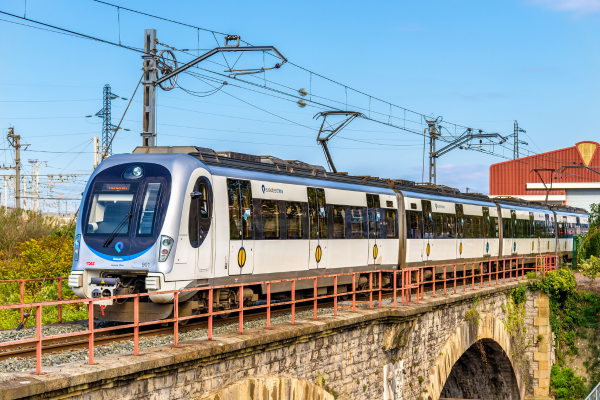
The Delhi Metro Rail Corporation (DMRC) has begun operating 20 additional train trips on weekdays across its network from Thursday, following the enforcement of Stage I of the Graded Response Action Plan (GRAP) in the national capital. The extra services will run from Monday to Friday, when commuter demand is at its peak.
In a statement issued on Wednesday, the corporation said the additional trips were intended to encourage more people to use public transport instead of personal vehicles. Alongside the increased services, DMRC said it would intensify anti-pollution drives at its construction sites and in surrounding areas across the city.
The Commission for Air Quality Management (CAQM) invoked Stage I of GRAP across Delhi-NCR on Wednesday after the capital's Air Quality Index (AQI) slipped into the 'poor' category, with a reading of 246. According to the Air Quality Early Warning System for Delhi, air quality is likely to remain 'poor' from October 21 to 24, and the outlook for the following six days indicates a similar trend.
Stage I of GRAP includes measures to control dust from construction and demolition activities, road dust and open waste burning, among other sources.
As part of its drive, DMRC said specific activities would be taken up to reduce dust levels inside construction sites, remove road dust from surrounding roads and clear garbage from footpaths and road medians. Its engineers will inspect construction sites and adjoining roads to ensure that construction materials are properly covered and that wheel-wash facilities for outgoing vehicles are in working condition.
The corporation said these drives would be carried out in addition to measures already in place. Approximately 31 km of city roads are currently under DMRC's temporary jurisdiction to facilitate Metro construction work, and most of these stretches have already been repaired so that they do not add to pollution levels in the city.
Over 250 anti-smog guns and mist guns have been installed at construction sites, stations and office buildings to reduce dust. DMRC's environment department is also conducting daily inspections to ensure compliance with environmental norms.
The Delhi Metro, which recorded annual ridership of about 235.8 crore passengers in 2025, usually operates more than 4,300 train trips a day. The latest increase forms part of the network's graded response to seasonal pollution, which typically worsens during the post-monsoon and winter months.
In previous years, DMRC has scaled up services in line with escalating GRAP stages. In 2023, the corporation added 40 weekday trips when Stage II measures came into force and introduced 20 more trips after Stage III was invoked, taking the total to 60 additional trips on weekdays.
The early augmentation this season comes as the city enters the festive period, when road congestion and travel times generally rise. DMRC has, in the past, urged commuters to plan their journeys and choose the Metro during this period to help reduce the number of vehicles on the road.
Source : PTI

17th Nov, 2026

17th Nov, 2026

17th Nov, 2026


16th Nov, 2026


16th Nov, 2026

16th Nov, 2026
16th Nov, 2026
Advertisement








 Facebook
 Whatsapp

