Advertisement






The Gulf conflict has disrupted global supply chains, pushed...
REITs have changed the way commercial real estate is owned a...
What really powers the cloud? Behind every Google search, A...
What really powers the cloud? Behind every Google search, A...
Luxury real estate is one of the most talked-about segments ...
Green building features can lower electricity and water bills, improve indoor comfort and reduce dependence on municipal resources. However, not every sustainability feature justifies a higher purchase price. Buyers should prioritise investments that deliver measurable savings, remain practical to maintain and provide long-term value. From energy-efficient windows and rooftop solar to water recycling and climate-responsive design, these eight features deserve attention when evaluating a property.
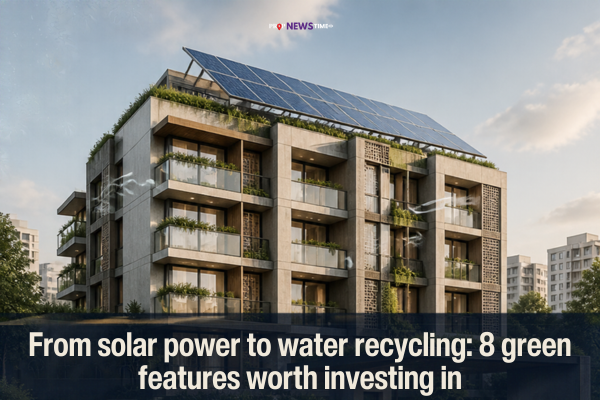
Green building features are becoming increasingly relevant as homebuyers consider utility costs, water availability, indoor comfort and long-term maintenance. However, a home marketed as sustainable is not automatically economical to own. Its value depends on local climate, installation quality, maintenance and actual consumption patterns.
1. Energy-efficient windows and a well-insulated building envelope
Insulated roofs, suitable glazing and external shading can reduce heat gain, maintain comfortable indoor temperatures and lower air-conditioning costs. These features are particularly useful in warmer parts of India.
Buyers should check insulation quality, window specifications and suitability for local conditions. Expensive double glazing may not always offer better value than effective shading and building orientation.
2. Rooftop solar power and solar water heating
Rooftop solar panels generate electricity, while solar water heaters reduce the energy needed for hot water. Savings depend on sunlight, system capacity, household consumption and conventional energy costs.
In apartment complexes, solar systems may serve individual flats or common facilities such as lifts, pumps and lighting. Buyers should verify warranties, maintenance responsibilities and whether savings directly benefit households or reduce shared expens
3. High-efficiency air conditioning and ventilation systems
Inverter air conditioners adjust their output according to cooling demand, potentially reducing electricity consumption. Combining efficient equipment with an energy-efficient building envelope can further improve performance.
Well-designed ventilation can support indoor air quality, although natural ventilation may be unsuitable during periods of high humidity, pollution or noise. Buyers should check equipment ratings, operating costs and repair arrangements.
4. Water-efficient fittings and fixtures
Low-flow taps, efficient showerheads and dual-flush toilets can reduce household water use without significantly affecting everyday convenience. Lower demand may also reduce pumping and water procurement costs.
Buyers should prioritise reliable fittings with verified performance and readily available replacement parts. Poor-quality products may deteriorate quickly, reducing the financial benefits of water conservation.
5. Rainwater harvesting and wastewater recycling
Rainwater harvesting supports storage or groundwater recharge, while treated wastewater can be reused for flushing and landscaping. These systems can reduce dependence on municipal supplies and water tankers.
Buyers should check system capacity, treatment quality and intended uses. Filters, treatment equipment and storage infrastructure require periodic maintenance to ensure reliable performance and compliance with applicable regulations.
6. Natural daylight, shading and climate-responsive design
Well-positioned windows, shaded balconies and appropriate building orientation can improve daylight and reduce artificial lighting requirements. External shading also limits excessive heat gain from direct sunlight.
Cross-ventilation and operable windows can improve airflow when outdoor conditions permit. Buyers should assess room orientation, shading and ventilation rather than relying solely on architectural renders, as these features can be difficult to retrofit.
7. Efficient lighting, appliances and energy monitoring
LED lighting, efficient pumps, lifts and household appliances can reduce energy use over their operating lives. Efficient common-area equipment may also help lower shared maintenance expenses.
Energy-monitoring systems can help residents and facility managers identify excessive consumption and inefficient equipment. Buyers should prioritise verified efficiency ratings and practical monitoring tools, as monitoring alone does not guarantee savings.
8. Green roofs, native landscaping and heat-reducing outdoor spaces
Shaded terraces, native plants and permeable surfaces can improve outdoor comfort, support biodiversity and help manage rainwater. Climate-appropriate landscaping may also require less irrigation.
Green roofs require proper waterproofing, drainage and structural support. Buyers should check landscaping maintenance, irrigation arrangements and access to shared green spaces, as unsuitable planting and poor management can increase costs.
Paying extra for a green home makes sense when its features deliver measurable benefits over the property's lifetime. Energy efficiency, renewable power, water conservation and climate-responsive design can improve comfort and reduce resource consumption, provided they are properly installed and maintained.
Before purchasing, buyers should examine technical specifications, expected operating costs and maintenance responsibilities. They should also distinguish between savings on individual utility bills and reductions in shared society expenses.
Ultimately, the best green home is not necessarily the one with the most sustainability features, but one that performs reliably, suits the local climate and offers lasting value relative to its upfront and ongoing costs.
Sources- Bureau of Energy Efficiency (BEE), Eco Niwas Samhita, Energy Conservation and Sustainable Building Code, Indian Green Building Council (IGBC) and U.S. Department of Energy.

17th Nov, 2026

17th Nov, 2026


17th Nov, 2026




17th Nov, 2026


17th Nov, 2026
Advertisement








 Facebook
 Whatsapp

