Advertisement






The Gulf conflict has disrupted global supply chains, pushed...
REITs have changed the way commercial real estate is owned a...
What really powers the cloud? Behind every Google search, A...
What really powers the cloud? Behind every Google search, A...
Luxury real estate is one of the most talked-about segments ...
In compact flats, balconies can offer valuable additional space when designed thoughtfully. Instead of using them only for drying clothes or storing household items, homeowners can turn these areas into functional extensions of their living spaces. The right combination of furniture, lighting, greenery, storage and colour can make a small balcony feel more open without requiring major renovation. From foldable seating to continuous flooring and vertical gardens, these seven ideas show how homeowners can improve usability, create a sense of spaciousness and make the most of limited square footage.
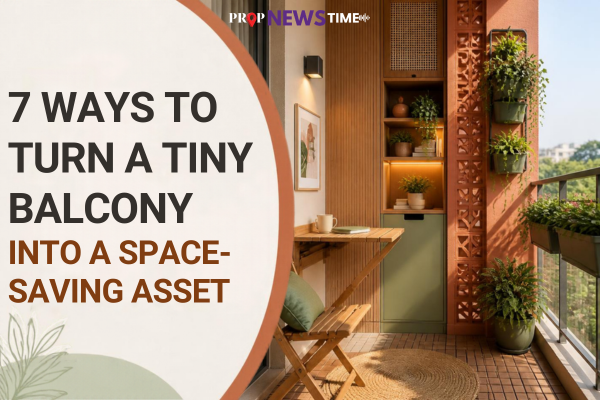
In urban housing markets, where compact apartments are increasingly common, every asquare foot matters. Balconies often become overlooked corners filled with unused furniture, laundry racks or miscellaneous storage. Yet even a narrow outdoor area can serve as a reading nook, a breakfast corner, a miniature garden or an extension of the living room.
The key is to design around the available dimensions rather than trying to fit too many features into a limited space. Bulky furniture, excessive decoration and poorly planned storage can make a balcony feel cramped, while a few carefully chosen elements can improve both movement and visual openness. For homeowners looking to maximise the potential of a compact flat, these seven balcony ideas offer practical ways to make the space feel larger, more organised and more inviting.
1. Choose foldable and space-saving furniture
Furniture determines how comfortably people can move around a small balcony. Large outdoor sofas, heavy tables and oversized chairs can quickly occupy most of the usable floor area, leaving little room to walk or relax.
Foldable chairs, wall-mounted tables, stackable stools and slim benches offer greater flexibility. A foldable table can be opened for meals or work and stored away when it is not needed. A narrow bench placed against a wall can provide seating without obstructing the main walking route.
Furniture with exposed legs can also create a lighter visual appearance than bulky pieces that sit directly on the floor. Before purchasing anything, homeowners should measure the balcony and allow sufficient clearance for doors, access routes and everyday use. The aim is not to fill the balcony with miniature versions of indoor furniture. It is to select a few versatile pieces that serve a clear purpose while keeping the floor as unobstructed as possible.
2. Use vertical space for plants and storage
When floor space is limited, walls and railings can provide additional room for greenery and essential items. Vertical planters, wall-mounted pots, hanging baskets and compact shelving allow homeowners to introduce plants without sacrificing valuable walking space.
A vertical garden can also create a natural backdrop for a seating area, making the balcony feel more intentional and visually connected. However, plant selection should account for sunlight, wind exposure, humidity and the time available for maintenance. Lightweight containers and suitable drainage are important, particularly in high-rise apartments.
Vertical storage can serve a similar purpose. Wall hooks may hold small gardening tools, while narrow shelves can accommodate lightweight accessories. Heavy objects should only be mounted using suitable fixings and after checking the wall's suitability. The arrangement should remain simple rather than covering every available surface. A concentrated display of plants or a well-organised storage section can make a balcony feel more spacious than a cluttered collection of pots and accessories.
3. Create a continuous floor and colour scheme
Visual continuity can make a compact balcony appear less fragmented. When flooring, wall finishes and furniture colours work together, the eye moves more easily across the space, creating a cleaner and more open impression.
Light and neutral shades, such as off-white, beige and soft grey, can help reflect daylight. Pale wood finishes and muted greens can introduce warmth without making the balcony feel visually heavy. This does not mean every surface must be white; a restrained accent colour can add character without overwhelming the design.
Where permitted, outdoor floor tiles or weather-resistant decking can give the balcony a more finished appearance. Using a finish that complements the adjoining room may also create a visual connection between indoor and outdoor areas, particularly when the balcony doors are open. Homeowners should prioritise slip resistance, weather durability and proper drainage over appearance alone. Any flooring addition must not obstruct water outlets or raise the floor in a way that creates drainage problems.
4. Add layered lighting to extend usability
A small balcony can feel more welcoming after sunset when lighting is planned carefully. A single harsh light may provide basic visibility but can make the space feel stark, while softer, layered lighting can create a more comfortable atmosphere.
Wall lights, compact outdoor lamps and appropriately rated string lights can provide illumination without taking up much floor space. Warm lighting may work well for a relaxed seating area, while brighter task lighting is useful for reading or tending to plants.
Lighting should be proportionate to the balcony's dimensions. Too many decorative fixtures, exposed cables or large lamps can introduce clutter rather than improve the space. Products intended for outdoor use should be selected according to their exposure to rain, moisture and dust.
Homeowners in apartment complexes should also check building rules before attaching fixtures to external walls or railings. With a simple and consistent arrangement, lighting can make the balcony usable for evening tea, reading or quiet conversations without requiring a major renovation.
5. Turn the balcony into a functional extension of the living room
A balcony does not have to function as a separate decorative area. In compact flats, it can complement the adjoining living room by providing a small but useful additional zone. Depending on its size and layout, it could accommodate a reading chair, a compact breakfast table, a work corner or a place to unwind. Keeping the design language similar to the living room can strengthen the connection between the two spaces. Matching colours, coordinated materials and a simple arrangement help the balcony feel like a natural extension rather than an unrelated area.
Large furniture is rarely necessary. A single comfortable chair, a small side table and one or two plants may be enough to establish a clear purpose. In very narrow balconies, a wall-mounted counter or a slim ledge may work better than a conventional table.
The balcony should still retain sufficient circulation and safe access. Enclosing it or altering doors, railings and external walls may require approvals, so homeowners should distinguish between lightweight styling changes and structural modifications.
6. Install built-in storage to eliminate clutter
Loose storage boxes, unused chairs, cleaning supplies and miscellaneous household items can quickly make a small balcony feel crowded. A planned storage solution helps keep these objects organised while preserving usable floor space.
A slim storage bench can combine seating with space for cushions or gardening equipment. Weather-resistant cabinets may work where the balcony has adequate room and protection from rain. In narrower layouts, compact wall-mounted organisers can keep smaller items off the floor.
Storage should be designed around the items that genuinely need to remain outdoors. Overloading the balcony with cupboards can reduce its usefulness and block light or airflow. Materials must also withstand the local weather, particularly in areas exposed to heavy rainfall, humidity or direct sunlight.
Homeowners should avoid storing heavy objects on railings or attaching fixtures without checking their safety. A balcony that is easy to clean and has a clear walking route will generally feel larger and remain more practical than one filled with hidden but excessive storage.
7. Keep the layout open with a few well-chosen features
One of the simplest ways to make a small balcony feel bigger is to resist the temptation to decorate every corner. Too many plants, contrasting patterns, oversized accessories and multiple furniture pieces can divide the space visually and restrict movement.
Instead, homeowners can establish one focal point, such as a comfortable chair, a compact plant arrangement or a simple outdoor rug designed for the conditions. Leaving some floor and wall area visible helps maintain a sense of openness.
Transparent or visually lightweight elements may also help. For example, a slim metal chair can appear less imposing than a bulky upholstered seat, while a small glass-topped table can preserve visual continuity. Any furniture or decorative item must remain stable and suitable for outdoor conditions.
The layout should be tested against everyday activities. Doors must open freely, drainage outlets should remain accessible, and the main route should not be obstructed. In high-rise buildings, plants, furniture and accessories must be secured against wind, and building regulations for balcony use should always be followed. A restrained design often delivers more value than an elaborate makeover because it makes the available space easier to use.
A small balcony can add meaningful value to a compact flat when its design prioritises function, movement and visual simplicity. Foldable furniture, vertical greenery, coordinated finishes, layered lighting, built-in storage and a clear layout can help transform an overlooked corner into a useful part of everyday living.
The most effective solution depends on the balcony's dimensions, orientation, exposure to weather and the homeowner's needs. Rather than copying a design intended for a larger property, residents should select a few features that suit their available space and maintenance preferences.
With thoughtful planning, even a narrow balcony can become a comfortable place to relax, work or enjoy the outdoors without making the flat feel more crowded.
Sources- National Building Code of India, Bureau of Indian Standards, housing and interior design guidance, and residential space-planning research.

17th Nov, 2026

17th Nov, 2026


17th Nov, 2026




17th Nov, 2026


17th Nov, 2026
Advertisement








 Facebook
 Whatsapp

