Advertisement






The Gulf conflict has disrupted global supply chains, pushed...
REITs have changed the way commercial real estate is owned a...
What really powers the cloud? Behind every Google search, A...
What really powers the cloud? Behind every Google search, A...
Luxury real estate is one of the most talked-about segments ...
The Delhi government is planning a phased riverfront development project along the Yamuna, drawing on Ahmedabad’s Sabarmati riverfront model. The proposed project will cover the stretch from Palla to Kalindi Kunj and will be divided into two phases, with the Wazirabad barrage separating the sections. The first phase will extend from Palla to Wazirabad, followed by the stretch from Wazirabad to Kalindi Kunj near the Okhla barrage. The government is in the process of engaging consultants and has proposed an agreement with the Sabarmati Riverfront Development Corporation. Planned facilities include walking and cycling tracks, sports grounds and recreational spaces, alongside measures to expand sewage treatment capacity and improve the Yamuna’s water quality.
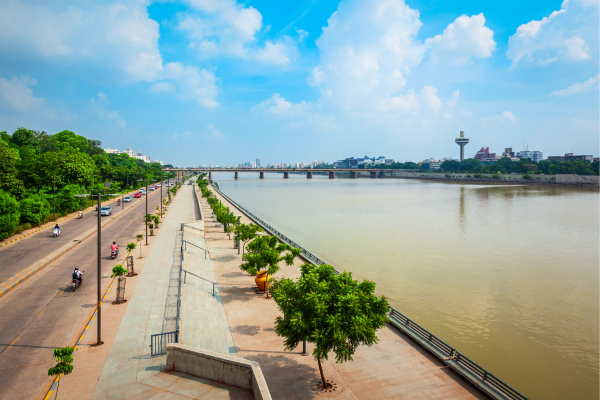
The Delhi government is planning to develop a riverfront along the Yamuna in two phases, drawing on Ahmedabad’s Sabarmati riverfront model to create public spaces along the river. The proposed project will cover the stretch from Palla in north Delhi to Kalindi Kunj near the Okhla barrage in the south. Delhi Water Minister Shri Parvesh Verma said the government was engaging consultants and had initiated the process of signing a memorandum of understanding (MoU) with the Sabarmati Riverfront Development Corporation to study and adapt the Gujarat project’s approach.
The proposed development will be divided into two sections, with the Wazirabad barrage serving as the dividing point. The first phase will cover Palla to Wazirabad, while the second will extend from Wazirabad to Kalindi Kunj. The first section is expected to be taken up on priority and could serve as a model for the wider riverfront project. The government has indicated that the first phase could become visible during its current term, although detailed implementation schedules and the final scope of work have not yet been established.
The proposed riverfront is expected to include walking and cycling tracks, sports grounds and other recreational spaces. The plan aims to make the riverbanks more accessible to residents and provide areas for activities such as morning walks, yoga and outdoor recreation. Officials have said the government intends to study the Sabarmati project’s practices and adapt them to Delhi’s requirements rather than replicate the model without changes.
The riverfront proposal is also linked to the wider effort to improve the Yamuna’s water quality. The river flows for approximately 52 km through Delhi, while the 22-km stretch between the Wazirabad and Okhla barrages has been a major focus of pollution-control efforts. Shri Verma said the river could become visibly cleaner in about two-and-a-half years, subject to the completion of sewage treatment plant upgrades and the expansion of treatment capacity.
Delhi has 37 sewage treatment plants, of which 28 have reportedly been upgraded over the preceding 18 months. The government is also developing additional facilities intended to add 250 million gallons per day of sewage treatment capacity, with the objective of treating all sewage generated in the city. Improving treatment capacity remains an important component of efforts to reduce the discharge of untreated sewage into the river.
The immediate steps for the riverfront proposal include engaging consultants and progressing the proposed MoU with the Sabarmati Riverfront Development Corporation. The project’s final design, execution details and implementation schedule remain to be established. Its development will therefore depend on the completion of preparatory work as well as progress on the parallel sewage-treatment and river-cleaning measures.
Source PTI

17th Nov, 2026

17th Nov, 2026
17th Nov, 2026

16th Nov, 2026


16th Nov, 2026

16th Nov, 2026
16th Nov, 2026
Advertisement








 Facebook
 Whatsapp

