Advertisement






The Gulf conflict has disrupted global supply chains, pushed...
REITs have changed the way commercial real estate is owned a...
What really powers the cloud? Behind every Google search, A...
What really powers the cloud? Behind every Google search, A...
Luxury real estate is one of the most talked-about segments ...
Fire safety in Indian buildings is governed by a layered framework of national technical standards, state fire service laws and local building bye-laws. The National Building Code 2016 sets the technical benchmark but gains legal force only through state and municipal adoption. A Fire NOC is issued in two stages, and obligations continue after occupancy through periodic audits. Maharashtra requires twice-yearly certificates and audits for certain buildings above 30 metres, while a revision of the Code is under way. When a building in India is designed, approved and occupied, a stack of fire safety rules sits behind each step. These rules come from several sources, and which of them bind a given building depends largely on the state it stands in.
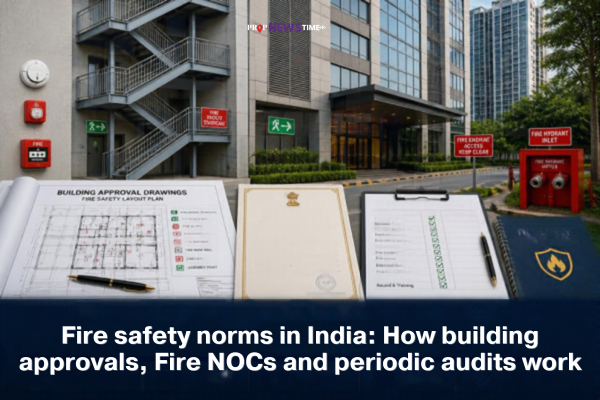
Every building that goes up in India, from a modest residential block to a sprawling hospital tower, must answer to a set of fire safety rules before anyone moves in and long after they do. Yet the system behind those rules is less straightforward than it appears. National technical standards, state fire service laws and local building bye-laws each play a part, and their reach varies from one state to the next. Understanding how approvals, Fire NOCs and periodic audits fit together matters to developers, owners and occupiers alike, particularly as Maharashtra requires periodic certification and audits for taller buildings.
How the four layers work
At the base is the National Building Code (NBC) 2016, whose Part 4 lays out how buildings should be planned for fire and life safety. It covers escape routes, fire-resistant construction, alarms, sprinklers and hydrants. The Code, however, is only a recommendation. It becomes enforceable when a state or municipality adopts its provisions. The Model Building Bye-Laws 2016, particularly Chapter 11, offer a template for doing so, while State Fire Service Acts and Rules create the binding duties, including fire clearances and enforcement powers. Municipal and development authority bye-laws then apply these requirements through building-plan approvals and occupancy or completion certificates. Because fire services and building regulation are state subjects, procedures differ from one state to the next.
What the Code covers
The Code treats buildings according to nine occupancy groups, among them residential, educational, institutional, assembly, business, mercantile, industrial, storage and hazardous. Requirements shift with a building's use, height and risk. They address the number and width of exits, travel distances, staircases, refuge areas, emergency lighting and signage. Passive measures such as fire-resistant structural elements and fire-check doors sit alongside active systems, including detection alarms, sprinklers, hydrants, fire pumps and smoke management.
The two stages of a Fire NOC
A Fire No-Objection Certificate (NOC) usually comes in two stages. Provisional approval reviews the proposed fire protection scheme at the design stage, looking at exits, access, hydrants, sprinklers, water storage and pumps. Final approval follows construction and checks that installed systems match the approved drawings and pass functional tests. Depending on the jurisdiction and building type, a fire clearance may be needed for plan approval, trade licences and occupancy or completion certificates. It typically applies to high-rise buildings, larger residential developments, assembly and institutional premises, and industrial or storage sites handling hazardous materials.
Obligations after occupancy
The duty does not end once the final NOC is in hand. Systems can deteriorate, go unmaintained or be altered during renovations and changes of use, so state laws commonly call for periodic audits or compliance certificates. Under Maharashtra's Fire Prevention and Life Safety Measures Act, 2006, as amended in 2023, owners or occupiers must submit prescribed certificates confirming that fire-fighting installations remain operational, conventionally twice a year, in January and July. Specified buildings taller than 30 metres, used as hotels, hospitals, or for business, mercantile or mixed purposes, must undergo a full Fire and Life Safety Audit within one year of the amendment taking effect on 11 May 2024, and every two years after that.
Consequences of non-compliance
Falling short can mean more than corrective work. Depending on the law, authorities may refuse or withdraw fire clearances, restrict occupancy, affect licence renewals or seal premises. Recurring lapses identified in the report include inadequate hydrant or sprinkler coverage, insufficient water storage, blocked exits, expired equipment-testing certificates, deviations from approved fire schemes and overdue audit filings.
Code revision and the role of enforcement
The Bureau of Indian Standards is currently revising NBC 2016 in consultation with stakeholders. In the meantime, how well these rules work rests on inspections, upkeep, timely certification and enforcement by state and local authorities. Owners and occupiers are therefore advised to check the requirements applicable to their premises, rather than treat a Fire NOC as a one-time approval.

17th Nov, 2026

17th Nov, 2026


17th Nov, 2026




17th Nov, 2026


17th Nov, 2026
Advertisement








 Facebook
 Whatsapp

