Advertisement






The Gulf conflict has disrupted global supply chains, pushed...
REITs have changed the way commercial real estate is owned a...
What really powers the cloud? Behind every Google search, A...
What really powers the cloud? Behind every Google search, A...
Luxury real estate is one of the most talked-about segments ...
Office space demand across Asia Pacific is expected to remain resilient despite the growing adoption of artificial intelligence (AI), with occupied office space projected to increase by 13% between 2026 and 2030 under a moderate AI displacement scenario, according to CBRE research released on 15 October 2026. The forecast compares with 18% growth under the base-case scenario. The report estimates that occupations facing meaningful AI displacement risks account for 1.8% of regional employment, while another 8% of the workforce could be exposed to AI. Demand is expected to be supported by portfolio adjustments in developed markets and economic upgrading in developing economies, including India. Meanwhile, a shrinking development pipeline is expected to limit oversupply risks. AI adoption is also likely to widen the performance gap between premium office buildings and secondary assets.
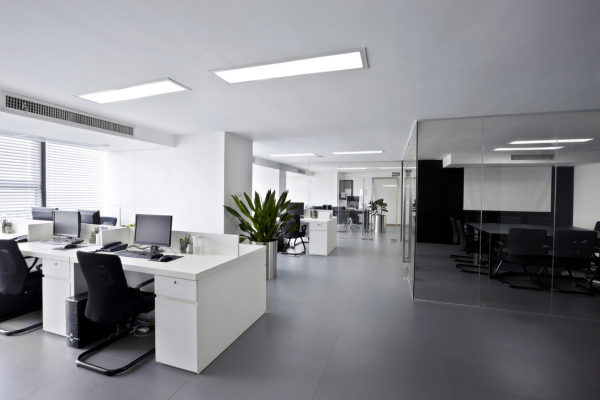
Occupied office space across Asia Pacific is forecast to grow by 13% between 2026 and 2030 under a moderate artificial intelligence (AI) displacement scenario, according to research released by CBRE on 15 October 2026. The report projects that office demand across the region will remain resilient despite changes to workplace roles and employment patterns, with growth under the moderate displacement scenario only five percentage points below the 18% increase forecast under the base case.
CBRE's analysis indicates that occupations facing meaningful displacement risks from AI account for 1.8% of total employment across Asia Pacific. A further 8% of the workforce is potentially exposed to the technology, although many employees are expected to adapt through reskilling and occupational mobility.
Tom Gaffney, head of leasing for Asia Pacific at CBRE, said AI was more likely to reshape work than eliminate it entirely. He noted that as technology assumes routine tasks, collaborative and client-facing activities would become more valuable. CBRE's latest Asia Pacific Office Occupier Survey also found that around half of occupiers intended to expand their real estate footprint over the following three years.
Demand patterns are expected to differ between developed and developing markets. In Australia, Hong Kong SAR, Japan, Singapore and South Korea, occupiers are expected to replenish office space following several years of portfolio optimisation during the pandemic. During that period, growth in occupied office space lagged behind office employment growth. Rising workplace attendance and a greater emphasis on employee experience are expected to support a 5% increase in occupied office space across these developed markets between 2026 and 2030 under the moderate AI displacement scenario.
Developing markets, including Mainland China, India and Southeast Asia, are expected to record stronger growth. Structural economic upgrading, expansion of tertiary industries and migration towards institutional-grade offices are projected to support a 19% increase in occupied office space through 2030, even under the moderate displacement scenario.
Supply-side constraints are also expected to limit the risk of oversupply. Elevated construction and financing costs, alongside greater uncertainty, have prompted developers to delay or scale back projects. Annual office completions are forecast to fall to 3.2% of total office stock in the fourth quarter of 2027 by 2028, compared with 5.3% before the pandemic in 2019.
Ada Choi, head of research for Asia Pacific at CBRE, said the region was unlikely to experience a major supply-demand imbalance even if AI moderated office demand growth. The shrinking development pipeline was expected to support market balance and relatively stable vacancy levels through the remainder of the decade.
Under the base-case scenario, regional office vacancy is forecast to decline from 16% in the second quarter of 2026 to 15% by 2030. Under the moderate AI displacement scenario, vacancy is projected to rise by only three percentage points above the baseline forecast.
AI adoption is also expected to accelerate the divergence between premium and secondary office assets. Occupier demand is likely to concentrate increasingly on buildings that support collaboration, innovation and technology-enabled work. This could widen performance differences between asset categories, placing greater pressure on owners of low

17th Nov, 2026
17th Nov, 2026

17th Nov, 2026

17th Nov, 2026


17th Nov, 2026



17th Nov, 2026

Advertisement








 Facebook
 Whatsapp

