Advertisement






The Gulf conflict has disrupted global supply chains, pushed...
REITs have changed the way commercial real estate is owned a...
What really powers the cloud? Behind every Google search, A...
What really powers the cloud? Behind every Google search, A...
Luxury real estate is one of the most talked-about segments ...
India is working towards developing indigenous high-speed trains with a design speed of 350 kmph by 2030, as the country prepares to expand its bullet train network beyond the Mumbai-Ahmedabad corridor. The proposed B35 trains are being developed alongside the B28 trainsets that will initially operate on the 508-km Mumbai-Ahmedabad High-Speed Rail corridor. The move is part of a broader push to build domestic capabilities in rolling stock, signalling and high-speed rail systems. Seven additional high-speed corridors covering nearly 4,000 km have also been identified, with proposed investments of around INR 16 lakh crore.
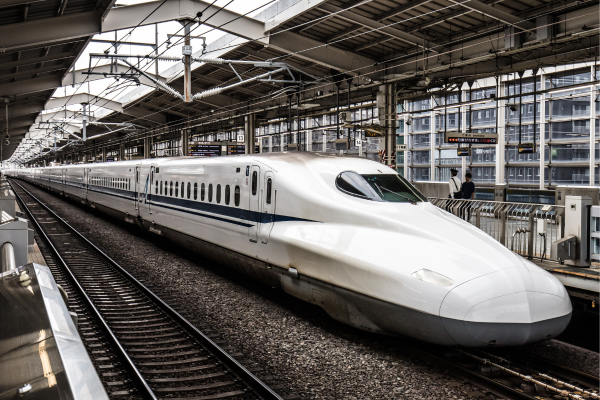
India is developing indigenous high-speed trains with a design speed of 350 kmph by 2030, marking a further step towards building domestic capabilities for the country's expanding high-speed rail network. The proposed B35 trainsets are expected to complement the indigenous B28 trains being developed for the Mumbai-Ahmedabad High-Speed Rail (MAHSR) corridor. The development comes as India works to establish a standardised model for future bullet train projects based on the experience of its first high-speed rail corridor.
The Railway Ministry has initiated work on the B35 trains following discussions with Japan over the transition from its existing E5 Shinkansen trains to the next-generation E10 series. Japan has indicated that E10 production is expected to begin in 2030, with the trains targeted for operations from 2034. India is therefore developing its own 350 kmph train technology while also keeping open the possibility of deploying Japanese E10 trains on the Mumbai-Ahmedabad corridor when they become available.
The immediate focus, however, remains on the B28 high-speed trains. These trainsets have a design speed of 280 kmph and are intended to operate initially on the MAHSR corridor. BEML has received contracts for 47 B28 trains, including a separate INR 5,400 crore contract for 15 additional trainsets, while two prototypes are expected to be ready for trial runs in the first quarter of 2027. The 508-km Mumbai-Ahmedabad corridor is targeted for completion by December 2030.
The MAHSR project has a design speed of 350 kmph and an operational speed of 320 kmph. The corridor will connect Mumbai and Ahmedabad through 12 planned stations and is expected to bring the journey time down to around one hour and 58 minutes. The first high-speed rail service is currently expected to begin in August 2027, with the initial section planned between Surat and Vapi.
Alongside rolling stock, Indian Railways is also developing domestic systems for high-speed operations. The government is promoting indigenous manufacturing of trainsets, specialised components, construction equipment and track systems. Integral Coach Factory and BEML are working on the B28 trains, while India is also developing the Bharat Train Control System, a domestic train control and signalling platform for managing train speeds, spacing and safety.
The government is also seeking to standardise the engineering and construction approach for future high-speed corridors. Common specifications for components such as piers, viaducts, tracks, station structures, overhead electrification and signalling are expected to simplify procurement, training, maintenance and spare-parts management. Foundations would continue to be designed according to local soil conditions, while other systems would follow common engineering standards.
India has identified seven additional high-speed rail corridors covering nearly 4,000 km. These include Delhi-Varanasi, Varanasi-Patna-Siliguri, Chennai-Bengaluru, Bengaluru-Hyderabad, Chennai-Hyderabad, Mumbai-Pune and Pune-Hyderabad. The proposed network is expected to attract investments of around INR 16 lakh crore, although these routes remain part of the country's future high-speed rail expansion plans.
The shift towards indigenous 350 kmph trains therefore extends beyond the development of faster rolling stock. It is tied to the creation of a domestic ecosystem covering train manufacturing, signalling, track systems, specialised equipment, engineering and workforce training. As the MAHSR corridor progresses, the technologies and processes developed for the project are expected to provide a foundation for subsequent high-speed rail projects across India.
Source PIB

17th Nov, 2026

17th Nov, 2026


17th Nov, 2026




17th Nov, 2026


17th Nov, 2026
Advertisement








 Facebook
 Whatsapp

