Advertisement






The Gulf conflict has disrupted global supply chains, pushed...
REITs have changed the way commercial real estate is owned a...
What really powers the cloud? Behind every Google search, A...
What really powers the cloud? Behind every Google search, A...
Luxury real estate is one of the most talked-about segments ...
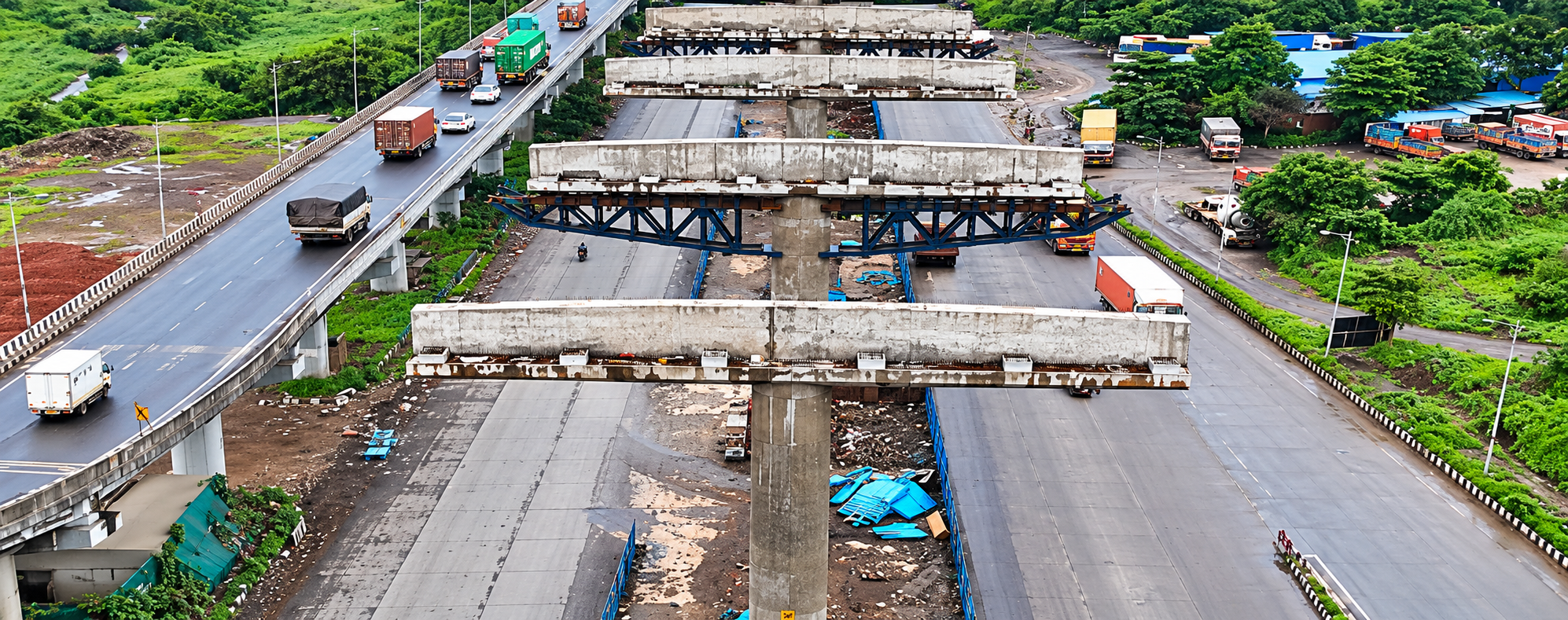
The closure of entry and exit ramps on Goa’s newly opened Porvorim elevated corridor has triggered concern among residents and commuters, with traffic building up on service roads below the flyover. The restrictions were introduced after a fatal accident on the corridor within a day of its opening, along with a ban on two-wheelers. Authorities have said the measures are temporary and intended to assess traffic movement, congestion and safety. A review is planned as officials examine whether the present arrangement should be retained, modified or withdrawn.

The 5.15-km, six-lane elevated corridor on NH-66 was opened to traffic on September 11 after being inaugurated two days earlier. The project was planned to reduce congestion on the busy Mapusa-Panaji route by shifting a substantial share of traffic onto the elevated road. Before opening, officials had estimated that the corridor could handle around 75,000 to 80,000 vehicles a day.
However, the traffic arrangement changed shortly after a fatal collision on September 12. Two people died in the accident near the Panaji-side section of the corridor, prompting the Public Works Department to impose restrictions. The government subsequently prohibited two-wheelers from using the elevated stretch and closed entry and exit points on the Porvorim, or Atal Setu, side, except for specified emergency and essential services.
The closures have raised concerns among local residents who say they are unable to use the infrastructure intended to improve connectivity through Porvorim. With vehicles diverted to ground-level service roads, congestion has begun to build around the approaches and adjoining local roads. Residents are particularly concerned about traffic conditions once schools and offices return to normal schedules following the Ganesh Chaturthi holidays.
Traffic authorities have been directed to monitor vehicle volumes, travel times, queue lengths, congestion levels and diversion patterns on the elevated corridor and surrounding roads. The data is expected to help the government assess how the network is functioning under the revised arrangement and determine whether further changes are required.
The restrictions have also renewed questions about road safety and the design of access points. The North Goa District Road Safety Committee has said that diverting vehicles back to service roads could leave existing accident-prone locations exposed to traffic pressure. It has also highlighted the importance of advance signage and adequate merging space at points where traffic enters or leaves the corridor.
The issue has drawn wider attention because the elevated road was positioned as a major intervention for Porvorim’s longstanding congestion problem. Its opening was expected to improve movement between Panaji, Porvorim and North Goa, while also supporting traffic travelling towards destinations beyond the city.
For now, the corridor remains operational under restricted conditions, with two-wheelers using the service roads and several access points closed. Authorities are expected to review traffic patterns in the coming days and consider changes based on field observations. The outcome will determine how the corridor’s entry, exit and ground-level traffic arrangements evolve.

16th Nov, 2026


14th Nov, 2026

14th Nov, 2026


11th Nov, 2026



Advertisement








 Facebook
 Whatsapp

