Advertisement






The Gulf conflict has disrupted global supply chains, pushed...
REITs have changed the way commercial real estate is owned a...
What really powers the cloud? Behind every Google search, A...
What really powers the cloud? Behind every Google search, A...
Luxury real estate is one of the most talked-about segments ...
Adani Power has signed a Shareholders Agreement with Bhutan’s state-owned Druk Green Power Corporation Ltd (DGPC) to develop the 770 MW Chamkharchhu-I Hydroelectric Project in central Bhutan. The project will be implemented through a 49:51 equity partnership between the two companies under the Build, Own, Operate and Transfer (BOOT) model, with a 30-year concession from the commercial operation date. Construction is expected to begin in the first half of 2027, with commissioning targeted within six years of groundbreaking. The project is expected to strengthen Bhutan’s energy security and support the export of surplus clean electricity to India.
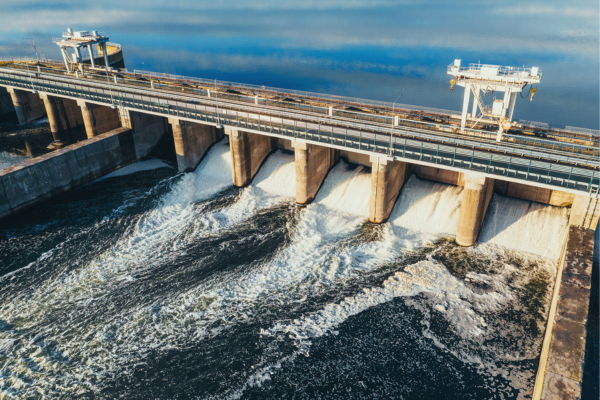
Adani Power has signed an agreement with Bhutan’s state-owned power generation utility, Druk Green Power Corporation Ltd (DGPC), to develop the 770 MW Chamkharchhu-I Hydroelectric Project in the Kingdom of Bhutan. The agreement formalises the partnership between the two companies for the development of the hydropower project.
According to the company’s statement, Adani Power and DGPC signed a Shareholders Agreement (SHA) for the project. The signing ceremony was attended by Bhutan Prime Minister Lyonchhen Dasho Tshering Tobgay and other dignitaries.
The project is the second major hydropower collaboration between the two companies, following their agreement for the 570 MW Wangchhu Hydroelectric Project in September 2025. It is also part of a broader 5,000 MW hydropower development Memorandum of Understanding (MoU) signed between the Adani Group and DGPC in May 2025.
The 770 MW project is a peaking run-of-river hydropower development located on the Chamkarchhu River in Bhutan’s Zhemgang District. Such projects are designed to generate electricity in response to periods of higher demand, while run-of-river systems primarily use the natural flow of a river to produce power.
The project will be developed under the Build, Own, Operate and Transfer (BOOT) model through a 49:51 equity partnership between Adani Power and DGPC. Under this arrangement, the project will operate under a 30-year concession period beginning from its commercial operation date (COD).
Construction is expected to commence in the first half of 2027, while commissioning is targeted within six years of groundbreaking. Once operational, the project is expected to increase Bhutan’s clean energy generation capacity and strengthen electricity cooperation between Bhutan and India.
Adani Power Managing Director Anil Sardana said hydropower would play an important role in South Asia’s energy transition. He added that the project would support regional energy security, help reduce carbon intensity and advance shared sustainability goals. Sardana also said the development would enable surplus green electricity to be exported to India during the summer months, creating long-term value for both countries.
DGPC Managing Director Dasho Chhewang Rinzin said the project would help strengthen Bhutan’s energy security, particularly during the winter months. He added that it would also create opportunities to optimise electricity generation and export surplus clean power to India.
The partnership comes as Bhutan continues to develop its hydropower resources, which are an important part of its electricity supply and economic relationship with India. For India, electricity imports from Bhutan provide an additional source of renewable power, while cross-border hydropower projects create opportunities for cooperation in regional energy supply.
The Chamkharchhu-I project will add to the growing cooperation between India and Bhutan in the hydropower sector. Its development will depend on construction progress, project execution and the timely completion of supporting infrastructure. The seasonal nature of electricity demand in both countries will also influence how the generated power is used and exported. With construction planned to begin in 2027, the project will be a long-term addition to Bhutan’s power generation capacity and could help meet India’s demand for renewable electricity, particularly during periods when surplus power is available.
Source PTI

17th Nov, 2026

17th Nov, 2026


17th Nov, 2026




17th Nov, 2026


17th Nov, 2026
Advertisement








 Facebook
 Whatsapp

