Advertisement






The Gulf conflict has disrupted global supply chains, pushed...
REITs have changed the way commercial real estate is owned a...
What really powers the cloud? Behind every Google search, A...
What really powers the cloud? Behind every Google search, A...
Luxury real estate is one of the most talked-about segments ...
The Association of Senior Living India (ASLI) has called for closer integration between senior living and care services as India’s ageing population expands. Its latest report, Silver Surge 2.0 – From Places to Care: Building India’s Senior Care Continuum, estimates that the country’s 60-plus population will reach 166.9 million in 2026 and could rise to around 347 million by 2050. Organised senior living penetration currently stands at about 1.5%, while assisted living represents less than 10% of organised senior living stock. The report estimates around 8.8 million Indians are living with dementia and 12.2% of seniors have supportive or palliative care needs. It identifies gaps in care infrastructure, financing, workforce and quality standards, and proposes 14 actions under the S.C.A.L.E. framework for 2026–27.
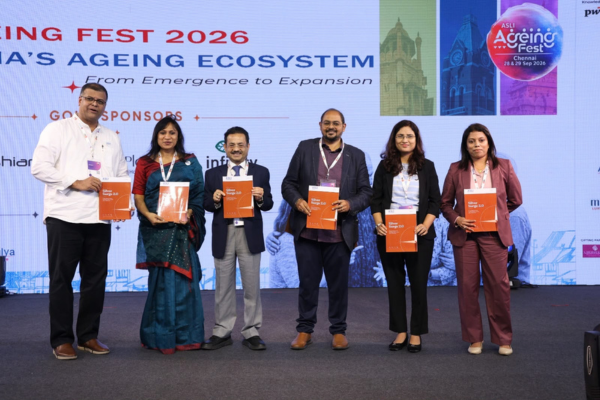
The Association of Senior Living India (ASLI) has called for senior living and care services to develop as interconnected components of India’s ageing infrastructure, as the country’s population aged 60 and above is estimated to reach 166.9 million in 2026 and is projected to rise to approximately 347 million by 2050. The recommendations are contained in ASLI’s second annual report, Silver Surge 2.0 – From Places to Care: Building India’s Senior Care Continuum, released in Chennai earlier this week at the 7th ASLI Ageing Fest 2026 with the active support of PwC India.
The report examines the gaps between the expansion of organised senior living and the availability of professional care services. It draws on public data, JLL-ASLI market estimates and the PwC-ASLI Senior Care Industry Survey to assess care infrastructure, financing, workforce capacity and quality standards.
According to the report, organised senior living supply has grown at an annual rate of 14.2% since 2024, but penetration remains at approximately 1.5%. Assisted living accounts for less than 10% of organised senior living stock, compared with 24–29% in mature markets. India currently has around 2,100 organised assisted-living beds, while an estimated 8.8 million Indians are living with dementia.
ASLI said the senior care ecosystem needs to extend beyond residential communities to cover different stages of ageing and changing health requirements. The report identifies six layers of care: wellness and chronic care, home care, assisted living, transition and rehabilitation care, memory care, and palliative and end-of-life care. It recommends connecting these services to provide continuity as seniors’ health and functional requirements change.
Rajagopal G, Chairman, ASLI, said the country’s ageing challenge involved more than increasing the number of senior homes. He said independent living, assisted living, rehabilitation, memory care and home care needed to form part of an integrated ecosystem that could respond to changing requirements.
The report also identifies financing and workforce capacity as key constraints. While recent policy measures include expanded health insurance coverage for people aged 70 and above and the Union Budget 2026–27 initiative to train 1.5 lakh caregivers, long-term care, assisted living, rehabilitation and home-based services remain largely financed through out-of-pocket spending.
According to the survey, 75% of participating providers identified workforce training as a priority, while 67% highlighted the need for increased funding. ASLI has called for innovative financing mechanisms, insurance coverage for out-of-hospital care, structured caregiver training and common quality standards. The report also proposes preliminary care-quality indicators to improve transparency and accountability among senior care providers.
The report introduces the S.C.A.L.E. framework, comprising 14 recommended actions for 2026–27 across five areas: Standards and Policy; Capital and Financing; Assisted and Continuum Care; Labour and Workforce; and Enabling Technology. The framework is intended to provide a coordinated agenda for government, investors, insurers, healthcare providers and senior living operators.
ASLI said the next phase of India’s ageing ecosystem would need to focus not only on expanding physical capacity but also on ensuring continuity, quality and dignity across different stages of senior care.

17th Nov, 2026

17th Nov, 2026


17th Nov, 2026




17th Nov, 2026


17th Nov, 2026
Advertisement








 Facebook
 Whatsapp

