Advertisement






The Gulf conflict has disrupted global supply chains, pushed...
REITs have changed the way commercial real estate is owned a...
What really powers the cloud? Behind every Google search, A...
What really powers the cloud? Behind every Google search, A...
Luxury real estate is one of the most talked-about segments ...
The Supreme Court has directed authorities to prioritise action against commercial activities operating in areas meant exclusively for residential use. The court said such premises should be sealed in the first instance when their use violates the sanctioned land-use plan. At the same time, it cautioned authorities against selective enforcement and said action must be taken without discrimination. The directions were issued in the ongoing Loganathan versus State of Tamil Nadu proceedings, which examine unauthorised construction and misuse of residential properties across several states. The court has also asked authorities to submit updated status reports before the next hearing.
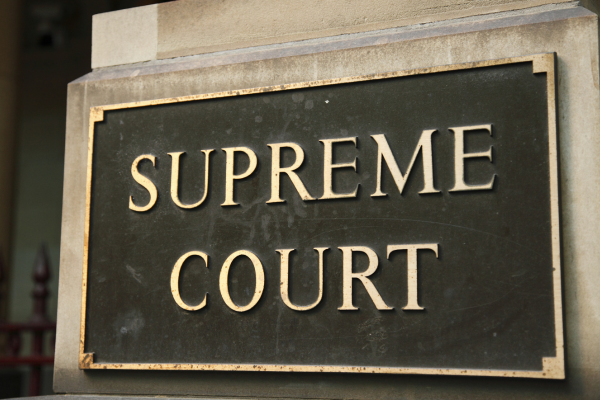
The Supreme Court has directed authorities to give priority to stopping commercial activities in areas specifically designated for residential use. Where a property is located in an area approved only for residential use and is found to be operating commercially, the premises should, in the first instance, be sealed.
The directions were issued by a bench of Justices Ahsanuddin Amanullah and R Mahadevan while hearing the ongoing Loganathan versus State of Tamil Nadu proceedings concerning unauthorised construction and misuse of land and buildings. The case has expanded into a wider examination of land-use and building-plan violations across states and Union Territories.
The court made it clear that enforcement cannot be selective. All authorities acting under its directions have been told to carry out the exercise without discrimination. It also warned that any pick-and-choose approach would be viewed strictly.
The court further clarified that where an area is not clearly designated as either residential or commercial, the possibility of mixed use may have to be examined. Until that issue is decided, authorities have been directed not to disturb the existing position on the ground, although related proceedings can continue.
Pending litigation will also not automatically prevent enforcement. If a title dispute or another case is pending between private parties, or between a government authority and the concerned party, authorities can still seal the premises if its actual use violates the purpose for which the land was allotted or the building plan was sanctioned and approved.
The Supreme Court also dealt with structures that have no approval from any authority. Where a building or structure has been constructed wholly without approval, the process of sealing or demolition, as required under law, should proceed without delay.
The court's observations came amid concerns over inconsistent enforcement in some locations. The amicus curiae informed the court that in places including Bhopal, some properties were being sealed and then unsealed within a few hours or days without any intervening development, such as a response to a show-cause notice or a decision by the competent authority. The court took note of the concern and reiterated that its directions could not be selectively applied.
The court also clarified the test that authorities should apply while examining properties and construction. Compliance has to be assessed against the existing Master Plan and the applicable building bye-laws of the competent authority.
The wider proceedings have been examining the misuse of residential properties for non-residential activities in different parts of the country. In an earlier order, the Supreme Court had expanded the matter beyond the original dispute and directed municipal bodies in the capital cities of states and Union Territories to identify residential areas being used for non-residential purposes. The court had also sought detailed reports from the concerned authorities.
The proceedings have also covered specific enforcement issues in cities such as Jaipur, Delhi, Lucknow and Bhopal. In Jaipur, the court was informed that coaching centres were operating from commercial areas even though designated areas had been identified for such institutes. Authorities, including the Jaipur Development Authority, had issued notices for relocation. The court also took note of an alleged threat to a person assisting the proceedings and sought action from the Rajasthan authorities.
In another part of the proceedings, the court had earlier required authorities in Gurugram to complete action relating to building bye-law violations and unauthorised construction within specified timelines. The court's latest directions now provide a clearer basis for enforcement where commercial activity is being carried out in areas sanctioned exclusively for residential use.
The directions are also relevant to the enforcement activity underway in Gurugram. The Department of Town and Country Planning has been carrying out sealing and demolition drives in licensed colonies including DLF Phase 3, DLF Phase 4, Sushant Lok-1 and South City-1. According to reporting by The Times of India, 150 buildings had been sealed over the past two months, comprising 98 paying guest accommodations, guesthouses and hotels and 52 residential premises being used for other commercial activities.
The Gurugram enforcement drive has also included action against unauthorised construction. The DTCP enforcement team recently demolished unauthorised structures at seven houses in DLF Phase 3's V-33, V-34 and V-35 blocks, according to the same report.
The Supreme Court has asked states, Union Territories and other concerned authorities to file updated status reports one week before the next hearing. The matter is scheduled to come up again on November 23, 2026, when the court is also expected to consider the consolidated report of the amicus curiae.
Source Indian Kanoon

17th Nov, 2026

17th Nov, 2026


17th Nov, 2026




17th Nov, 2026


17th Nov, 2026
Advertisement








 Facebook
 Whatsapp

