Advertisement






The Gulf conflict has disrupted global supply chains, pushed...
REITs have changed the way commercial real estate is owned a...
What really powers the cloud? Behind every Google search, A...
What really powers the cloud? Behind every Google search, A...
Luxury real estate is one of the most talked-about segments ...
The Delhi Development Authority (DDA) has started discussions with private developers to take forward its in-situ slum rehabilitation programme under the Master Plan for Delhi 2047. An investors’ meeting held last week brought developers and other stakeholders together to discuss the proposed framework, including project structure, financing, risk allocation, implementation and approvals. The programme envisages in-situ rehabilitation of around 17 lakh residents of Jhuggi-Jhopri (JJ) clusters, with the aim of providing formal housing while improving infrastructure and land use. The DDA will use the industry feedback to refine the framework before moving towards implementation.
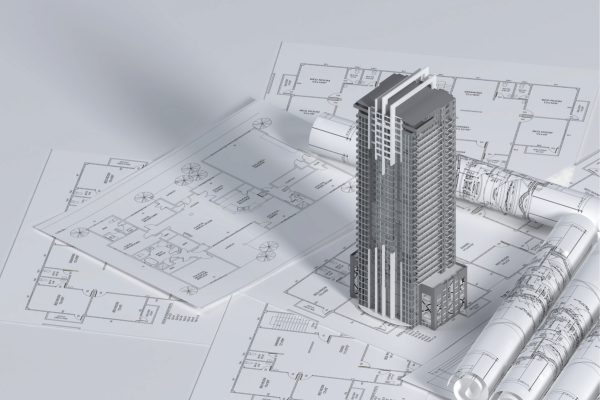
The Delhi Development Authority has begun seeking private-sector inputs for its proposed in-situ rehabilitation programme for JJ clusters across the national capital. The authority held an investors’ meeting last week as part of efforts to understand the concerns of developers and work out a practical framework for large-scale rehabilitation projects.
The programme is being taken forward under the Master Plan for Delhi 2047, which envisages in-situ rehabilitation for approximately 17 lakh people living in JJ clusters. The proposed approach aims to provide eligible residents with housing at their existing locations while improving neighbourhood infrastructure and making more efficient use of land.
At the investors’ meeting, developers and other stakeholders discussed the structure of the proposed projects, implementation mechanisms, financing requirements, risk allocation and approval processes. The DDA said the feedback would help it refine the framework and make the proposed model more practical and predictable for private-sector participation.
The authority is looking at private developers as an important part of delivering rehabilitation at the scale required across Delhi. The proposed model seeks to combine formal housing for eligible JJ cluster residents with better roads, civic infrastructure, public amenities and more organised neighbourhood development.
The DDA’s existing housing programme also provides a basis for private participation in in-situ rehabilitation. The authority is the state-level nodal agency for the in-situ rehabilitation of JJ dwellers living in 376 JJ clusters on DDA and Central government land under the Pradhan Mantri Awas Yojana (Urban). Under this model, JJ clusters are proposed to be replaced with permanent residential units through a public-private partnership, using the land occupied by the clusters as a resource.
The DDA has already identified several in-situ rehabilitation projects, including schemes at Jailorwala Bagh in Ashok Vihar and Kalkaji Extension. Its pipeline also includes projects in Suraj Park and Blocks E and F of Sector 18, Sector 20 and Sector 19 in Rohini.
The broader policy direction has also changed in recent months. The Delhi Assembly approved an amendment to the Delhi Urban Shelter Improvement Board Act, changing the eligibility cut-off date for JJ clusters from January 2006 to January 2025. The change was part of the Delhi Slum and Jhuggi Jhopri Rehabilitation and Resettlement Policy, 2026, which provides for a wider framework for rehabilitation and relocation of eligible residents.
The Delhi government had earlier announced that the first phase of its 2026 rehabilitation policy would cover five JJ clusters in Mayur Vihar, Seelampur, Sultanpuri, Lajpat Nagar and Pitampura. The plan also envisaged PPP-based rehabilitation projects, with DDA and the Delhi Urban Shelter Improvement Board expected to play key roles in implementation.
The proposed rehabilitation programme is also linked to the wider housing strategy under the Master Plan for Delhi 2047. The draft plan estimates a requirement for around 40 lakh additional homes by 2047 and proposes greater use of small-format affordable housing, rental housing, land pooling and transit-oriented development. It also calls for regeneration of existing residential areas and in-situ rehabilitation of slums and JJ clusters to reduce displacement while improving housing conditions.
The investors’ meeting does not yet mark the start of construction or procurement for the citywide programme. The DDA is still working on the framework and is using feedback from developers to determine how projects should be structured, financed and implemented. The next stage will depend on the finalisation of the framework and subsequent approvals and procurement processes.
Source PTI

17th Nov, 2026

17th Nov, 2026

17th Nov, 2026


16th Nov, 2026


16th Nov, 2026

16th Nov, 2026
16th Nov, 2026
Advertisement








 Facebook
 Whatsapp

