Advertisement






The Gulf conflict has disrupted global supply chains, pushed...
REITs have changed the way commercial real estate is owned a...
What really powers the cloud? Behind every Google search, A...
What really powers the cloud? Behind every Google search, A...
Luxury real estate is one of the most talked-about segments ...
The Centre has notified Deendayal Port in Kandla, Jawaharlal Nehru Port in Nhava Sheva, Paradip Port and Adani Group’s Mundra Port as India’s first mega ports. The Ministry of Ports, Shipping and Waterways issued the notification under Section 73 of the Indian Ports Act, 2025, after the four ports met the prescribed cargo-handling criteria. The classification applies to both major and non-major ports and will remain valid for five years. Mundra is the only non-major and privately operated port among the four, while the other three are major ports.
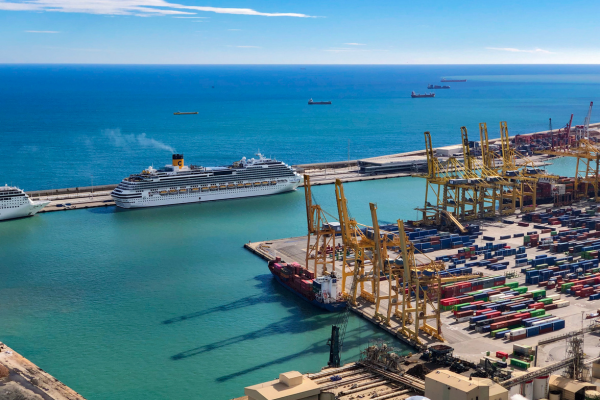
The Centre has notified four ports - Deendayal Port in Kandla, Jawaharlal Nehru Port in Nhava Sheva, Paradip Port and Mundra Port - as mega ports, creating a new classification for the country’s largest cargo-handling facilities. The notification was issued by the Ministry of Ports, Shipping and Waterways under Section 73 of the Indian Ports Act, 2025.
The notification covers three major ports - Deendayal, Jawaharlal Nehru and Paradip - along with Mundra Port, which is classified as a port other than a major port. Mundra is operated by the Adani Group and is the only privately operated port among the four notified mega ports.
The mega port framework was established through a notification issued by the ministry in July. Under the criteria, a port qualifies for mega port status if it handles at least 150 million metric tonnes of cargo in a financial year in the case of a bulk port, or 7.5 million twenty-foot equivalent units (MTEUs) annually in the case of a container port. For ports handling both containerised and bulk cargo, the container cargo is converted into million metric tonnes using the standard methodology adopted by the respective port.
The criteria apply to existing as well as new ports, irrespective of whether they are classified as major ports or ports other than major ports. A port can be notified as a mega port within 90 days of meeting the prescribed threshold. Once notified, the mega port classification remains valid for five years, even if cargo throughput subsequently falls below the required level.
The latest notification does not change the existing classification of the four ports as major or non-major ports. Instead, the mega port status is an additional classification based on cargo throughput under the Indian Ports Act, 2025.
India currently has 12 operational major ports, along with more than 200 non-major ports. The 12 operational major ports are Deendayal, Mumbai, Mormugao, New Mangalore, Cochin, Chennai, Kamarajar, V.O. Chidambaranar, Visakhapatnam, Paradip, Syama Prasad Mookerjee Port in Kolkata, and Jawaharlal Nehru Port.
The wider major-port network is also expanding. Vadhvan Port in Maharashtra and Galathea Bay Port in the Andaman and Nicobar Islands have been notified as major ports and are under development, while the four newly designated mega ports remain the first to receive the new classification.
Paradip is the only mega port among the four located on India’s eastern coast. Deendayal, Jawaharlal Nehru and Mundra are located on the western coast, giving the new classification representation across the country’s two main maritime corridors.
Source PTI

17th Nov, 2026

17th Nov, 2026


17th Nov, 2026




17th Nov, 2026


17th Nov, 2026
Advertisement








 Facebook
 Whatsapp

