Advertisement






The Gulf conflict has disrupted global supply chains, pushed...
REITs have changed the way commercial real estate is owned a...
What really powers the cloud? Behind every Google search, A...
What really powers the cloud? Behind every Google search, A...
Luxury real estate is one of the most talked-about segments ...
Flexible housing is no longer just about booking a holiday apartment for a few nights. Rising rents, remote work, changing lifestyles and housing shortages are encouraging people to choose longer-term, community-focused living arrangements. Around the world, co-living spaces are emerging as an alternative to traditional rentals and short-term accommodation platforms. Here's how flexible housing has evolved over the years, why co-living is gaining momentum, and what this shift means for residents, investors and the future of urban housing.
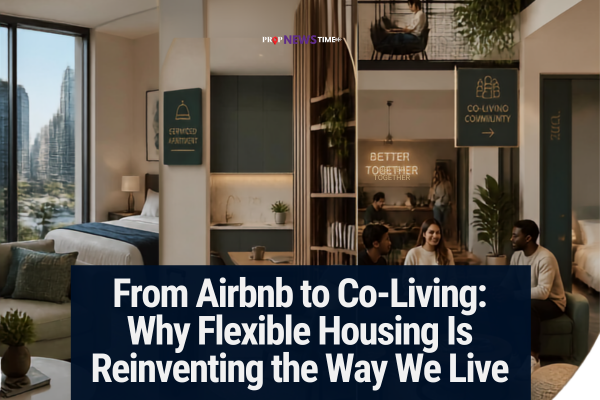
A decade ago, flexible housing meant one thing for most people: a short stay booked through platforms like Airbnb or Vrbo. Whether it was a beach holiday, a weekend getaway or a business trip, renting someone's spare apartment became a global phenomenon.Today, the idea of flexible housing has changed dramatically.Instead of searching for a place to stay for three nights, many people are looking for somewhere they can live for six months or even several years without the long commitments, hefty deposits or isolation that often come with traditional rentals.
This is where co-living enters the picture.
1. It all started with short-term rentals
When Airbnb launched in 2008, it transformed the way people travelled. Suddenly, homeowners could rent out spare rooms or entire homes to visitors, while travellers gained access to accommodation that often felt more personal than hotels. Other platforms such as Vrbo and Booking.com's vacation rental offerings followed, making short-term rentals a mainstream part of tourism. The model created new income opportunities for homeowners and investors, while giving travellers more choice and flexibility. It proved that people were comfortable living in homes they didn't own even if only for a few days.
2. Then remote work changed everything
The COVID-19 pandemic accelerated a shift that had already begun.
Millions of people started working remotely, freeing them from the need to live close to a traditional office. Instead of taking short vacations, many began spending weeks or months in different cities. Others relocated entirely while keeping the same job. This created demand for housing that was more flexible than annual leases but more stable than holiday rentals. People wanted homes that were "move-in ready" with furniture, internet and utilities already included.
3. Rising housing costs made traditional renting harder
Across many global cities, buying a home has become increasingly expensive, while rents have continued to rise.For many young professionals and first-time workers, signing a long lease, paying large security deposits and furnishing an apartment can be financially overwhelming. Co-living addresses some of these challenges by offering fully furnished rooms, shared amenities and a single monthly payment that often includes utilities and internet.
Lower upfront costs and greater flexibility.
4. Co-living is about more than sharing a house
At first glance, co-living may seem similar to renting a room with roommates.In reality, professionally managed co-living developments are designed around community. Residents typically have private bedrooms and sometimes private bathrooms while sharing kitchens, lounges, gyms, workspaces or rooftop terraces. Many operators also organise networking events, fitness classes and social gatherings to help residents build connections.
It's a housing model built around both convenience and community.
5. Investors are seeing a different kind of opportunity
The rise of co-living isn't just changing how people live, it's also reshaping investment strategies.
Institutional investors and real estate developers are increasingly exploring co-living because it can generate income from multiple units within a single property while responding to growing urban housing demand. Purpose-built co-living projects are now appearing in cities across Europe, North America and Asia, particularly in areas with strong student and young professional populations.
It's another way to diversify residential portfolios, although success depends on local regulations, demand and operational management.
6. Cities are beginning to adapt their policies
As co-living becomes more common, governments and planning authorities are updating regulations to accommodate new housing formats.Some cities have introduced planning guidelines for shared housing, while others are reviewing zoning rules, occupancy standards and safety requirements to ensure these developments fit within existing neighbourhoods.Regulatory approaches vary widely by country and city, making local compliance an important factor for developers and operators.
Policy is increasingly trying to keep pace with changing housing needs.
7. Technology is making flexible housing easier to manage
Modern co-living spaces often rely on digital tools.Residents can complete applications online, unlock doors with smartphones, book shared amenities, report maintenance issues and pay rent through mobile apps.For operators, technology helps manage occupancy, maintenance and resident communication more efficiently.The experience increasingly resembles a subscription service rather than a traditional rental arrangement.
8. Flexible housing is likely to keep evolving
Co-living isn't expected to replace conventional homeownership or long-term rentals.Instead, it is becoming another option within the housing market particularly for people who value mobility, affordability and community.As cities continue to grow and work patterns evolve, housing models are also adapting.The future of flexible housing may include hybrid developments that combine apartments, co-living, student housing and serviced residences within the same project.
Rather than choosing between renting and owning, future residents may have a wider range of living options that better match different stages of life.The story of flexible housing reflects a broader shift in how people think about home. What began as a way to book short holiday stays has evolved into a housing model designed for changing careers, remote work, rising urban costs and a growing desire for community. Co-living is not a one-size-fits-all solution, nor is it replacing traditional housing. But it has become an important addition to the residential landscape, offering greater flexibility for residents while opening new opportunities for developers and investors. As cities continue to evolve, the definition of "home" is becoming more adaptable than ever before.
Sources: JLL – Global Co-Living Report, CBRE – Living Sector & Flexible Housing Reports, Knight Frank – The Wealth Report / Residential Research, Savills – Co-Living and Residential Market Insights, OECD – Housing and Urban Policy, UN-Habitat – Housing and Urban Development, Urban Land Institute (ULI) – Residential and Co-Living Research

17th Nov, 2026

17th Nov, 2026


17th Nov, 2026




17th Nov, 2026


17th Nov, 2026
Advertisement








 Facebook
 Whatsapp

