Advertisement






The Gulf conflict has disrupted global supply chains, pushed...
REITs have changed the way commercial real estate is owned a...
What really powers the cloud? Behind every Google search, A...
What really powers the cloud? Behind every Google search, A...
Luxury real estate is one of the most talked-about segments ...
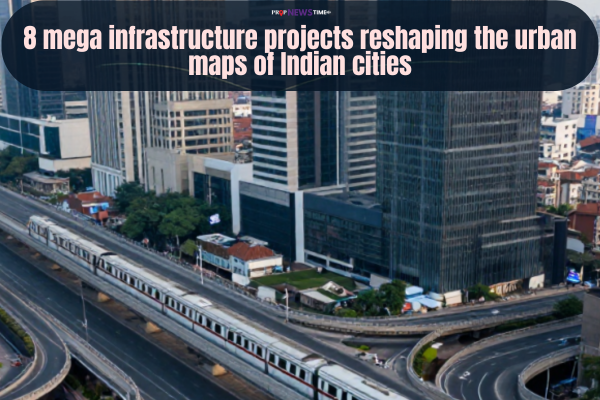
India’s infrastructure expansion is increasingly changing the geography of urban growth, with highways, high-speed rail, metro systems, ports and industrial corridors extending economic activity beyond established city centres. Projects such as the Mumbai–Ahmedabad High-Speed Rail corridor, Delhi–Mumbai Expressway, Chennai Metro Phase II, Vadhavan Port and the National Industrial Corridor Development Programme are improving connectivity between metropolitan regions and emerging economic nodes. Their influence extends beyond transport, with better accessibility potentially supporting logistics, manufacturing, commercial development, workforce housing and residential growth in peripheral and intermediate locations.
Mumbai–Ahmedabad High-Speed Rail
The 508-km Mumbai–Ahmedabad High-Speed Rail corridor, with 12 stations across Maharashtra, Gujarat and the Union Territory of Dadra and Nagar Haveli, is among India’s most significant transport projects. Trains will operate at speeds of up to 320 kmph, with the project expected to substantially reduce travel time between Mumbai and Ahmedabad. The first section between Surat and Bilimora is targeted for commissioning in 2027.
The corridor could strengthen economic links between Mumbai, Surat, Vadodara, Ahmedabad and intermediate locations such as Boisar and Vapi. Improved connectivity may support residential, commercial and industrial development around stations, particularly where rail access combines with existing employment and logistics infrastructure.
Delhi–Mumbai Expressways are opening up peripheral land
The Delhi–Mumbai Expressway, including its associated spurs, is planned across 1,386 km and connects major economic regions across northern, western and central India. Its significance for real estate goes beyond passenger travel, as faster freight movement can improve the viability of logistics parks, warehouses and industrial estates outside established urban centres.
Locations around Sohna and other emerging nodes along the corridor could benefit as employment and logistics activity expands. However, the strongest development is likely to occur where highway connectivity is supported by industrial investment, utilities and other urban infrastructure.
Chennai Metro is extending the city’s development belt
Chennai Metro Phase II covers 118.9 km across three corridors, connecting areas including Madhavaram, Poonamallee, Sholinganallur and SIPCOT. With a planned network extending deep into the city’s northern, western and southern growth areas, the project could significantly improve access to employment and residential clusters.
The expansion is particularly relevant to transit-oriented development. Better metro connectivity can support higher-density housing, retail and office development around stations while making peripheral locations more accessible to Chennai’s major employment centres.
Vadhavan Port could create a new maritime-industrial ecosystem
The INR 76,220-crore Vadhavan Port project in Maharashtra is planned as a major deep-draft maritime gateway with large-scale container-handling capacity. Its development could generate demand for logistics, warehousing, industrial support services, worker accommodation and hospitality in the wider Palghar region.
The port’s real-estate impact, however, will depend on the pace of construction and the development of supporting road, rail and industrial infrastructure. Areas that gain both port connectivity and employment opportunities are likely to have greater potential for sustained urban growth.
Bengaluru’s metro expansion is strengthening northern and western corridors
Bengaluru Metro Phase III is planned over about 44.65 km, including corridors connecting JP Nagar 4th Phase with Kempapura and Hosahalli with Kadabagere. The wider metro expansion is expected to improve connectivity across parts of western and northern Bengaluru.
Improved public transport could strengthen residential and commercial demand in emerging areas, while the broader airport-connectivity network is adding importance to the northern Bengaluru growth belt around Hebbal and Devanahalli.
Industrial corridors are building new economic nodes
The National Industrial Corridor Development Programme is designed to create new industrial cities rather than simply connect existing urban centres. The Union government has approved 12 industrial nodes across 10 states, with projects including Dholera, Zaheerabad, Orvakal and Dighi.
These developments combine industrial infrastructure with utilities and logistics connectivity. As manufacturing investment creates new employment centres, surrounding areas could see secondary demand for housing, retail, healthcare, education and commercial services.
Great Nicobar combines port, airport and township infrastructure
The Great Nicobar Integrated Development Project brings together an international container transshipment terminal, airport, power plant and township infrastructure. The project is intended to establish the island as a strategic maritime and economic hub because of its location near major international shipping routes.
If implemented at the planned scale, it could create demand for logistics, commercial services and hospitality. Its development, however, will also remain closely linked to environmental safeguards, land-use restrictions and the protection of indigenous communities.
Mumbai’s metro expansion is redrawing the metropolitan region
Mumbai’s expanding metro network is gradually improving connections between the island city, suburbs and peripheral areas across the Mumbai Metropolitan Region. Corridors including Metro Lines 2B, 4, 6, 9 and 12 are expected to strengthen east-west and north-south connectivity across Mumbai and adjoining urban centres.
Improved accessibility could increase the development potential of locations such as Vikhroli, Kanjurmarg, Kasarvadavali and Taloja, particularly where metro connectivity is accompanied by employment, commercial and social infrastructure.
Infrastructure is becoming a driver of urban expansion
Together, these projects show how India’s infrastructure strategy is moving beyond simply reducing travel time. High-speed rail is connecting intermediate cities, expressways are strengthening logistics networks, metros are expanding urban catchments, ports are creating maritime-industrial ecosystems and industrial corridors are establishing new economic centres.
For real estate, the key change is the expansion of the geography within which businesses and households can operate efficiently. The locations most likely to benefit will be those where multiple infrastructure investments converge, creating a combination of connectivity, employment, utilities and urban services.
Source MoRTH, NHSRCL, NICDC, CMRL

17th Nov, 2026

17th Nov, 2026


17th Nov, 2026




17th Nov, 2026


17th Nov, 2026
Advertisement








 Facebook
 Whatsapp

