Advertisement






The Gulf conflict has disrupted global supply chains, pushed...
REITs have changed the way commercial real estate is owned a...
What really powers the cloud? Behind every Google search, A...
What really powers the cloud? Behind every Google search, A...
Luxury real estate is one of the most talked-about segments ...
The global luxury branded residences market is set to cross 1,000 developments this year, driven by wealth creation, greater international mobility and demand for lifestyle-focused locations, according to Knight Frank’s latest Global Residences Report. The sector has grown from 354 schemes in 2015 to 903 at the end of 2025 and could reach 1,800 schemes with more than 300,000 units by 2031. The Middle East remains the main growth engine, while resort and non-city markets are gaining ground. Hotel brands continue to dominate, although fashion, automotive and lifestyle brands are expanding their presence.
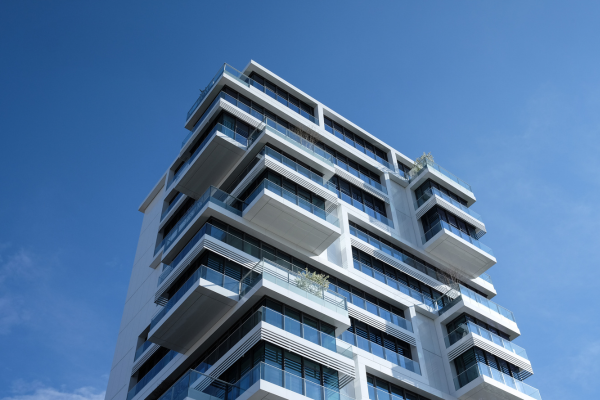
The global branded residences market is entering a period of continued expansion as rising wealth and increased international mobility support demand for luxury homes in both established and emerging destinations, according to Knight Frank.
Knight Frank’s Global Branded Residence Survey has verified nearly 1,800 live and pipeline schemes from more than 200 brands across 90 countries. The sector has almost tripled over the past decade, increasing from 354 schemes in 2015 to 903 at the end of 2025. It is expected to cross 1,000 developments this year and, based on current pipelines, could reach 1,800 schemes and more than 300,000 units by 2031.
The growth of the sector is also influencing the wider residential market, with the services, amenities and placemaking associated with branded residences increasingly shaping expectations for luxury housing developments.
The United States continues to have the largest concentration of operational branded residences, while the Middle East has emerged as the biggest growth engine. The region accounts for 20 per cent of all projects and 29 per cent of the global pipeline.
Dubai remains the leading city market globally, with 175 schemes. Abu Dhabi and Ras Al Khaimah are also gaining a larger share of future development activity, although regional uncertainty could lead to changes in some planned launch programmes.
One of the major changes in the market is the growing importance of locations outside major cities. In 2016, fewer than four in 10 branded residence schemes were located outside major cities. Today, more than half are in non-city locations, and this share is expected to reach 57 per cent by 2028 based on the identified pipeline.
More than half of new openings are now taking place in coastal, island, mountain and resort destinations. When the pipeline is included, Phuket Island has more branded residence schemes than London.
The market is also becoming more diverse in terms of the brands entering the sector. Hotel brands account for around 70 per cent of operational schemes, although their share falls to about 60 per cent when pipeline projects are included. The share of non-hotel brands is expected to increase from around 30 per cent in 2025 to almost 40 per cent by 2028.
Fashion houses, automotive companies and lifestyle brands are increasingly entering the branded residences market, giving buyers a wider range of choices beyond traditional hotel-linked developments.
Rising global mobility is another factor supporting demand. International flight volumes are forecast to reach 13.2 million in 2026, above pre-pandemic levels and almost 19 per cent higher than in 2023.
In Europe, the strongest growth in international mobility is being seen in markets where tax and visa policies are attracting international buyers. Monaco leads this growth with a 407 per cent increase, followed by markets including Malta, Athens and Milan. Among the 10 largest branded residence markets, Al Marjan Island recorded 45 per cent growth, while Phuket and Abu Dhabi recorded 40 per cent and 37 per cent, respectively.
Higher mobility is also contributing to demand for second, third and fourth homes. The average residential portfolio held by ultra-high-net-worth individuals has increased from 2.9 properties to 3.8 properties in less than a decade.
The increase in branded residence demand is being supported by strong wealth creation across major markets. The United States accounted for 41 per cent of the world's newly created ultra-high-net-worth individuals over the five years to 2026. India and Vietnam are also rising as important sources of new wealth and potential demand for branded residences.
Knight Frank Global Head of Research Liam Bailey said the luxury branded residential sector had become one of the strongest growth segments in global real estate. He noted that the market had nearly tripled over the past decade and was expected to double again over the next five years. He also pointed to increasing competition as new supply enters the market, with developers and brands focusing more on innovation and differentiation. This is also contributing to a broader change in how luxury is being defined in the residential sector.
The expansion of branded residences reflects a wider change in luxury housing, where buyers are increasingly looking for homes that fit into their travel patterns, lifestyle and broader property portfolios. The shift towards resorts and non-city locations also shows that demand is no longer concentrated in traditional global cities. With more hotel and non-hotel brands entering the market, competition is likely to become stronger across destinations. For developers and brands, the challenge will be to offer a clear reason for buyers to choose one branded residence over another as supply continues to increase.

17th Nov, 2026

17th Nov, 2026


17th Nov, 2026




17th Nov, 2026


17th Nov, 2026
Advertisement








 Facebook
 Whatsapp

